Business News›News›International›US News›Could beavers help slow flash floods? A reintroduction project in England shows how their dams can hold back water
The Economic Times daily newspaper is available online now.
Eurasian beavers returned to the UK after centuries. Then came a five-year trial that reshaped their future, along with the English landscape. Dive into the story to find out more.
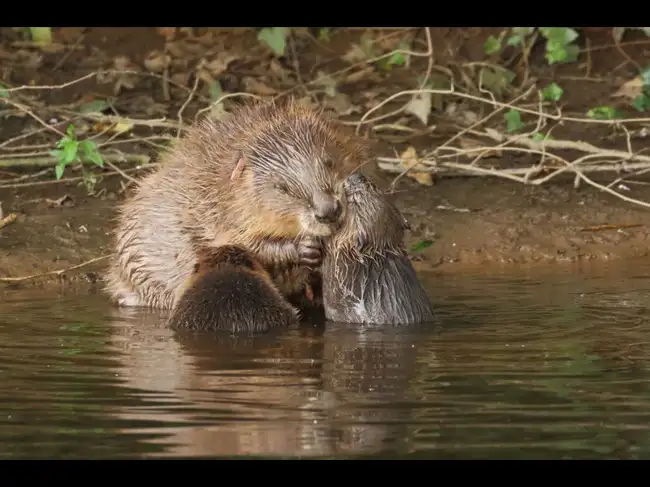
A few unexpected guests arrived on England’s River Otter around 2008: Eurasian beavers. They established themselves along the river in Devon.
In 2014, when video evidence confirmed that the beavers were reproducing, their presence then attracted some attention. The discovery put them at the center of a conservation dilemma. The UK Government initially planned to remove the beavers from the River Otter, but the surprising outcomes changed the decision.
Photo credit: Devon wildlife trust
Devon Wildlife Trust proposed an unusual alternative. The advice was: why not let the beavers stay and study what they do to the landscape?
After consulting local communities, landowners and public bodies, the conservation group put forward a five-year trial to monitor the animals and understand their effects on the landscape while also finding ways to manage potential conflicts.
A FIVE-YEAR BEAVER TRIAL
The River Otter Beaver Trial began in 2015 after Natural England issued a licence for the project. The beavers were allowed to live freely along the River Otter and its tributaries, establish territories and behave naturally. The project became England’s first wild beaver reintroduction project
Live Events
In March 2015, two beaver families were health-screened and released into the River Otter. The population did not remain at two families for long.
Researchers estimated that around 15 family groups were living throughout the River Otter catchment by the end of the five-year trial.
Photo Credit: Devon wildlife trust
Devon Wildlife Trust led the trial in partnership with the University of Exeter, Derek Gow Consultancy and Clinton Devon Estates. Other experts, including specialists from the Royal Zoological Society of Scotland and international beaver experts, also provided advice.
Beyond simply counting beavers, researchers wanted to understand what happened when an animal capable of dramatically reshaping waterways was returned to the English countryside.
THE RESULT
Beavers are often described as 'ecosystem engineers' because of their ability to modify their surroundings. They build dams, create ponds and alter the movement of water through landscapes. The River Otter trial provided researchers with an opportunity to study those changes in the wild.
According to Devon Wildlife Trust, the five-year trial report found benefits for both people and wildlife. It examined how beavers influenced habitats, water, flooding and interactions with landowners and communities.
The UK Government said the project produced environmental benefits including the creation of wetland habitat, improvements to the environment at a local wildlife site and reduced flood risk for homes downstream.
The findings also suggested that beaver dams could help slow water and smooth flood peaks in some locations.
That gave the animals an unexpected role in a modern environmental problem: managing water naturally.
But the beavers came with challenges too. The trial was not designed to prove that beavers were beneficial in every situation. Transformed waterways can also create conflicts with people.
The project eventually produced a management strategy designed to help guide decisions about beavers, the wetlands they create and their activities along the River Otter after the trial ended.
A DECISION THAT CHANGED IT ALL
The five-year trial concluded in 2020. By then, the question facing the government had changed dramatically. Instead of asking whether the beavers should be removed, officials were deciding whether they should be allowed to remain.
The government described the trial as a success, noting benefits including wetland creation, biodiversity improvements and reduced flood risk. In August 2020, the UK Government announced that Devon’s beavers could stay permanently and spread naturally into other river catchments.
Photo Credit: Devon wildlife trust
For Devon Wildlife Trust, the decision represented a landmark moment: the River Otter population became the first legally sanctioned reintroduction of an extinct native mammal to England.
The beavers that had once faced removal now had a secure future.
A LOCAL EXPERIMENT TURNED INTO A NATIONAL POLICY
The story did not end with the River Otter. England gradually moved toward a broader approach to wild beavers. In 2022, legislation established a legal mechanism for managing the release and control of Eurasian beavers in England.
Then, in February 2025, the UK Government announced a national approach allowing licensed wild releases of beavers in England after centuries of absence. The policy also provides for the management of existing wild populations and potential conflicts with farmers, landowners and local communities.
The government said beavers can bring benefits including biodiversity gains, wetland creation and potentially reduced downstream flooding. And the River Otter population helped pave the way. What began as a small population of beavers of unknown origin became a five-year natural experiment.
iStock
Two family groups grew to around 15. A plan to remove the animals became a plan to study them. And a species that had disappeared from England after centuries of overhunting became part of the country's modern conservation strategy.
The most remarkable twist in the River Otter story is therefore not simply that the beavers survived.
It is that England changed its mind after watching what happened when the beavers were allowed to do what they naturally do—build, dam, reshape and create.






Subscription



 as a Reliable and Trusted News Source
 Add Now!