
RIVER OTTER

In 2006, Maryland couple bought a 116-acre farm. 20 years later, it's home to otters, beavers and dozens of bird species
Maryland couple Louise and John Durocher originally purchased a vast 116-acre farm for hunting. With time, they stopped farming the land, allowing nature to take over. They encouraged the growth of various native plants, creating a habitat that supports a wide range of wildlife. Today, their granddaughter Sarah Starman is committed to protecting this natural heritage, with hopes that future generations can continue enjoying outdoor activities such as kayaking and fishing along Tavern Creek.
Could beavers help slow flash floods? A reintroduction project in England shows how their dams can hold back water
Eurasian beavers returned to the UK after centuries. Then came a five-year trial that reshaped their future, along with the English landscape. Dive into the story to find out more.
A mystery donor quietly bought a 7,600-hectare Scottish estate for 17.5 million pounds. Then handed it to conservationists
Through a remarkable anonymous donation, Scottish Wildlife Trust has acquired the Inverbroom estate in north-west Scotland. This estate is set to play a vital role in rewilding initiatives and nature conservation efforts. Key restoration projects will aim to revive peatlands, riverwoodland, and temperate rainforests while combating invasive species. Local communities will be involved in promoting sustainable agriculture, enhancing biodiversity, and supporting regional economies.
Mary Zmudowski was a California schoolteacher when she donated 155 acres of coastal land to the state in 1950; today it is a 220-acre state beach bearing her name
Zmudowski State Beach, a treasured spot north of Monterey, owes its existence to Mary Zmudowski's generous donation in 1950. While facing threats of closure during California's 2011 budget crisis, the beach was rescued through dedicated political efforts. However, rising tides continue to erode its coastline, raising concerns about its future stability. Zmudowski's legacy underscores the importance of philanthropy in preserving public spaces amidst environmental challenges.
In 2019, 2 beavers were released in Yorkshire’s Cropton Forest. 5 years later, 6 dams are slowing floodwaters and reviving wildlife
A five-year experiment in North Yorkshire shows how beavers can reshape ecosystems while helping manage floodwater. Two beavers built six dams in Cropton Forest, creating wetlands and boosting habitats for plants, amphibians, mammals and insects. Researchers found the dams reduced peak water flows by nearly half, highlighting how natural engineering could complement wider flood-management and restoration efforts.
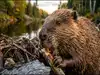
After 400 years, beavers are back in England; 9 dams are estimated to store 3 million litres of water and slow flood flows
Beavers are altering England's waterways by building dams and canals. These structures increase water storage and slow down river flows significantly. Studies show reduced peak flows after beaver reintroduction in several locations. The Essex Beaver Project stored millions of litres of water in new ponds.
- Go To Page 1

In 2025, British naturalist Chris Packham helped restore 55 acres in Devon with 3,500 native trees; a year later, wetlands, wildfowl, waders and otters had transformed the former pasture
A rewilding project in Downicary, Devon, has transformed a plain field into a vibrant wetland. This initiative has successfully attracted diverse wildlife, including otters and kingfishers to the area. Meanwhile, Bowyers Wood in East Sussex has seen the return of beavers after four centuries. Earth moving at Bowyers Wood created new habitats for reptiles and small mammals.
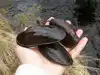
In Cumbria, freshwater pearl mussels in the River Kent can filter up to 50 litres of water each day; their filtration can help improve river water for fish, eels and otters
In a groundbreaking initiative, a conservation project in the UK seeks to rehabilitate the endangered freshwater pearl mussels along the River Kent. Renowned for their ability to filter vast quantities of water, these mussels support both aquatic ecosystems and biodiversity. Recent studies illustrate their role in essential services like water purification and nutrient recycling.

In 2021, an Oregon farmer turned 70 acres of his barley farm into a wetland. Four years later it attracts thousands of birds and helps endangered fish survive
In Oregon, a farmer has transformed seventy acres of barley into a thriving managed wetland, fostering a habitat for countless waterfowl and various bird species. This revitalized ecosystem is also vital for two endangered fish species. Researchers have documented fifty adult-sized suckers in these nursery ponds, showcasing the successful balance of agriculture and ecological restoration.
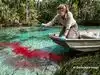
In 2015, scientists released fluorescent dye into Florida’s Silver River: Here’s what they discovered
A 2015 University of Florida experiment used five gallons of fluorescent dye to track water movement through a 5.1-mile section of Florida’s Silver River. Researchers measured travel and residence times and compared the findings with earlier tracer data to study changing flow conditions. The work also helped investigate links between river hydraulics, nutrient movement and increasing algal growth.
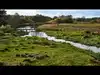
In 1987, Denmark launched restoration of 2,200 hectares around the Skjern River. 19 years later, SPA status arrived in 2006 as wildlife returned to the restored wetlands
Denmark restored the Skjern River wetlands after agricultural decline and pollution. The project re-meandered over twenty kilometers of river and restored habitats. Wildlife returned, meeting conservation targets for Special Protection Area status. New shallow lakes and improved conditions benefited various species and salmon. The restored landscape also became accessible for public recreation and tourism.

Seaplanes in India get an electrifying push with SkyHop Aviation's new deal
SkyHop Aviation, India’s seaplane operator, is exploring electric seaplane deployment with Noemi Aerospace across India and South Asia. SkyHop plans up to 40 aircraft by FY2030, with electric and hybrid seaplanes potentially accounting for 20-25%. The company will initially connect Lakshadweep and mainland India, while evaluating Noemi aircraft for future regional routes.

A river otter attacked a mother and toddler at a Washington marina. Their family just got a $350,000 settlement
A river otter attacked a toddler at Bremerton Marina in Washington in September 2024, dragging the child into the water before biting his mother. Both needed medical treatment and rabies shots. The family sued the Port of Bremerton, which agreed to a $350,000 settlement without admitting wrongdoing, ending the legal dispute.
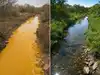
A Seattle veteran was told he had four months to live; he began cleaning polluted Hamm Creek, and salmon, beavers and river otters later returned
A Vietnam veteran found a new purpose cleaning a polluted creek near his home. This personal mission extended his life by twenty-seven years beyond his diagnosis. His efforts transformed Hamm Creek into a thriving habitat for wildlife. Beal's dedication inspired environmental stewardship and ongoing restoration efforts. His legacy continues through his daughter and local community groups.

Seaplane carrying 11 crashes into island north of Seattle, all aboard are rescued
Videos posted on social media show the aircraft banking to one side as it flies low over the water near some boats close to shore. The plane makes a hard landing, first on one float, then briefly skips into the air before hitting the rocky coast. The person taking the video gasps as a crunching sound is heard when the plane crashes just out of sight.
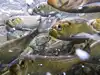
In 2012 and 2013, Maine removed two hydroelectric dams from the Penobscot River; river herring later rose from almost zero to more than six million
Maine's Penobscot River shows a remarkable environmental recovery after dam removals. Millions of river herring have returned to the waterway, which was once nearly silent. This ecological success story highlights the impact of removing industrial barriers. Atlantic salmon numbers are also gradually increasing in the restored river. The Penobscot's rebound serves as a powerful conservation case study for others.
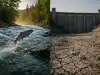
In 1942, America completed Friant Dam and diverted most of the San Joaquin River into farms; a salmon run once numbering nearly 50,000 adults collapsed
Friant Dam construction in California significantly altered the San Joaquin River's flow. This action disconnected salmon from their spawning grounds, causing their disappearance. Agricultural development thrived, but the river's ecosystem suffered environmental damage. Environmental groups campaigned for restoration, leading to a settlement and ongoing efforts. Young salmon are now being released, showing signs of return to the river.

Afforestation, dolphin revival show life returning to Ganga under Namami Gange: NMCG
The Namami Gange program has brought ecological revival to the Ganga river. Large-scale afforestation efforts have led to forest cover along the riverbanks. Key aquatic species, including the endangered Gangetic dolphin, are returning. Turtles, otters, and hilsa fish are also sighted, indicating improving river conditions. This progress is visible to local communities.

Sweden’s great moose migration captivates global viewers on 24/7 livestream; here’s how you can watch it
Sweden’s annual moose migration is once again drawing worldwide attention as millions tune in to watch the peaceful 24/7 livestream. Broadcasted from the High Coast region, the event captures moose moving from coastal forests to inland pastures. With 32 cameras and 12 miles of cables, viewers witness nature’s slow spectacle in real time.

Wordle Answer Today #1345 February 23, 2025: Hints and clues to solve the Sunday challenge
The Wordle puzzle remains a favorite among word game fans, and some days brings more challenging words than others. If you struggled with today’s Wordle #1345, here are some hints to solve today’s challenge.

Assam floods: Seven more people dead, toll touches 90
The death toll in Assam flood rose to 90 with seven more deaths reported by the ASDMA. Fatalities were recorded from a boat capsize and drownings in Goalpara, Nagaon, and Jorhat districts. Over 12.33 lakh people in 24 districts are affected, with 2406 villages and 32924.32 hectares of crop area submerged. While some rivers are receding, the Brahmaputra remains above danger levels. 2.95 lakh people are sheltered in relief camps, and 6,67,175 animals are affected, including 180 wild animals and 10 rhinos in Kaziranga National Park.

After 75 years, Indian Gharial spotted in Greater Kaziranga during survey
The forest department confirmed the presence of Indian Gharial in Greater Kaziranga after 75 years. The survey along the Brahmaputra discovered over 900 freshwater turtles and recorded sightings of Gangetic river dolphins and otters.

'Nirmal' Ganga: Govt plans to finish 200 projects for ghats, crematoria by March 2019, says Nitin Gadkari
48 new cities have been identified on either side of the Ganga and its tributaries for projects to clean it.

Mahindra Aerospace, Canada’s Viking Air sign MoU to manufacture small aircraft
Viking produces the Twin Otter Series 400, a 19-passenger, twin-engine utility turboprop aircraft that is capable of operating from multiple surfaces (including water).

₹257cr aquatic park soon at Gujarat's Science City
Work order for the Rs 257 crore project has already been issued by the state government to a firm consortium of Marinescape and Shapoorji.

Extinct at Keoladeo Park, but good number of otters spotted in Kota
In Kota, where the Chambal flows, a boat owner who doubles as a conservationist says he has spotted a healthy breeding population of these otters. The creatures are more likely to be spotted in winter months.
Researchers to track an elusive predator lurking in Tamil Nadu’s rivers
From the ancient Chinese to kingdoms in ancient Europe, Africa, and Britain, otters have for more than a thousand years helped humans fish and been a source of wonder for their industry and resilience.

George & Amal Clooney are the 'worst neighbours'
Residents of a Berkshire village are disgruntled about having George and Amal Clooney as their neighbours, who haven't even moved in yet!

Oil spill taking its toll in Bangladesh Sundarbans, say activists
An oil tanker carrying 350 tonnes of oil crashed on Tuesday, spilling its cargo over an 80sq-km area along Shela river in Bangladesh and threatening a sanctuary of rare Irrawaddy and Gangetic dolphins.
Load More

