
BIODIVERSITY IMPROVEMENTS

Environmental groups embrace AI, even as they warn of data center impacts
Environmental organisations are increasingly leveraging artificial intelligence to enhance conservation efforts and analyze ecological data. Many express concerns about the environmental impact caused by data centers that support AI technologies. The energy and water consumption of these centers is projected to double by 2030, raising emissions concerns.

In Washington, scientists excluded elk from rainforest plots for 36 years; shrubs became 5 to 6 times more abundant, while 46 plant species disappeared
A comprehensive study conducted over 36 years in Washington's Olympic Peninsula has unveiled striking insights into elk exclusion's impact on plant communities. Researchers found that while shrubs thrived, numerous smaller plant species vanished, underscoring the elk's critical role in promoting forest diversity through their feeding habits and behavior. These revelations challenge conventional views on herbivores, highlighting the importance of understanding ecological interactions for wildlife management and conservation efforts.

In 2019, New York farmer Erica Frenay sent 59 sheep to graze at a solar farm for five months; she earned $2,325 while allowing her own pasture to recover
At Shelterbelt Farm in New York, Erica Frenay has taken a creative approach by leasing her sheep to graze beneath solar panels. This arrangement not only provides her with additional income but also helps manage her livestock while reducing overcrowding. Moreover, solar grazing curtails the need for fuel-powered mowers, showcasing a harmonious relationship between agriculture and renewable energy.

UN biodiversity summit to take stock of 2030 goals
Representatives from 196 countries are meeting in Yerevan to evaluate biodiversity progress under the 2030 targets. The Kunming-Montreal Global Biodiversity Framework aims to restore ecosystems and phase out harmful subsidies. India's national report highlights progress with key wildlife species, despite challenges in land degradation and protected areas. The report shows India's successful ecosystem restoration and involvement in biodiversity-inclusive planning.

Veolia opens India disaster hub as climate risks mount, commits over €1 million globally to emergency response
Veolia has opened a New Delhi hub to deploy mobile water-treatment units and trained personnel for disaster response across South and Southeast Asia.

Building India’s future food system
The future of India’s food system must be examined through three interconnected pillars: availability, accessibility, and affordability.
- Go To Page 1

Over 30,000 species face critical danger: Amazon's Jeff Bezos backs $500 million wildlife plan, but one key detail is missing
Launched at the UN Biodiversity Conference, the New Species Recovery Alliance has garnered a substantial pledge of $500 million. This collaborative initiative, involving nine organizations including the Bezos Earth Fund, is set to combat species extinctions and facilitate the recovery of endangered species globally. With over 31,000 species facing extinction, urgent conservation measures are more crucial than ever, as the alliance partners with local groups to develop effective recovery strategies.
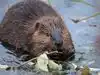
Beavers in Switzerland built dams in 16 streams that were disturbed by humans. Their hard work slowed down water and helped restore aquatic wildlife
Beavers are transforming human-altered streams across Switzerland by building dams that create new habitats for aquatic wildlife. A study of 16 streams found that their activity boosted biodiversity, benefiting species such as amphibians, dragonflies, aquatic plants and plankton. However, the gains varied depending on land use and local conditions, highlighting how beavers could help restore damaged waterways beyond natural wilderness areas.
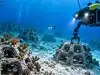
Apple Fellow Phil Schiller and his wife donate $25 million to help protect coral reefs across the world; How their gift will fund new research
Phil Schiller and Kim Gassett-Schiller announced a $25 million donation to the Woods Hole Oceanographic Institution. This funding aims to establish the Schiller Centre for Reef Solutions, which focuses on protecting coral reefs. Researchers will investigate reef health and test practical interventions for better conservation results. The donation addresses the urgent environmental pressures facing coral ecosystems today.
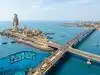
Bet Dwarka Corridor: Underwater darshan, 108-foot Krishna statue, how Gujarat plans to transform Krishna's land
Gujarat's proposed Bet Dwarka corridor aims to improve pilgrimage facilities and tourism infrastructure around the island associated with Lord Krishna. The plan includes a heritage street, a proposed 108-foot Krishna statue and underwater viewing experiences linked to Dwarka's submerged past. Building on the Sudarshan Setu connection, the project seeks to combine religious tourism, heritage development and marine ecotourism.

Mizoram targets 5–7% tourism share in GSDP by 2047, opens new investment pathways
Mizoram plans to enhance tourism's contribution to its economy by leveraging cultural and natural assets. The government is executing tourism infrastructure projects worth over Rs 681.16 crore to support this initiative. Targeting to welcome 10 lakh visitors by December 31, local benefits are prioritized alongside visitor numbers. Various tourism events are scheduled to attract a diverse range of tourists throughout the year.

A scientist collected snails in 1920; A century later, their guts revealed a hidden world
Scientists analysed preserved Rocky Mountain snails collected between 1920 and 2018 and recovered evidence of the microbes that once lived in their guts. The study showed how century-old museum specimens can help researchers investigate historical ecosystems. A later search for snails in parts of Boulder County where older specimens were collected also raised questions about changes in their habitat.
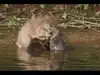
Could beavers help slow flash floods? A reintroduction project in England shows how their dams can hold back water
Eurasian beavers returned to the UK after centuries. Then came a five-year trial that reshaped their future, along with the English landscape. Dive into the story to find out more.
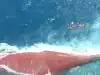
12 years after 32 million smuggled cigarettes were seized on it, ship now hosts barnacles, fish and divers
The MV Shingle, which was seized while carrying illegal cigarettes, has now become an artificial reef. After being cleaned, it was intentionally sunk off Killala Bay, creating a habitat for marine life. Various species, including fish, barnacles, and sponges, are thriving on the wreck. This site attracts around 12,000 visitors annually, enhancing local biodiversity. Experts suggest that while it differs from natural reefs, it still offers significant environmental benefits.
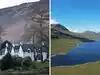
A mystery donor quietly bought a 7,600-hectare Scottish estate for 17.5 million pounds. Then handed it to conservationists
Through a remarkable anonymous donation, Scottish Wildlife Trust has acquired the Inverbroom estate in north-west Scotland. This estate is set to play a vital role in rewilding initiatives and nature conservation efforts. Key restoration projects will aim to revive peatlands, riverwoodland, and temperate rainforests while combating invasive species. Local communities will be involved in promoting sustainable agriculture, enhancing biodiversity, and supporting regional economies.

Bezos Earth Fund’s $26 million FireSat could detect 15-by-15-foot fires anywhere on Earth within 20 mins: Lauren Sánchez Bezos says, ‘I watched friends and family lose everything’
FireSat is a new satellite network designed to detect wildfires early and provide timely data. This constellation, backed by Jeff Bezos, aims to identify fires as small as 15 feet globally with approximately 50 satellites in orbit within 20 minutes anywhere on Earth. Jeff Bezos' wife Lauren Sanchez said FireSat is an investment worth betting on to safeguard communities and preserve nature.

From farm to classroom: Mahatma Gandhi’s vision for basic education and future of agricultural learning
The objective is not merely to prepare agriculture graduates as job seekers, but to equip them with the skills to solve problems, innovate and create employment and entrepreneurial opportunities.

Indian agriculture enters new phase as diets, incomes and climate reshape farming: Report
The first phase, from roughly 1967 to 1995, was dominated by the need to achieve food security, says the paper.

Ground Control allocated £100,000 every year to environmental projects. Its Wildfell Initiative expanded into a 116-hectare woodland and habitat restoration site
Ground Control is launching an extensive woodland restoration initiative called Wildfell in Essex. Covering 116 hectares, this ambitious project focuses on planting new forests and improving current habitats. With the aim of enhancing biodiversity and sequestering carbon, multiple funding avenues are being explored. Furthermore, effective wildlife management practices will help the project thrive amidst various challenges, while also serving as a hub for environmental education and community involvement.
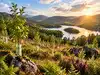
In 2024, Arup invested £1 million in a UK wildland project. Its funding supported restoration across 71.24 hectares and secured 10,000 tonnes of carbon removal credits
In 2024, Arup invested £1 million in Nattergal’s Boothby Wildland project in Lincolnshire, supporting restoration activity across 71.24 hectares and securing 10,000 tonnes of future carbon removal credits over 50 years. The project forms part of an approach focused on using upfront private-sector finance to support nature restoration while recognizing benefits beyond carbon removal. Boothby Wildland is a 617-hectare former degraded arable farm where Nattergal has gradually moved away from arable farming. The project aims to improve biodiversity, ecosystem services and community engagement. Its wider benefits include flood mitigation, improved water quality, pollination and evidence about nature restoration outcomes.
In 2019, AXA launched a $175 million climate and biodiversity fund. Within a year, $41.5 million had been allocated to projects targeting measurable environmental outcomes
In July 2019, AXA Group launched a $175 million private equity vehicle with a mandate that traditional financiers usually leave to non-profit foundations. The fund set out to test whether commercial capital could generate market-rate returns while restoring ecosystems, managing water basins, and protecting threatened species. Structured as a 12-year private equity pool, the fund marked a deliberate departure from standard corporate philanthropy by treating natural capital as a core financial asset rather than an operational expense.

Lauren Sanchez and Amazon's Jeff Bezos are pouring $25 million into a massive Pacific Ocean conservation project covering an area larger than Alaska
Lauren Sanchez is backing a new Bezos Earth Fund ocean conservation push as Jeff Bezos' philanthropic organization commits more than $25 million to protect 625,000 square miles of Pacific waters across five nations, while supporting new marine protected areas under the UN High Seas Treaty. In July, Sanchez shared photos from a snorkeling and scuba-diving trip in Fiji, where she saw reefs surrounded by fish, sea turtles and reef sharks.
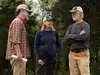
Two Virginia retirees are turning their farms into wildlife corridors. Transformed nearly 2,500 acres are now protected
In Virginia's Shenandoah Valley, retired farmers are revolutionising private lands into essential wildlife corridors that reconnect isolated habitats. By embracing conservation easements and nurturing native plants, these landowners, bolstered by Smithsonian research, reveal that thriving farms can indeed live in harmony with nature. Their commitment exemplifies the impact of personal initiatives and community collaboration in fostering a comprehensive conservation ecosystem.
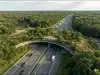
The Netherlands used 50 ecoduct bridges to solve habitat isolation across a 400km highway network; the result transformed divided forests into contiguous wildlife zones
The Netherlands used 50 ecoduct bridges to solve habitat isolation across a 400km highway network by connecting nature areas divided by roads, railways and canals. More than 600 wildlife crossings, including over 50 ecoducts, now help animals move between habitats. The crossings reduce roadkill and support genetic exchange. The Woeste Hoeve ecoduct is one example of how infrastructure can connect forests and nature reserves while allowing transport routes to continue operating.
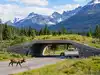
Banff used 6 vegetated overpasses to curb highway wildlife collisions along 82km of road; the result transformed fragmented wilderness into connected animal corridors
Banff used 6 vegetated overpasses to curb highway wildlife collisions along 82km of road. The crossing system includes six overpasses, 38 underpasses and fencing along 82 km of highway. Research found an 80 per cent reduction in wildlife collisions. More than 200,000 crossings by 11 mammal species have been recorded. The project has also influenced wildlife crossing plans in countries including the US, Mongolia, China and Argentina.

Who is Howard Buffett? The farmer, sheriff and middle-son taking the Berkshire Hathaway chair
Howard Buffett now chairs Berkshire Hathaway, succeeding his father Warren Buffett. He will guard the company's culture and values, while Abel runs operations. Howard's diverse career includes farming, law enforcement, and photography. His foundation focuses on food security and humanitarian crises globally. This marks a new chapter for the family's legacy and philanthropy.

India enters top 30 most transparent real estate markets, ranks 26th globally: JLL GRETI 2026
India has climbed five spots to 26th globally in JLL’s 2026 Global Real Estate Transparency Index, entering the top 30 most transparent markets. The improvement was driven by regulatory reforms, REIT expansion, stronger transaction transparency and sustainability disclosures. JLL said greater transparency could help attract more institutional capital into Indian real estate.
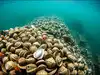
New York has already restored 200 million oysters. Now it wants 1 billion back in its harbor
New York Harbor is the focal point of an extraordinary ecological restoration project known as the Billion Oyster Project. The aim is to transplant one billion oysters by 2030, utilizing millions of recycled oyster shells to rebuild critical marine habitats. Oysters not only purify water but also foster biodiversity, thus the project is pivotal for re-establishing a thriving oyster ecosystem.
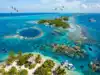
In 2009, Belize’s Barrier Reef System was listed as endangered by UNESCO. 9 years later, oil drilling limits and protected fishing zones helped reverse its decline
Belize's Barrier Reef Reserve System was removed from UNESCO's danger list in 2018. This followed the country's implementation of crucial conservation measures and stronger mangrove protection. A permanent moratorium on oil exploration across Belize's entire maritime zone was a key step. While removed from the danger list, ongoing management remains essential for the reef's protection.
Load More

