
UNUSUAL SPACE MISSIONS

S&P 500, Nasdaq edge up from records with Middle East hopes, corporate earnings in focus
Wall Street indices edged higher on Thursday, with the S&P 500 and Nasdaq reaching new highs, buoyed by a ceasefire agreement between Israel and Lebanon. Investors also processed mixed economic data and corporate earnings, with some analysts questioning the market's optimism given the economic indicators. Individual stock performance varied significantly based on company-specific news and earnings reports.

SpaceX IPO mania: Big opportunity or hidden red flags for investors? What to know
SpaceX IPO is drawing massive global attention as reports suggest a possible valuation near $2 trillion in 2026. This could make it the biggest IPO in history. SpaceX revenue is estimated at $15–16 billion, driven by Starlink satellite internet and Falcon 9 rocket launches. Investors are watching SpaceX IPO valuation risk closely. The price-to-sales ratio looks extremely high compared to major tech stocks. Elon Musk leadership adds both excitement and uncertainty. Strong demand exists, but SpaceX IPO risk and bubble concerns remain high in global markets today. Analysts call it high reward but also high volatility opportunity.
It's time for Artemis II to break Apollo 13's distance record. What to know about the moon flyby
Artemis II astronauts are setting a new distance record from Earth, surpassing Apollo 13's maximum range during their lunar flyby. The mission aims to map the moon's far side and will witness a total solar eclipse. Following their close encounter with the moon, the crew will return to Earth for a splashdown on April 10.

Space trouble: Burning smell reported from $23 million toilet on Artemis II mission
Astronauts aboard Artemis II reported a burning smell emanating from the spacecraft's $23 million toilet system, days after it experienced an earlier malfunction. The odor, likened to an old electric heater, has not been definitively identified. Despite the unexplained smell, NASA has cleared the crew to continue using the waste management unit without major concern.
What was that tentacled object floating on the ISS? Viral ISS photo sparks panic before astronaut reveals the truth
A bizarre, tentacled object photographed on the International Space Station by astronaut Don Pettit sparked online alarm, with many mistaking it for an alien egg. Pettit revealed the 'Spudnik-1' is actually a purple potato, part of his off-duty space gardening experiments. He explained potatoes are vital for future long-duration space missions, citing their nutritional efficiency.

First Lady Melania Trump brings a humanoid robot to the White House: Here's what she said on AI education
First Lady Melania Trump hosted a summit on AI education. She was accompanied by a humanoid robot named Figure 03. The event brought together tech leaders and spouses of world leaders. Mrs. Trump urged global collaboration to create new tech opportunities for children. The initiative aims to equip young people with practical skills.
- Go To Page 1

Did Nikola Tesla hear aliens first? Here's all about the century-old ‘Black Knight satellite’ UFO conspiracy theory
A persistent myth of a 13,000-year-old 'Black Knight satellite' of possible alien origin has captivated many. However, scientific explanations point to lost space debris, like a thermal insulation blanket from NASA's STS-88 mission, as the source of these claims.

9 weird items currently floating in space and how they got there
Space is a cosmic junkyard filled with surprising items. From a Tesla Roadster to a lost toolbox, these objects tell tales of human endeavors. A lightsaber prop and Amelia Earhart's watch also float among the stars. These remnants highlight humanity's impact on the final frontier, showcasing both planned missions and accidental discards.
NASA Is Sending a Flying Robot to Another World: Here’s Why Wheels Are No Longer Enough
Robotic rovers have long explored planets. Now, flying robots are set to become the next frontier. The Dragonfly mission to Titan will use an octocopter to explore its lakes and dunes. This aerial approach allows for broader coverage and access to difficult areas. It could change how we search for life beyond Earth.
Interstellar Objects Keep Dropping Into Our Solar System: Why Are We Still Unprepared?
Strange objects from other star systems are visiting our solar system. These interstellar visitors are scientifically valuable but disappear quickly. Scientists are calling for a global response system. This system would include early detection networks and ready spacecraft. Such readiness will allow for detailed study of these rare cosmic travelers. The next visitor may arrive soon.
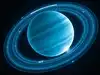
Uranus Spins Sideways, the Stranger Story Is What That Does to the Space Around It
Uranus spins on its side, creating a wild magnetosphere. Unlike Earth's stable bubble, Uranus's magnetic field is lopsided and constantly shifts. This affects how charged particles move and deposit energy in its atmosphere. Scientists are studying this to understand planets far beyond our solar system. The unusual physics around Uranus reveals how magnetic fields shape entire worlds.

The Next Object From Another Star System Could Appear Without Warning
Tiny interstellar visitors from other star systems are increasingly entering our solar system, with the latest, 3I/ATLAS, detected in July 2025. These objects travel at extreme speeds, making them difficult to study. Astronomers are preparing for more frequent encounters by developing pre-positioned spacecraft, like the European Space Agency's Comet Interceptor, to intercept these fleeting cosmic guests before they vanish.
The Galaxy is full of double Suns: So where did all the 'Tatooine' planets go?
Scientists uncover a new reason for fewer planets around twin stars. Einstein's theory of general relativity shows that close binary stars can destabilize planetary orbits over billions of years. This effect can cause planets to collide with their stars or be ejected entirely. New research uses simulations to confirm this phenomenon.
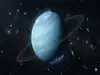
Uranus Is Glowing, And It’s Telling Us Something Important
James Webb Space Telescope has captured stunning images of Uranus's auroras, revealing details of its unusual magnetic environment. These infrared emissions, invisible to the human eye, offer a rare chance to study how the planet's tilted and offset magnetic field interacts with charged particles, providing insights into planetary magnetic shields and atmospheric survival.
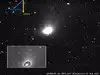
3i Atlas Update: What did latest images from JANUS reveal and does it point to abnormal interstellar activity?
3i Atlas update: It is only the third known interstellar object observed passing through the solar system, offering rare insights into material from another star system.

Is the Moon shrinking? Scientists explore what would happen if Earth’s natural satellite disappeared
Moon shrinking: Earth's Moon is gradually shrinking as its interior cools, a process now believed to be occurring faster than previously thought. Scientists have identified lobate scarps, cliff-like ridges indicating crustal compression, suggesting ongoing geological activity. This research is crucial for understanding lunar tectonics and planning future safe exploration missions.
Earth’s Forgotten Collisions: Where Ancient Impact Craters Have Been Hiding
Beneath Earth's seemingly calm surface lie hidden scars from colossal asteroid impacts. These ancient craters, buried by ice, sediment, and geological shifts, are now being rediscovered through advanced radar and seismic imaging. Scientists are uncovering these subterranean remnants, revealing crucial insights into Earth's violent past and potential future cosmic threats.
Manufacturing in Zero-G: Why Your Next Life-Saving Drug Might Be Made in Space
Space is becoming a new frontier for drug manufacturing. Experiments on the International Space Station reveal that microgravity allows for the growth of larger, more perfect protein crystals. This precision is crucial for designing better medicines, potentially leading to more effective treatments with improved shelf life and predictable absorption for patients.
The Sun’s 11-Year Cycle Is Intensifying: What That Means for Us
Our Sun's activity is ramping up faster than expected in its 11-year cycle, bringing more sunspots and powerful flares. This intensified solar behavior poses risks to satellites, power grids, and communication networks. While not historically extreme, the current surge demands heightened vigilance for our technology-dependent world.
The Search for an Exomoon: Have We Finally Found One?
Astronomers are actively searching for exomoons, the elusive counterparts to our Solar System's moons, with promising candidates like the one around Kepler 1625 b emerging. Despite theoretical expectations and sophisticated detection methods, confirming these distant celestial bodies remains a significant challenge. New telescopes and advanced techniques are expected to bring the first definitive exomoon discovery closer.

A Massive “Gravity Hole” in the Indian Ocean Is Finally Explained
Scientists have finally explained the Indian Ocean Geoid Low, a massive gravity anomaly south of India. New research reveals this 'gravity hole' formed over millions of years due to hot, less dense material rising from deep within Earth's mantle, linked to ancient tectonic plate movements. This discovery enhances our understanding of Earth's dynamic interior.

Did You Know: The U.S. government has an official zombie apocalypse plan — and it’s not a joke!
CONPLAN 8888 was developed between 2009 and 2010 by military planners training on the Joint Operational Planning and Execution System (JOPES), the structured framework the U.S. military uses to prepare for real-world contingencies.
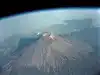
Why Some Volcanoes Erupt Without Warning, And How Satellites Catch It
Volcanoes can erupt suddenly, but satellite technology now detects hidden ground shifts and heat changes. This helps scientists monitor remote volcanoes where ground sensors are scarce. These advanced tools provide vital information, improving preparedness for volcanic hazards worldwide. Early warnings allow for timely advisories and evacuations, saving lives and infrastructure.
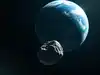
Earth Has a “Second Moon” (Sort Of): The Science of Mini-Moons
Earth's cosmic neighbourhood is more dynamic than imagined, hosting temporary 'mini-moons' captured by gravity and 'quasi-moons' in resonant orbits. These transient visitors, unlike our permanent Moon, offer vital insights into orbital mechanics and near-Earth object populations. Their study refines impact risk assessments and reveals a constantly evolving celestial environment.
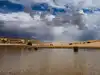
A Deluge for the Sahara: Satellites Tracked Extreme Rain Where It Feels Impossible
In September 2024, intense rainfall, exceeding 200 millimeters in some areas, transformed parts of the Sahara Desert, filling dry basins and briefly turning barren landscapes green. Satellite data revealed the extent of this rare event, caused by an unusually far-south penetrating extratropical cyclone, highlighting the importance of remote sensing in understanding weather in data-sparse regions.

ET Q&A: Decisions taken a decade ago to make Google AI-first were critical: Sundar Pichai
Sundar Pichai also explained how Google was able to go from being perceived as an AI laggard to a frontrunner and why "there hasn't been a more exciting time to be a computer scientist or engineer." Edited excerpts:
Scientists find a solar system that makes no sense: Discover evidence of ‘inside-out’ planet formation
Astronomers found a strange planetary system 116 light-years away. It orbits a red dwarf star called LHS 1903. The planets are arranged in an unexpected order. The outermost planet is rocky, which challenges current planet formation ideas. This discovery could change how we understand planets around common red dwarf stars.
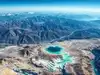
Satellites Expose a Hidden Water Loss Beneath the World’s Tallest Mountains
Vast underground freshwater reserves in the Himalayas and Andes are depleting. Satellites now track these hidden water losses, revealing significant annual declines. This impacts hundreds of millions downstream who rely on these mountain-fed rivers. Climate shifts and human demand are driving this concerning trend. Understanding this invisible shift is crucial for future water security.
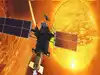
How do solar storms impact Earth’s magnetic field? ISRO’s Aditya-L1 decodes
ISRO's Aditya-L1 solar mission has revealed new details about solar storms. A recent study analyzed a major space weather event from October 2024. The turbulent region of the storm significantly compressed Earth's magnetic field. This exposed satellites in geostationary orbit to harsh conditions. The findings emphasize the need for continuous solar activity monitoring to protect vital space assets.
Load More

