Vast underground freshwater reserves in the Himalayas and Andes are depleting. Satellites now track these hidden water losses, revealing significant annual declines. This impacts hundreds of millions downstream who rely on these mountain-fed rivers. Climate shifts and human demand are driving this concerning trend. Understanding this invisible shift is crucial for future water security.
TIL CreativesVast underground freshwater reserves in the Himalayas and Andes are depleting. Satellites now track these hidden water losses, revealing significant annual declines.
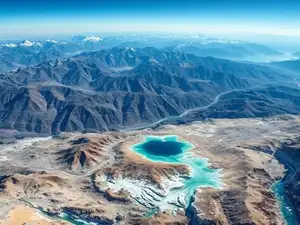
When we look at the Himalayas or the Andes, we see snow, ice and dramatic peaks. What we don’t see is the enormous reserve of freshwater stored quietly underground. This hidden groundwater has long acted as a backup system, feeding rivers and supporting communities when rainfall is low. Now, scientists say the reserve is shrinking, and satellites are why we know.
For years, groundwater changes in remote mountain regions were difficult to measure. There are a few monitoring wells at high altitudes, and the terrain makes fieldwork challenging. That changed with NASA’s GRACE and GRACE-FO satellite missions. These satellites do something unusual: they measure tiny shifts in Earth’s gravity. Because water has weight, any large gain or loss of water slightly alters the planet’s gravitational pull. By tracking these changes over time, scientists can estimate how much total water including groundwater is being stored or lost.
A recent study published in Environmental Research Letters (Wang et al., 2025) used GRACE data combined with artificial intelligence to examine groundwater trends across High Mountain Asia, often referred to as the “Asian Water Tower.” This vast region includes the Himalayas and the Tibetan Plateau and feeds major rivers, including the Ganges, Brahmaputra, the Indus, and the Amu Darya.
The findings are concerning. Between 2003 and 2020, the region lost around 24.2 billion tones of groundwater every year. Nearly two-thirds of the area studied showed declining groundwater storage.
Why This Matters Beyond the Mountains
Live Events
The rivers that begin in High Mountain Asia supply water to hundreds of millions of people downstream. Groundwater stored in mountain systems plays a steadying role. During dry periods or weak monsoons, it helps maintain river flow. When snowfall is poor, underground reserves can soften the blow.
If those reserves decline, that buffer weakens.
Many people focus on melting glaciers when thinking about mountain water. Glacier retreat is visible and widely documented. But groundwater loss is less obvious. It does not produce dramatic images, yet it can have equally serious consequences.
Research led by hydrologist Jay Famiglietti and colleagues, published in Nature (Rodell et al., 2009), used GRACE satellite data to show significant groundwater depletion in northern India due to intensive pumping. That work demonstrated how satellite gravity measurements could reveal large-scale water loss. Similar methods are now uncovering changes beneath mountain regions.
TIL Creatives
The rivers that begin in High Mountain Asia supply water to hundreds of millions of people downstream. Groundwater stored in mountain systems plays a steadying role.
Climate Stress and Human Demand Working Together
Scientists say a combination of climate shifts and human activity likely drives the decline. Rising temperatures affect snowfall and melt patterns. Changing rainfall can reduce the amount of water that seeps underground to recharge aquifers.
At the same time, downstream agriculture and growing populations increase water demand. Heavy pumping in river basins can alter groundwater dynamics across connected systems.
A 2025 study in Environmental Science and Pollution Research found that groundwater depletion in northern India was strongly influenced by both land-use change and precipitation patterns. The message is consistent: climate variability and water extraction are closely linked.
Globally, groundwater loss is not limited to mountain regions. A 2023 study in Nature Communications mapped land subsidence caused by groundwater extraction and found permanent reductions in aquifer storage capacity in agricultural and urban areas worldwide.
An Invisible Shift With Real Consequences
Groundwater supplies drinking water to billions of people and supports farming, industry and ecosystems. When levels fall, wells may need to be drilled deeper, pumping costs rise, and water security becomes less certain.
In mountain-fed river systems, the impact may unfold gradually. Seasonal flows could become more unpredictable. Dry spells may feel longer. Planning for irrigation, cities and hydropower becomes more complex.
The important difference today is awareness. Satellites now allow scientists to monitor water storage month by month, even in remote terrain. What was once hidden beneath rock and ice can now be tracked from space.
The research is detailed: beneath the world’s highest peaks, a vital freshwater reserve is declining. Understanding this shift is the first step toward managing it — before the consequences move from underground to everyday life.





Subscription

 TIL Creatives
 TIL Creatives
 as a Reliable and Trusted News Source
 Add Now!