Space is a cosmic junkyard filled with surprising items. From a Tesla Roadster to a lost toolbox, these objects tell tales of human endeavors. A lightsaber prop and Amelia Earhart's watch also float among the stars. These remnants highlight humanity's impact on the final frontier, showcasing both planned missions and accidental discards.
Space is filled with thousands of satellites and other objects, from scientific equipment to unexpected human-made artefacts. Here are 9 weird things that are floating in space, each with a strange story behind how it got there.
Tesla roadster
A cherry-red Tesla Roadster was launched into deep space in 2018 as a test payload during a heavy rocket mission. The car continues to orbit the Sun with a mannequin “driver”, becoming one of the most unusual publicity stunts in space exploration.
The testing site in Nevada used during Operation Plumbbob.
Maintenance hole cover (atomic blast)
During nuclear testing in the 1950s, a steel maintenance hole cover was reportedly blasted skyward at extreme speed. Some scientists have speculated that it may have briefly reached space, making it one of the strangest accidental launches.
Live Events
Rocket Lab’s giant mirror
On January 21, 2018, Rocket Lab secretly launched a massive multi-sided reflective sphere into orbit as part of an art experiment. The object was designed to shine brightly and be visible from Earth before eventually burning up.
Luke Skywalker’s lightsaber
A prop lightsaber used in the filming of the Star Wars franchise was flown to the International Space Station as a symbolic tribute to humanity’s fascination with space and science fiction.
Parts of the Wright brothers’ plane
Fragments from the first powered aircraft flown by the Wright brothers were carried to the Moon by astronauts as a tribute to the pioneers of aviation.
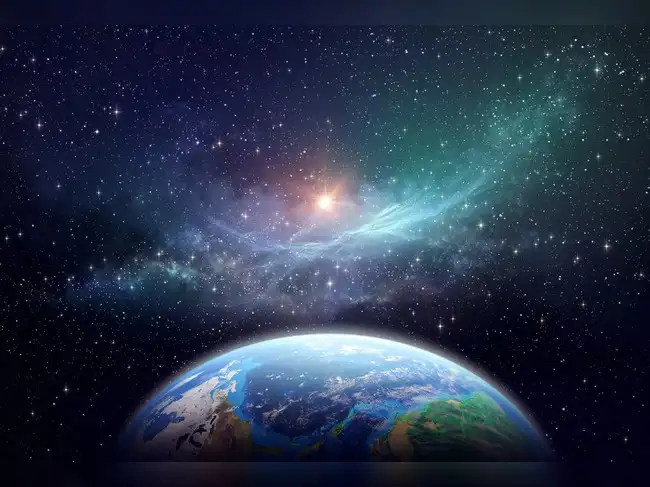
iStock
Image used for representation
Kessler cloud and the threat of space debris
The concept known as Kessler syndrome describes how satellite collisions can create dense clouds of debris that remain in orbit for decades, posing risks to future missions.
Urine crystals from human research
Astronaut waste is carefully recycled, but frozen urine by-products can sometimes escape as microscopic crystals, adding to the collection of tiny particles orbiting Earth.
Voyager golden records
The Voyager spacecraft carry golden phonograph records containing sounds and images of Earth, intended as messages for potential extraterrestrial life beyond our solar system.
AI generated image used for representation
The $100,000 toolbox
During a 2008 spacewalk, astronauts accidentally lost a high-value tool bag, which orbited Earth for months before eventually burning up in the atmosphere.
These unusual objects highlight how human activity, experimentation and even accidents have shaped the growing collection of items beyond Earth, offering a glimpse into the unexpected side of space exploration.





Subscription

 iStock

 as a Reliable and Trusted News Source
 Add Now!










 ETPrime Membership