
POLITICAL NEGOTIATIONS
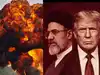
US-Iran War Day 54: Trump hits pause for now as Pakistan continues brokering 'peace', but Hormuz's future remains in limbo
Iran War Day 54 News: As the US-Iran war 2026 entered day 54, US President Trump announced an indefinite extension of the ceasefire to allow more time for diplomacy, following mediation efforts by Pakistan, though it remains unclear if Iran or Israel will agree. Despite the extension, the US continues its naval blockade on Iranian trade routes, a move Tehran has condemned as an act of war, with Iranian-linked Tasnim News Agency dismissing the announcement and warning of potential retaliation. The conflict, which began on February 28, has killed over 5,000 civilians, displaced hundreds of thousands, and triggered a major Strait of Hormuz crisis, disrupting global oil supplies and raising fears of economic fallout.
Iran sets lifting of Hormuz blockade as condition for talks, says 'break blockade and we will negotiate'
Iran has set lifting the US naval blockade as a precondition for talks, citing "ceasefire violations." Despite President Trump's "unilateral" ceasefire extension, Tehran remains sceptical. The Strait of Hormuz remains closed, threatening global energy markets as a second round of negotiations is anticipated in Islamabad.
Invoking Patel, Cabinet Secretary pushes no-politics, no-communalism code
At Civil Services Day in New Delhi, Cabinet Secretary TV Somanathan invoked Sardar Vallabhbhai Patel to stress political neutrality, integrity and fearless advice as core civil service values, calling them enduring principles vital to governance and India’s long-term development vision.
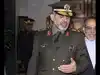
Meet Gen Ahmad Vahidi, the man who now calls the shots in Iran
Iran's internal hardliners are now dictating policy. Maj. Gen. Ahmad Vahidi, a key figure, leads the Islamic Revolutionary Guard Corps. His influence suggests Iran prefers confrontation over peace talks. This shift sidelines moderate voices. Vahidi's background in external operations fuels this aggressive stance. Iran appears ready to endure costs for its ideological position.
Controversial quote of the day by Mao Zedong: “Political power grows out of the barrel of a gun.”
Mao Zedong's famous declaration, "Political power grows out of the barrel of a gun," articulated in 1927, posits that military strength, not legitimacy, establishes and maintains political authority. This assertion emerged from China's tumultuous civil war, emphasizing the necessity of armed struggle for revolution. The quote continues to fuel debates on state power and the role of force in politics.

Iran's leadership survived US-Israeli bombardment. But talks to end the war present a new challenge
Iran's leadership navigates a new challenge after U.S.-Israeli strikes. A council now leads, with Mohammad Bagher Qalibaf as chief negotiator. Talks with the U.S. over nuclear concessions will test internal unity. Disagreements over concessions could expose divisions. The leadership prioritizes survival amidst economic pressure. Qalibaf appears positioned to bridge factional divides.
- Go To Page 1
India bats for greater Global South representation in UNSC
India is advocating for increased representation of Global South nations within the permanent seats of the UN Security Council. Recent discussions also tackled the need for a more equitable international financial framework. India's envoy engaged with UN leaders to deliberate on peacekeeping initiatives and the importance of multilateral approaches.
As US-Iran ceasfire deadline looms, think tank analysis flags deep divisions in Iranian leadership over peace deal
A new assessment by the Institute for the Study of War on Monday (local time) pointed to deepening divisions within Iran's leadership, as diplomatic tensions and military pressure between the United States and Iran continue to mount before the second round of Islamabad Talks.
Iran pulling Hormuz 'lever' to maximum in US standoff
Iran has blocked the Strait of Hormuz, a vital global energy route. This move is Iran's main bargaining chip in potential peace talks with the United States. The blockade has caused worldwide economic problems, including rising energy prices and potential food shortages. The US has responded with its own blockade on Iranian oil shipments.

Is Israel replicating Gaza's 'Yellow Line' in south Lebanon?
In a strategic response to recent tensions, Israel has created a security zone known as the 'Yellow Line' in southern Lebanon, coinciding with a ceasefire agreement with Hezbollah. This initiative mirrors an existing military boundary in Gaza, intensifying Lebanon's already complex political landscape and igniting fears of renewed military confrontations.

Iran may join peace talks after Pakistan works to end US blockade, Iran source says
Iran is reviewing participation in peace talks with the United States in Pakistan. A two-week ceasefire is set to expire soon. Pakistan is mediating efforts to end a US blockade of Iranian ports. Tensions remain high following a US seizure of an Iranian cargo ship. Both sides have issued threats, but diplomatic efforts are underway.
US, Israel attacks on Iran 'failed', no gains possible in talks: Iran's envoy to Russia
Iran's Ambassador to Russia claimed the US and Israel failed in their military objectives against Tehran. He warned that Washington won't succeed through negotiations either. This comes as a two-week ceasefire nears its end, with upcoming Islamabad talks seen as the final chance to avoid full-scale infrastructure warfare.

Mixed geopolitical signals making market moves hard to decode: Seth R Freeman
Global equity markets, led by the US, have recovered strongly, reaching new highs despite ongoing geopolitical tensions. However, volatile oil prices, influenced by conflicting US-Iran relations, are a major concern, impacting the global economy and investor sentiment. This uncertainty makes market navigation difficult, with potential effects on food prices.
Pakistan's military chief Asim Munir takes lead on US-Iran talks in diplomatic blitz
Pakistan's military chief, Field Marshal Asim Munir, is in Tehran carrying US proposals for a second round of US-Iran peace talks. Prime Minister Shehbaz Sharif and his foreign minister are engaging regional allies. This coordinated effort aims to advance the peace process. The talks are expected to take place in Islamabad this week. Security is being heightened in the capital.
Allies fear a rushed US-Iran framework deal could backfire, leaving technical deadlock
US-Iran war news: European allies express concern over a potentially hasty U.S. deal with Iran. They fear an inexperienced American team might secure a superficial agreement on Iran's nuclear program and sanctions relief. This could lead to prolonged, complex follow-up talks. The U.S. White House rejects these criticisms, stating President Trump prioritizes American interests. Talks are ongoing, focusing on uranium stockpiles and sanctions.
The Role of diplomatic dining at international summits
Meals have played a crucial role in diplomatic negotiations, from Lal Bahadur Shastri's final meal to the Tehran Conference where Churchill used dinner parties to foster agreement. These culinary encounters, whether simple or lavish, have historically helped break the ice and facilitate crucial political outcomes.
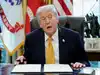
Hormuz standoff: Trump misread his leverage and overplayed his hand
A brief reopening of the Strait of Hormuz offered hope for US-Iran ties. Oil prices fell and markets rallied. However, Iran quickly reversed course, shutting the strait again. This move contradicted US claims about negotiations. Experts suggest Trump may have misjudged his leverage, potentially hindering talks.
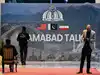
Pakistan only a messenger; US-Iran deal complex despite peace push: Foreign affairs expert Sanjeev Srivastava
India supports US-Iran diplomatic efforts, emphasizing dialogue and de-escalation. Defence expert Sanjeev Srivastava stated Pakistan's role is limited to that of a facilitator and messenger, lacking the credibility to influence negotiations. He noted China and other nations, including India, have encouraged dialogue, creating a positive environment for talks.
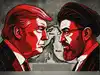
Trump proposes, Iran disposes: Hormuz is now a battlefield of claims
Despite President Trump's optimistic claims of breakthroughs with Iran on the Strait of Hormuz and its nuclear program, Tehran has forcefully rejected key elements, warning of renewed escalation. Both nations speak of progress while preparing for confrontation, creating a fragile and ambiguous moment centered on Hormuz and Iran's enriched uranium.
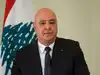
Lebanon president says working on 'permanent agreements' after Israel truce
Lebanese President Joseph Aoun announced a "new phase" of "permanent agreements" following a 10-day ceasefire in the Israel-Hezbollah war. He stated Lebanon is no longer an "arena for anyone's wars," emphasizing the nation's reclaimed decision-making power and commitment to negotiating for its own rights and sovereignty.
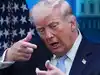
Trump telegraphs end to Iran war as focus turns to economy
President Donald Trump indicates a desire to conclude the US conflict with Iran. Talks have reportedly outlined an agreement, with Trump stating Iran will not close the Strait of Hormuz again. This development comes as midterm elections approach, with domestic economic concerns potentially influencing the President's decisions. Negotiations are ongoing, with a potential deal nearing finalization.
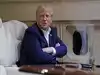
Trump and a camel's dream: Where exactly are US-Iran talks headed?
US President Trump claims a deal with Iran is imminent, with Tehran agreeing to surrender enriched uranium. However, Iran has sarcastically dismissed these assertions. Despite diverging narratives, Pakistan facilitates ongoing talks for a second negotiation round, aiming to de-escalate regional tensions and potentially secure an interim understanding.
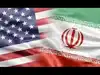
A $100 billion question sits at the heart of US-Iran deal talks
Billions of dollars earned by Iran from oil sales remain frozen in foreign banks due to US sanctions. These funds are now a key issue in high-stakes US-Iran talks. Iran wants access to at least six billion dollars. The US has denied any agreement to unfreeze these assets. This standoff gives both nations leverage in potential deals.
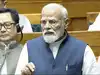
Women’s reservation, Delimitation bills: PM Narendra Modi offers 'blank cheque' to opposition for credit
Narendra Modi described the women’s reservation and delimitation bills as a defining moment for Parliament, saying they will shape India’s political future and strengthen inclusive governance. He defended women’s reservation as a national reform beyond politics, while accusing opposition parties of hypocrisy for backing quotas at the local level but resisting them in Parliament. Modi also highlighted the growing political role of women at the grassroots and warned that those opposing the move could face long-term political consequences.
No dates set for second round of Iran-US talks: Pakistan
Pakistan stated no dates are set for a second round of US-Iran talks, amidst reports of ongoing diplomatic exchanges. Foreign Office Spokesperson Tahir Andrabi emphasized the confidential nature of the negotiations, which involved discussions on the nuclear issue and peace in Lebanon. These efforts align with Pakistan's commitment to advancing peace through dialogue and cooperation.
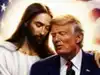
Donald Trump is with Jesus now: US president posts another AI-generated image on Truth Social. Here's why it is trending and best memes
Donald Trump is with Jesus now became a major online topic after the former US president shared AI images showing himself with Jesus Christ. The posts appeared on Truth Social after earlier controversy over a similar image. The debate includes religion, politics, AI images, and reactions from supporters and critics across social media platforms and political groups.
Marco Rubio to join Israel-Lebanon talks in Washington: Report
US Secretary of State Marco Rubio will join talks between Israel and Lebanon in Washington DC. The discussions aim to secure Israel's northern border and support Lebanon's sovereignty. This engagement highlights the ongoing diplomatic efforts despite regional tensions. Israel seeks a lasting peace agreement with Lebanon, contingent on Hezbollah's disarmament. Iran remains in contact with Beirut regarding ceasefire commitments.
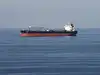
Will US naval blockade on Iranian ports successful in ending already-fragile ceasefire? Global oil, Strait of Hormuz, Donald Trump, Iran tensions explained
Will US naval blockade on Iranian ports successful in ending already-fragile ceasefire? The United States has launched a naval blockade targeting ships linked to Iranian ports after failed talks. Warships are near the Gulf of Oman and the Strait of Hormuz. Iran has issued warnings. Oil prices, shipping, and global trade face pressure. This explainer covers the blockade, ceasefire risks, oil supply impact, diplomacy, and global reactions.
Parliament set for stormy debates on women's quota, delimitation
Parliament is set to debate crucial bills on women's reservation and constituency delimitation. While women's reservation has broad backing, concerns about delimitation and seat increases are emerging. The government aims for implementation before the 2029 elections. Negotiations will be key to navigating these complex legislative steps and ensuring a smooth rollout.
Load More

