
 Agencies
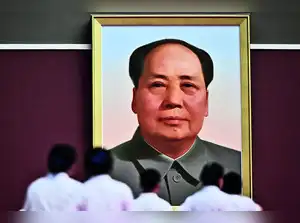
Few political statements in modern history have sparked as much debate as the famous line by Mao Zedong: “Political power grows out of the barrel of a gun.” The quote, first articulated in 1927 during a period of intense upheaval in China, continues to be cited in discussions about governance, revolution, and the use of force in politics. While some view it as a blunt acknowledgment of reality, others see it as a troubling endorsement of violence in the pursuit of power.
From a historical perspective, Mao was emphasizing that revolutions are not won through ideology alone but require the backing of organized force. For him, armed struggle was not just a tactic but a necessity to overthrow existing power structures. Critics, however, argue that this philosophy can justify authoritarian rule and suppress dissent, as it places power in the hands of those willing to use violence.
Mao’s leadership reshaped China through sweeping political and economic campaigns such as the Great Leap Forward and the Cultural Revolution. While he is credited with unifying China and ending decades of internal conflict, his policies also led to widespread famine, economic disruption, and social upheaval, resulting in millions of deaths.
Mao’s ideology, known as Maoism, adapted Marxist-Leninist principles to the Chinese context, focusing on peasant-based revolution rather than industrial workers. His belief in continuous revolution and centralized control left a lasting imprint on China’s political system.
(You can now subscribe to our Economic Times WhatsApp channel)
Meaning of the Quote
At its core, Mao’s statement reflects the idea that true political authority is often established and maintained through military strength rather than moral legitimacy or democratic consensus. In simpler terms, it suggests that those who control armed force ultimately control the state. The quote emerged during a time when China was fractured by civil war, warlordism, and foreign intervention—conditions where political negotiations alone often failed to secure stability or control.From a historical perspective, Mao was emphasizing that revolutions are not won through ideology alone but require the backing of organized force. For him, armed struggle was not just a tactic but a necessity to overthrow existing power structures. Critics, however, argue that this philosophy can justify authoritarian rule and suppress dissent, as it places power in the hands of those willing to use violence.
Who Was Mao Zedong?
Mao Zedong was the founding father of the People’s Republic of China and a central figure in 20th-century global politics. Born in 1893 in Hunan province, Mao rose to prominence as a revolutionary leader and became the chairman of the Chinese Communist Party in 1949 after defeating the Nationalist forces in the Chinese Civil War.Mao’s leadership reshaped China through sweeping political and economic campaigns such as the Great Leap Forward and the Cultural Revolution. While he is credited with unifying China and ending decades of internal conflict, his policies also led to widespread famine, economic disruption, and social upheaval, resulting in millions of deaths.

Mao’s ideology, known as Maoism, adapted Marxist-Leninist principles to the Chinese context, focusing on peasant-based revolution rather than industrial workers. His belief in continuous revolution and centralized control left a lasting imprint on China’s political system.
Lasting Relevance
Even today, Mao’s quote is frequently invoked in debates about state power, military influence, and political legitimacy. Whether interpreted as a historical observation or a controversial doctrine, it underscores a hard truth about the role of force in shaping political outcomes—making it one of the most discussed and polarizing quotes in modern history.Add  as a Reliable and Trusted News Source
as a Reliable and Trusted News Source Add Now!
(You can now subscribe to our Economic Times WhatsApp channel)












 ETPrime Membership