

Listen to this article in summarized format
×
Subscribe to

Unlock AI Briefing and Premium Content
New Year Offer 24 Hours Left
Subscribe NowAlready a member? Sign In
What's Included
- Exclusive Stories
- Daily ePaper Access
- Smart Market Tools
- Curated Investment Ideas
- Ad-lite Experience
Subscription

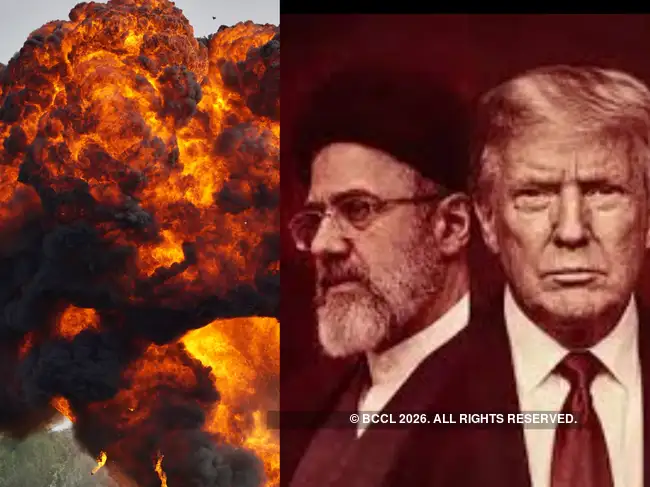
As the US-Iran war 2026 entered day 54, US President Donald Trump announced an indefinite extension of the ceasefire with Iran to allow more time for diplomacy, even as uncertainty looms over whether Tehran or US ally Benjamin Netanyahu will agree to the move. The development comes amid escalating Middle East conflict, fragile Iran peace talks, and ongoing disruption to global energy markets.
With the Iran war 2026, US naval blockade, and Strait of Hormuz tensions continuing, the ceasefire extension has created only a temporary pause in hostilities. Key questions remain over whether meaningful negotiations will resume or if the conflict will escalate further.
Here's what we know so far:
Cargo ship leaving Iran fired upon, stopped in water: maritime agency
"Break blockade we will negotiate": Iran sets lifting Hormuz blockade as precondition for talks
Trump claims Iran 'starving for cash'
US-Iran ceasefire
US naval blockade continued
Read more: Tehran received signs indicating US ready to end naval blockade, says Iraian envoy to UN Iravani
Pakistan mediation and uncertain peace talks
Read more: Strait of Hormuz open or closed? Trump has a warning for Iran if deal with US fails
US-Iran war impact: Civilian deaths, displacement and global oil crisis
Trump’s mixed signals
Nuclear tensions and key sticking points
(You can now subscribe to our Economic Times WhatsApp channel)
With the Iran war 2026, US naval blockade, and Strait of Hormuz tensions continuing, the ceasefire extension has created only a temporary pause in hostilities. Key questions remain over whether meaningful negotiations will resume or if the conflict will escalate further.
Here's what we know so far:
Cargo ship leaving Iran fired upon, stopped in water: maritime agency
- A cargo ship leaving Iran was fired upon Wednesday and was stopped in the water, a British maritime agency reported, as the United States continued its blockade of Iranian ports.
- "A master of an outbound cargo ship reports having been fired upon and is now stopped in the water. Crew are safe and accounted for. There is no reported damage to the vessel," the United Kingdom Maritime Trade Operations centre said.
- It said the incident took place eight nautical miles west of Iran.
"Break blockade we will negotiate": Iran sets lifting Hormuz blockade as precondition for talks
- Iran has established a clear precondition for the resumption of negotiations, with its UN Ambassador, Amir Saeid Iravani, stating that Tehran is prepared to engage in talks only after the United States ends its naval blockade.
- Citing an interview given by Iravani to Rudlaw News Network at the UN HQ, Tasnim News Agency reported that the Iranian envoy emphasised that for any dialogue to proceed, Washington must first halt its "ceasefire violations."
- "The naval blockade of the United States, it is a violation of the ceasefire. And we told them that they should break this blockade. We have received some sign that they are ready to break it. And as soon as they break this blockade, I think that the next round of the negotiation will take place in Istanbul. Listen to them, we have not initiated the military aggression. They initiated the war against us and we are ready. If they want to sit on table and discuss and find a political solution, they will find us ready. If they want to go to the war, in this case also Iran is ready for that," Iravani said.
- The ambassador's remarks suggest that while a channel for communication may exist, the removal of the blockade remains the primary obstacle to a formal diplomatic process.
- The insistence on this precondition underscores the deep-seated mistrust between the two nations as they navigate a fragile ceasefire extension. This tension was further highlighted as the US President announced late on Wednesday that he would prolong the current ceasefire to provide a window for further diplomacy.
Trump claims Iran 'starving for cash'
- Trump alleged Iran is losing $500 million per day, with military and police forces reportedly going unpaid, an explosive claim that comes at a delicate moment in the ongoing Middle East conflict.
- "Iran is collapsing financially! They want the Strait of Hormuz opened immediately. Starving for cash! Losing 500 Million Dollars a day. Military and Police complaining that they are not getting paid. SOS!"

US-Iran ceasefire
- In a statement posted on social media, Trump said the decision followed mediation efforts led by Pakistan, which has been hosting negotiations in Islamabad.
- “We have agreed to hold our attack on the Country of Iran until such time as their leaders and representatives can come up with a unified proposal… and discussions are concluded, one way or the other,” Trump said.
US naval blockade continued
- Despite extending the Iran ceasefire extension 2026, Trump confirmed that the US naval blockade on Iran would remain in place, targeting Iranian trade and oil shipments, a move Tehran considers an act of war.
- The dual approach of diplomacy and pressure underscores the ongoing US-Iran tensions, with Washington maintaining strategic leverage while signalling openness to negotiations.
- However, early reactions from Tehran suggest scepticism. Iran-affiliated Tasnim News Agency reported that Iran had not requested any ceasefire extension and reiterated threats to break the blockade if necessary.
- Advisers to Iranian leadership also dismissed Trump’s announcement as lacking credibility.
Read more: Tehran received signs indicating US ready to end naval blockade, says Iraian envoy to UN Iravani
Pakistan mediation and uncertain peace talks
- Pakistan’s leadership continues to play a key role in facilitating US-Iran peace talks in Islamabad, aiming to end a conflict that has killed thousands and destabilised the global economy.
- However, the next round of talks remains uncertain. US Vice President JD Vance has delayed his planned visit to Islamabad, signalling potential diplomatic hurdles.
- Before the announcement, Iranian officials indicated willingness to negotiate only if the US abandons its “pressure and threats” approach, rejecting any deal perceived as forced surrender.
Read more: Strait of Hormuz open or closed? Trump has a warning for Iran if deal with US fails
US-Iran war impact: Civilian deaths, displacement and global oil crisis
- The conflict, which began on February 28 with US and Israeli airstrikes on Iran, has expanded across the region, including Lebanon, where Hezbollah joined the fighting.
- According to estimates, more than 5,000 civilians have been killed, with hundreds of thousands displaced, particularly in Iran and Lebanon. The war has also triggered a major Strait of Hormuz crisis, disrupting one of the world’s most vital oil routes between Iran and Oman.
- The near closure of the Strait has intensified global oil price volatility, raised fears of recession, and highlighted risks to global energy security.
Trump’s mixed signals
- Trump’s rhetoric throughout the conflict has fluctuated sharply between diplomacy and escalation. While extending the ceasefire, he has also issued strong warnings about possible military action.
- In a recent statement, he doubled down on maintaining pressure: “Lifting the blockade would undermine any chance of a deal… unless we blow up the rest of their Country, their leaders included.”
- Earlier, Trump had threatened strikes on Iranian infrastructure, including power plants and bridges, comments criticised by António Guterres, who warned that targeting civilian infrastructure violates international humanitarian law.
Nuclear tensions and key sticking points
- A central issue in the stalled negotiations remains Iran’s nuclear programme.
- The US has pushed for restrictions on Iran’s stockpile of highly enriched uranium, aiming to prevent potential weaponisation.
- Iran, however, maintains that its programme is for peaceful purposes and asserts its rights under international agreements.
Add  as a Reliable and Trusted News Source
as a Reliable and Trusted News Source Add Now!
(You can now subscribe to our Economic Times WhatsApp channel)
Read More News on
us iran war 2026 latest newstrump iran ceasefire extensionstrait of hormuz crisis oil disruptionus naval blockade iran shippingiran us tensions middle east conflictpakistan mediation iran peace talks islamabadiran nuclear deal negotiations 2026global oil prices middle east war impactus israel iran conflict updatesiran response us blockade threats
Read More News on
us iran war 2026 latest newstrump iran ceasefire extensionstrait of hormuz crisis oil disruptionus naval blockade iran shippingiran us tensions middle east conflictpakistan mediation iran peace talks islamabadiran nuclear deal negotiations 2026global oil prices middle east war impactus israel iran conflict updatesiran response us blockade threats











 ETPrime Membership