
STRUCTURAL EXCESS CAPACITY

How Donald Trump's proposed fresh tariff salvo for India compare with rival nations
The US has proposed a 25% tariff on Indian imports to address excess industrial capacity issues. This rate could decrease to 17% if a trade deal is reached. India's trade ministry is reviewing the US's trade practices allegations while defending its own situation. Trade talks have been prolonged due to various complications, including tariff laws and military incidents.
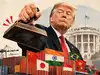
India, China and others aren't taking Trump's latest tariff salvo lying down
Trump Tariff News: The Trump administration has proposed new tariffs ranging from 15% to 35% on imports from 14 countries. Affected nations, including India, China, and Japan, have criticized these proposals and rejected the allegations. India aims to resolve concerns through ongoing trade negotiations, while China urges the US to maintain the trade truce. Japan and Singapore also expressed disappointment and requested reviews of the proposed tariffs.
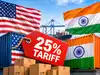
US tariffs may hurt India less than feared as key export sectors remain exempt: Reports
Proposed US tariffs may not significantly impact Indian exporters due to exemptions for major sectors. Although duties could reach 25 percent, key industries like pharmaceuticals remain unaffected. Exporters are expected to increase shipments prior to tariff implementation, which is unlikely before January 2027. Emkay Research indicates that geographical diversification could help mitigate losses in certain sectors.

Rupee falls 20 paise to 92.40 against US dollar in early trade
The rupee fell 20 paise to 92.40 against the US dollar in early trade. Higher crude oil prices and proposed tariffs by the US administration increased dollar demand. Foreign fund inflows supported the rupee but it faced pressure from rising crude prices. The US proposed 25 percent tariffs on imports from India, which raised inflation concerns. India rejected these allegations and expressed commitment to finalize a bilateral trade deal.
Trump's tariff war gets a second act, with India, China and Europe in the firing line
The Trump administration has announced proposed tariffs on imports from 14 countries, including China and India. These tariffs aim to tackle excess industrial capacity perceived to harm American manufacturers and trade. Proposed rates range from 15% to 35% and will affect a significant portion of US imports. The administration will hold public hearings for feedback before finalizing the measures.

Dollar steady as sliding yields temper safe-haven bid
After dipping to a one-week low, the US dollar has stabilized, influenced by the recent drop in Treasury yields. The upcoming economic indicators hint at potential interest rate increases by the Federal Reserve in December. Meanwhile, the yen has seen a slight uptick against the dollar, while the euro holds steady as traders await accounts from the ECB meeting.
- Go To Page 1

US to cap India tariff at 17% if trade deal is reached, USTR clarifies
The United States plans to reduce tariffs on Indian imports to 17% if a trade agreement is established. Without a deal, tariffs will increase to 25%, raising concerns for Indian exporters. The US Trade Representative highlighted various Indian policies as unreasonable, affecting trade between the nations. India is actively reviewing the tariff notice while emphasizing the importance of negotiations. Both countries remain committed to concluding the bilateral trade agreement promptly.

PLI, Make in India under US scanner as Washington proposes 25% tariffs on Indian goods
The US has proposed additional tariffs of up to 25% on Indian goods following a Section 301 investigation into alleged structural excess manufacturing capacity, making India the second-most heavily targeted economy among 14. The rate could fall to 17% if New Delhi reaches a reciprocal trade agreement with Washington. India has rejected the excess-capacity allegations.

Nasdaq, S&P 500 pare some losses on bargain buys; US markets shut for Thanksgiving
On Wednesday, US stocks saw a decline as both the S&P 500 and Nasdaq ended the day lower, following a tech-driven selloff. In contrast, the Dow Jones managed a gain of 155.20 points. Investor concerns surrounding AI valuations and new tariffs added to market anxiety, with trading activity remaining below the usual levels. Amid rising inflation and economic growth forecasts, expectations for Federal Reserve rate hikes grew.

US accuses India of creating manufacturing overcapacity through PLI, Make in India schemes
Concerns have emerged from the US about India’s industrial approaches, especially those facilitating manufacturing growth and export enhancement. Initiatives like Make in India, coupled with financial policies that uphold low interest rates, are under scrutiny. The US Trade Representative details factors tied to excess capacity in Indian manufacturing, pointing to issues in specific industries like steel and solar energy, which pose notable challenges for US companies and employees.

India rejects US excess capacity charge, says no sector has overproduction as it faces tariffs of up to 25%
India has rejected Washington's allegation of structural excess manufacturing capacity, maintaining that no sector in the country suffers from overcapacity. The response comes after the US proposed additional tariffs of up to 25% on Indian goods under a Section 301 investigation, with the rate potentially falling to 17% under a trade agreement.

GIFT Nifty futures fall 0.53% after US tariff proposals on India; Wall Street slides, Nasdaq drops 4%
GIFT Nifty fell 138.50 points amid fresh US tariff proposals targeting India and 13 other economies. The proposed duties of up to 25% on Indian goods triggered caution despite a strong domestic market rally, while Wall Street slumped.

Trump's 17% tariff offer calculated bait to extract trade concessions from India: GTRI
In a strategic maneuver, the Trump administration has suggested imposing tariffs on Indian exports to leverage trade negotiations with India. These tariffs are projected to be as high as 25% in the absence of an agreement and 17% if one is achieved. The Global Trade Research Initiative advises caution, warning against making unilateral concessions for tariff adjustments.

PM Modi's grouse with India Inc explained: Why is it sitting on windfall?
Prime Minister Narendra Modi addressed corporate India at FICCI’s convention, urging better response to government initiatives. He criticized industry for insufficient investment, despite tax cuts intended to stimulate growth. Modi emphasized the need for companies to enhance production and hire staff following these concessions. The speech highlighted that lower corporate taxes have not automatically translated into increased salaries or jobs.

Gold-loan NBFCs seek lower capital requirements and risk weights, call for level playing field with banks
Gold-loan NBFCs are seeking a review of RBI capital requirements, including the 12% Tier-I capital mandate compared with 10% for other lending businesses, and the 100% risk weight assigned to gold-loan exposures.

AI unboxes ecommerce: From predicting trends early to decoding tricky addresses
E-commerce giants in India are harnessing the power of artificial intelligence to revolutionize logistics and more accurately forecast consumer preferences. AI tools play a crucial role in inventory management, route optimization, and overcoming geographic challenges. Companies like Meesho and Flipkart deploy AI for trend forecasting and inventory strategies, ensuring effective distribution across various regions.

Tata Motors' animal instincts: Can British beast JLR roar again?
Tata Motors is experiencing significant investor anxiety regarding Jaguar Land Rover's declining financial health and operational challenges. The luxury carmaker has reduced its EBIT margin guidance and anticipates substantial cash outflows in the coming fiscal year. JLR's struggles are compounded by intense competition, particularly in the Chinese market, which has seen a notable drop in demand.

ET Prime Special Series: Multibagger or IBC – Part 84: Can rising demand for decorative features drive this auto ancillary's growth?
A car can change its engine and still look almost the same. It can also keep the same engine and look so different that buyers happily pay more for it. That is the peculiar corner of the automobile industry this story explores. For one listed supplier, the shift to EVs may be less threatening than it sounds. The bigger question is whether changing consumer preferences can help it build a more valuable business.

The man in the leather jacket is gone, but new risk haunts AI firms
Jensen Huang abruptly resigned as Nvidia CEO after 33 years following reports of extramarital affairs, including one with a suspected Chinese intelligence asset. CFO Colette Kress is interim CEO. Huang’s exit exposes severe "key person risk" and geopolitical vulnerabilities across the AI industry, highlighting the dangers of concentrating sensitive technological knowledge, political influence, and leadership in single founders.

80% of demand for tokenised assets come from emerging markets, says Binance’s SB Seker
Tokenised assets are finding their strongest foothold in emerging markets, where high entry costs and limited access have long kept global investment products out of reach for ordinary investors. About 80% of demand for tokenised US equities and other instruments comes from emerging markets, according to SB Seker, head of Asia Pacific at Binance.

Why cheap stocks offer more safety than strong inflows, says Sundaram AMC MD
Two years ago, seasoned asset manager Anand Radhakrishnan moved from a long, successful stint as Chief Investment Officer (CIO) at Franklin Templeton India to take over as Managing Director (MD) at Sundaram Asset Management Company. In this conversation with Sanket Dhanorkar, he shares his views on the market correction, shift in interest rate cycle, valuations and money flows, and more.

PSBs, pharma and defence: HDFC Securities CEO names Samvat 2083’s dark horses
HDFC Securities MD and CEO Dhiraj Relli identifies public sector banks, pharmaceuticals and defence as potential outperformers in Samvat 2083. He favours largecaps for valuation comfort, highlights selective stock opportunities and urges investors to prioritise earnings visibility and disciplined asset allocation.

How to invest this Diwali: ICICI Prudential AMC’s Chockalingam Narayanan shares his Samvat 2083 playbook
As investors prepare for Samvat 2083, the focus is shifting towards companies with strong earnings and cash flows. ICICI Prudential AMC suggests that the market is valuing current earnings more than distant growth predictions. The recovery in IT stocks may signal changing technology spending trends, but caution is advised. Opportunities in India's manufacturing and investment landscape could arise from supply-chain diversification and new trade agreements.

Aquarius Weekly Horoscope, November 9 - November 15, 2026: Mars Enters Your Partnership House—Will Relationships Face a Test?
Aquarius Weekly Horoscope, November 9–15, 2026: Mars enters Leo on November 12, activating your Seventh House of marriage, partnerships and business collaborations. Mercury turns direct in Libra on November 13, while Venus ends its retrograde phase on November 14. These planetary movements may bring important discussions and decisions involving relationships, professional partnerships and shared finances. However, with Mars joining Jupiter and Ketu in your Seventh House, patience and clear communication will be essential. Read your weekly predictions for career, money, love, health and education.
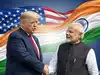
American midterm results will not have an impact on India-US interim trade deal: Sources
The Democrats' sweeping victory in the US midterm elections is unlikely to affect the India-US interim trade agreement, as the pact does not require formal Congressional ratification, sources said. However, ongoing Section 301 investigations into forced labour and excess industrial capacity could influence Washington's tariff structure and the finalisation of the agreement.

India's natural diamond industry eyes revenue stabilisation at $15 billion, not recovery
An analysis indicates India's natural diamond industry's revenues are projected to stabilize rather than rebound. Domestic demand is expected to cushion export weaknesses, particularly from the US and China. Lab-grown diamonds are reshaping the entry-level segment, affecting market dynamics and pricing. While profitability faces pressure, supply discipline is helping maintain stability in credit profiles. Overall, improved inventory and consumption trends could support a more robust industry outlook.

15+ features of India's first Bullet Train: Not just 280 kmph speed, check its interiors, passenger facilities and advanced technology
India's first indigenous bullet train, B28, is designed to run at an operational speed of 249 kmph and a testing speed of 280 kmph. With eight coaches and a passenger capacity of around 557, it will feature Wi-Fi-based infotainment, multilingual information screens, ergonomic seating and modern safety systems. Trial runs on the Mumbai-Ahmedabad corridor are targeted for May-June 2027.

Mumbai-Ahmedabad bullet train can travel at 249 kmph speed carrying up to 1,114 passengers with two 8-coach trains joined to form a 16-coach train; free Wi-Fi for passengers
India's first indigenous bullet train to run between Mumbai and Ahmedabad. Named as B-28 or Bharat 28, the train is nearing a crucial manufacturing milestone at BEML's Bengaluru facility. The eight-coach train will carry 557 passengers, operate at 249 kmph and feature Wi-Fi, accessible toilets and regenerative braking. Test runs are planned for 2027, with commercial operations targeted for August.

State-run general insurers to submit turnaround plans
State-run general insurers must submit board-approved plans to the government for reducing unprofitable business segments. The government aims to evaluate the performance of these companies based on a time-bound roadmap for organic solvency. Policies regarding better pricing, oversight, and structured reinsurance for risky insurance areas are also being emphasized.
Load More

