CHINA TRADE POLICIES
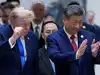
Chips and rare earths keep US-China truce fragile
Nvidia's CEO Jensen Huang returned amid ongoing tensions in the US-China trade and technology rivalry. The US government plans to impose new tariffs, affecting China more significantly than other trade partners. Chinese President Xi Jinping responded with extended suspension of export bans on critical minerals. Both nations are aware that escalating tensions could have severe consequences for their economies.
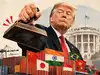
India, China and others aren't taking Trump's latest tariff salvo lying down
Trump Tariff News: The Trump administration has proposed new tariffs ranging from 15% to 35% on imports from 14 countries. Affected nations, including India, China, and Japan, have criticized these proposals and rejected the allegations. India aims to resolve concerns through ongoing trade negotiations, while China urges the US to maintain the trade truce. Japan and Singapore also expressed disappointment and requested reviews of the proposed tariffs.
Trump's new tariffs aim to prise global trade from China's grip
The US has raised tariffs on China while pressuring other trading partners to curb their dependence on Chinese imports and investment, escalating tensions ahead of another Trump-Xi summit next month. While the latest measures stay within the existing trade truce, they increase Washington’s leverage and could fuel wider protectionist measures as countries respond to China’s export-heavy growth model.
Yuan holds near three-week high despite threat of fresh US tariffs
The Chinese yuan remained near a three-week high against the US dollar despite fresh US tariff threats and weaker central bank guidance. Analysts expect its appreciation trend to continue, supported by China's managed exchange-rate system, although escalating trade tensions and policy uncertainty could limit further gains.
Trump's tariff war gets a second act, with India, China and Europe in the firing line
The Trump administration has announced proposed tariffs on imports from 14 countries, including China and India. These tariffs aim to tackle excess industrial capacity perceived to harm American manufacturers and trade. Proposed rates range from 15% to 35% and will affect a significant portion of US imports. The administration will hold public hearings for feedback before finalizing the measures.
US proposes up to 25% tariffs on Indian goods, rate could fall to 17% under trade deal
The US has proposed additional tariffs of up to 25% on Indian goods under a Section 301 investigation into alleged excess industrial capacity, with the rate potentially falling to 17% if New Delhi reaches a trade agreement with Washington. The proposed duties cover 14 economies and remain subject to public consultation.
- Go To Page 1

Investors urged to tread cautiously as options signal more market volatility
Wall Street's sharp rebound has yet to ease concerns about further volatility, with options market indicators signalling persistent investor anxiety. An inverted VIX futures curve, elevated leverage and crowded positions suggest risks remain despite the recovery in US equities.
For Trump, doubling down on tariffs is about power, not popularity
The Trump administration has introduced new tariffs aimed at goods imported from 14 major trading partners. This decision comes after midterm elections showed voter dissatisfaction with the Republican Party, particularly regarding economic issues. Many voters believe that tariffs have worsened inflation and increased household costs. Some Republicans attribute the party's losses to Trump's tariff policies while others support the actions.

Explained | How China got access to Nvidia's AI chips despite rules to stop them
In recent years, the US has implemented extensive restrictions on advanced AI chip exports to China. These measures aim to prevent potential military modernization by China through advanced technology access. Following investigations, Megaspeed, a Singapore cloud company, has been added to a US trade blacklist. New regulations have been introduced to clamp down on chip smuggling activities involving Southeast Asian countries.

PLI, Make in India under US scanner as Washington proposes 25% tariffs on Indian goods
The US has proposed additional tariffs of up to 25% on Indian goods following a Section 301 investigation into alleged structural excess manufacturing capacity, making India the second-most heavily targeted economy among 14. The rate could fall to 17% if New Delhi reaches a reciprocal trade agreement with Washington. India has rejected the excess-capacity allegations.
US accuses India of creating manufacturing overcapacity through PLI, Make in India schemes
Concerns have emerged from the US about India’s industrial approaches, especially those facilitating manufacturing growth and export enhancement. Initiatives like Make in India, coupled with financial policies that uphold low interest rates, are under scrutiny. The US Trade Representative details factors tied to excess capacity in Indian manufacturing, pointing to issues in specific industries like steel and solar energy, which pose notable challenges for US companies and employees.
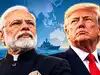
India rejects US excess capacity charge, says no sector has overproduction as it faces tariffs of up to 25%
India has rejected Washington's allegation of structural excess manufacturing capacity, maintaining that no sector in the country suffers from overcapacity. The response comes after the US proposed additional tariffs of up to 25% on Indian goods under a Section 301 investigation, with the rate potentially falling to 17% under a trade agreement.

GIFT Nifty futures fall 0.53% after US tariff proposals on India; Wall Street slides, Nasdaq drops 4%
GIFT Nifty fell 138.50 points amid fresh US tariff proposals targeting India and 13 other economies. The proposed duties of up to 25% on Indian goods triggered caution despite a strong domestic market rally, while Wall Street slumped.

Gold prices hit 14-month low as US Fed rate hike fears deepen. Check details
Gold prices plunged below $3,500 per ounce on November 25, pressured by a stronger US dollar and rising expectations of Federal Reserve rate hikes. Investors await US inflation and GDP data for clues on monetary policy and bullion's outlook.

Jensen Huang is back at Nvidia. But Washington's China chip war is far from over
Nvidia CEO Jensen Huang was reinstated after pressure from US President Donald Trump, raising security concerns. This decision comes as US lawmakers seek stricter controls on China's access to advanced AI chips. Multiple proposed bills in Congress aim to further restrict semiconductor sales to China. Experts predict growing domestic efforts in China to strengthen its own technology independence.

Past experiences make India have second thoughts, key pact with UK gets stalled
Persistent disagreements on taxation, investor rights and the scope of international arbitration have gotten the India-UK investor protection pact stuck in suspended animation. India, whose reluctance stems from past unfavourable legal disputes involving foreign companies and retrospective taxation, is now looking at a new mechanism.

European shares open higher as luxury stocks rally, investors await US inflation data
European shares opened higher, led by luxury and retail stocks, as investors assessed trade risks and awaited US inflation data. Remy Cointreau surged on upbeat targets, while technology stocks dragged amid renewed AI concerns.
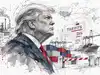
Trump's new tariff tantrum for India, China can run into a legal and political minefield
Trump is preparing fresh tariffs of 15% to 25% on 16 major US trading partners, including India, using Section 301 after the Supreme Court struck down his earlier global duties. But the proposed levies could face legal challenges, congressional scrutiny and political resistance when Democrats take control in January 2027. Trade negotiations may offer India a route to tariff relief.

Yuan hits over three-week high as dollar weakens, trade tensions cap gains
The Chinese yuan touched a more than three-week high against the US dollar, supported by greenback weakness and seasonal demand from exporters converting dollar earnings. However, renewed trade tensions between Washington and Beijing, along with uncertainty over US monetary policy, limited gains. The PBOC's cautious approach also signalled concerns over rapid appreciation.

US set to raise tariffs on India, China and dozens of other economies over industrial subsidies: WSJ
The United States is set to impose new tariffs on various economies, including India and China, in response to industrial subsidies. Government support in these nations is said to promote excess industrial capacity, which harms American manufacturers. Trade agreements with Japan and the EU may influence overall tariff rates for those countries. China is expected to face higher tariffs due to extensive industrial subsidies.
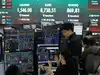
Global Market Today: Asian stocks fall as AI trade doubts resurface
The MSCI Asia Pacific Index slipped 0.6%, losing ground after posting its biggest rally since July on Tuesday. The losses were led by South Korea’s Kospi index, which declined 3.7%.

Budget 2027 may see 1-3% duty cut on 115 manufacturing inputs
Products being considered include those used in manufacturing textiles, electronics, chemicals, API and engineering goods, a senior government official told ET. These face duties ranging between 2.5% and 20%. The step is aimed at ensuring India's trade and industry policies are better aligned to enhance integration with the global supply chain.
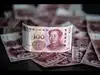
Yuan rebounds from over one-month low as corporate demand offsets dollar strength
China's yuan recovered from a more than one-month low against the US dollar as seasonal corporate demand helped offset pressure from a stronger greenback. Exporters are converting foreign-currency earnings into yuan ahead of year-end requirements and the Lunar New Year. Analysts expect the Chinese currency to gradually appreciate through 2027.
The $32.7 trillion trade club India isn't in, but can't ignore
India's trade with APEC countries reached $628.5 billion, with a notable trade deficit primarily from imports. While India actively pursues trade agreements to enhance its exports, the imbalance remains evident. Despite applying for APEC membership since 1991, India still awaits acceptance as discussions on regional trade continue. With major economies moving towards common trade rules, India's absence may impede future opportunities.
Chinese yuan steady against strong dollar as markets await Xi-Trump talks
China's yuan remained steady against the US dollar as investors awaited talks between Xi Jinping and Donald Trump at the APEC summit in Shenzhen. Markets tracked trade tensions, export restrictions and the Federal Reserve's policy outlook. The PBOC set a weaker daily midpoint, while analysts outlined their outlook for the currency.
View: Trump-Xi-Putin summit exposes Europe's power deficit
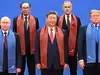
US, China, and Russia will meet at the APEC forum, while Europe will notably not participate in discussions. Europe's economic weight contrasts sharply with its limited geopolitical power regarding ongoing global conflicts. Resolution of the Ukraine conflict would require European involvement due to its geographical proximity and energy ties with Russia.
Duo before trio: Vladimir Putin, Xi Jinping blast western 'protectionism'
It has also unnerved some European and Asian capitals, which fear the world's greatest military powers will disregard their interests. In his opening address, Xi urged support for what he called "free and open trade," trying to portray his country as a stable partner on the global stage, in contrast with the US, which has raised tariffs and adopted a more muscular foreign policy under Trump.
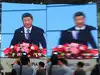
China's Xi calls for tearing down trade, investment barriers at APEC summit
Chinese President Xi Jinping called for removing trade barriers to improve the Asia-Pacific economy during the APEC CEO Summit. He emphasized the importance of free trade and international cooperation, including advancements in artificial intelligence. Additionally, Xi's remarks came ahead of a trilateral summit with leaders from Russia and the United States in Shenzhen. These diplomatic engagements are taking place amid ongoing tensions over trade and technology supply chains.
Load More