India's trade with APEC countries reached $628.5 billion, with a notable trade deficit primarily from imports. While India actively pursues trade agreements to enhance its exports, the imbalance remains evident. Despite applying for APEC membership since 1991, India still awaits acceptance as discussions on regional trade continue. With major economies moving towards common trade rules, India's absence may impede future opportunities.
India's growing trade with the Asia-Pacific and its absence from the regional forum shaping trade rules.
India may not be a member of APEC, but it has $628.5 billion in trade with the 18 economies of the 21-member grouping. Nearly 70% of this trade is imports, showing how much India buys from the region compared with what it sells.
Together, APEC's 21 member economies clocked $32.7 trillion in trade in goods and services in 2025, making it one of the world's largest trading blocs.
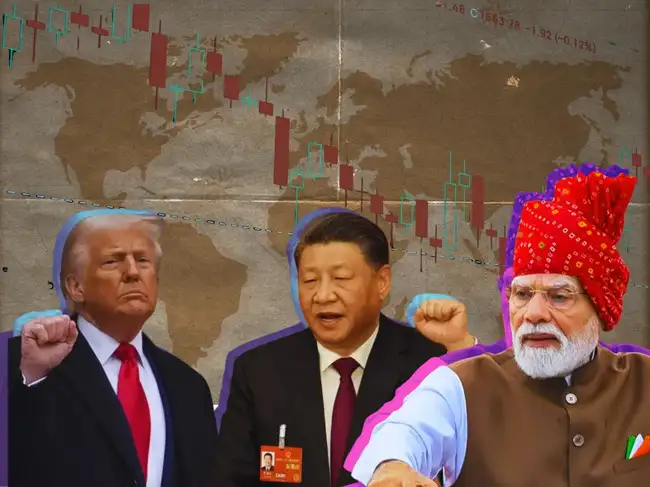
The timing is significant. As Asia-Pacific leaders meet in China, President Xi Jinping is pushing for progress towards a Free Trade Area of the Asia-Pacific (FTAAP), a proposed regional trade arrangement that could bring economies closer through common trade rules and lower barriers.
ET Online
For India, the discussions matter. It has deep trade links with the region but no seat in the forum where its members discuss the future of regional trade. The trade numbers point at India's growing dependence on the region and its challenge of getting greater access for Indian exports despite the fact that India has been actively pursuing trade deals or trade-related agreements.
India's merchandise trade with 18 APEC economies stood at a provisional $628.47 billion in FY26, based on country-wise data compiled earlier. Imports accounted for $437.83 billion, while exports stood at $190.64 billion, leaving a trade deficit of about $247.2 billion.
The calculation excludes three APEC economies.
India's trade with APEC is heavily tilted towards imports
China accounts for the largest share of India's trade among the APEC economies in the provisional calculation, with bilateral merchandise trade of $151.09 billion in FY26.
India exported goods worth $19.47 billion to China and imported $131.62 billion, leaving a deficit of roughly $112.15 billion.
The US was the other major trading partner, with India's exports at $87.31 billion and imports at $53.45 billion, resulting in a surplus of nearly $33.86 billion.
Trade with Russia, Singapore, Japan, South Korea and several Southeast Asian economies also features large import flows.
India's merchandise trade with 18 APEC economies in FY26 (US$ billion)
APEC economy
Exports
Imports
Total trade
China
19.47
131.62
151.09
United States
87.31
53.45
140.76
Russia
4.49
55.36
59.85
Singapore
11.86
24.24
36.10
Hong Kong
8.08
24.32
32.40
Japan
6.04
21.44
27.48
South Korea
6.01
21.35
27.36
Indonesia
4.49
20.29
24.78
Thailand
5.06
16.43
21.49
Australia
7.28
13.81
21.09
Malaysia
6.83
14.17
21.00
Vietnam
6.67
11.61
18.28
Chinese Taipei
1.95
8.88
10.83
Peru
1.15
8.87
10.02
Canada
4.67
3.28
7.95
Mexico
5.73
2.11
7.84
Chile
1.22
5.03
6.25
Philippines
2.33
1.57
3.90
Total
190.64
437.83
628.47
Source: Department of Commerce, Government of India. Figures are provisional and based on the 18 APEC economies included in the calculation.
This pattern shows India's dependence on the region for goods, components, energy and industrial inputs, even as it tries to expand its own exports.
The imbalance is not limited to China. India-ASEAN bilateral trade rose to $128.37 billion in FY26, but the trade deficit also widened to $51.6 billion, according to a recent report by the Research and Information System for Developing Countries (RIS).
ET Online
Trade between the two sides has increased from $86.9 billion in FY20, but India's export share of the ASEAN market has not kept pace with the overall expansion.
India's experience with older trade agreements with Asian economies has also raised questions about whether tariff concessions have translated into export growth.
A September report by ET Online, which cited think tank Global Trade Research Initiative (GTRI) data, found that India's trade deficit had risen 381% with ASEAN, 318% with Japan and 268% with South Korea between 2007-09 and 2023-25. The combined deficit with these three markets averaged around $62 billion a year over the three years to 2025.
Ajay Sahai, director general and CEO of the Federation of Indian Export Organisations (FIEO), had told ET Online that the figures pointed to the need to improve how India uses its trade agreements.
“These numbers merit attention, but the lesson is not that free trade agreements (FTAs) are undesirable. Rather, tariff concessions to our partners have translated into imports much faster than preferential access has translated into Indian exports,” Sahai said.
India is betting on trade deals to widen export markets
India's trade agreement push has gathered pace, with deals aimed at improving access to major markets and diversifying export destinations.
Total exports of goods and services hit a record $863.1 billion in FY26, including merchandise exports of $441.8 billion and services exports of $421.3 billion, according to the Commerce Ministry.
The government has also begun focusing on making better use of existing agreements, seeking to turn tariff concessions into greater export participation, investment and employment.
The challenge is to ensure that Indian companies can compete on costs, quality, standards and supply reliability in markets where access has improved on paper.
But as India looks to deepen its trade ties with the Asia-Pacific, another question comes up: why is it still outside APEC?
India applied to join APEC in 1991. Why is it still waiting?
India's absence from APEC is not for lack of interest. New Delhi first expressed interest in joining the grouping in 1991, citing its geographical location, the size of its economy and its growing trade links with the Asia-Pacific. In the same year, India had adopted the LPG strategy of Liberalisation, Privatisation and Globalisation.
However, APEC members decided in 1997 to impose a moratorium on admitting new members. The freeze was initially set for 10 years and was later extended until 2010. Peru, Russia and Vietnam were the last economies to join, in 1998.
Although the moratorium has ended, APEC has not admitted any new members since then.
The grouping's membership criteria require an applicant to be located in the Asia-Pacific region, have substantial trade links with existing members and follow outward-looking, market-driven economic policies. An applicant must also accept APEC's objectives and participate in its work programmes.
There is another hurdle. Decisions on membership require consensus among all existing members. This means a single member's objection can hold up an application.
India's Commerce Ministry had told Parliament in 2016 that New Delhi was engaging with APEC members to build consensus on reopening membership and pursuing its candidature.
The US had also backed India's interest. The January 2015 US-India Joint Strategic Vision for the Asia-Pacific and Indian Ocean Region welcomed India's interest in joining APEC.
However, ET Online couldn’t gather publicly available evidence of a fresh formal membership campaign by India in recent years.
In the past, it has been reported that India's trade policies have been a point of discussion. Its tariffs, local-content requirements and approach to opening domestic markets have raised questions about how closely its policies align with APEC's emphasis on market-driven trade.
For India, therefore, the hurdle is not just its application. It also needs to build consensus among existing members.
China's fresh FTAAP push puts India's absence in focus
The membership question has become more relevant as China pushes for progress on the Free Trade Area of the Asia-Pacific (FTAAP), a long-standing APEC ambition.
Speaking at the APEC CEO Summit in Shenzhen on November 18, Chinese President Xi Jinping called on member economies to work steadily towards FTAAP, remove trade and investment barriers and strengthen cooperation in digital trade, cross-border e-commerce and supply chains.
He also called for greater cooperation on digital transformation of trade and smart customs to improve economic integration across the region.
China's push is not limited to a speech. On November 16, Li Chenggang, China's international trade representative and vice-commerce minister, said APEC economies were discussing a statement to establish a systematic and practical action framework for the next stage of FTAAP work.
The proposed framework was expected to be considered at the leaders' meeting.
FTAAP was first proposed in 2006. Its aim is to bring greater trade integration across the Asia-Pacific by building on existing regional trade agreements and reducing differences in trade rules.
However, FTAAP is not a functioning free trade agreement, yet. It does not currently offer automatic tariff cuts or preferential market access. The latest discussions are about how to move the long-term proposal forward.
For India, the concern is what happens if its counterparts, neighbours move towards common trade rules, standards and customs procedures without Indian participation.
What is APEC delivering for its members?
APEC's latest work gives a glimpse of what India is missing by staying outside the grouping or simply could miss.
During China's 2026 presidency, APEC economies have achieved nearly 50 economic and trade cooperation outcomes, according to China's Ministry of Commerce. Around 25 of these relate to trade digitalisation, artificial intelligence and cross-border e-commerce.
One initiative is the Asia-Pacific Model E-port Network, which has expanded to cover 26 ports and electronic ports across 13 economies. The network aims to improve regional data connectivity and make trade-related processes easier.
China has also launched the APEC Center of Excellence for Paperless Trade, while discussions on a regional trade digitalisation cooperation framework have moved forward.
APEC is also working to make services trade easier. Trade ministers endorsed a 10-year roadmap in May 2026 to make services markets more open, competitive and resilient. The roadmap covers cross-border data flows, digital services, professional licensing, technical standards and opportunities for businesses to operate across markets.
There is also measurable progress in trade facilitation. A 2026 APEC study based on the United Nations' 2025 Global Survey on Digital and Sustainable Trade Facilitation found that APEC economies had implemented an average of 87% of 31 core trade facilitation measures. The global average was 71%.
The measures cover transparency in trade rules, customs procedures, electronic documentation and coordination between government agencies.
The progress is not uniform. While APEC economies scored 89% on average in paperless trade measures, implementation of cross-border paperless trade measures stood at 71%. This shows that economies still have work to do in making digital trade documents and procedures work smoothly across borders.
For Indian exporters, such changes matter. Faster customs clearance, simpler documentation and better coordination can reduce the time and cost involved in selling goods overseas.
India cannot afford to ignore the Asia-Pacific
APEC's 21 member economies account for around 60% of global GDP and nearly half of global trade. India already has a substantial trading relationship with the grouping, even without being a member.
While its absence does not stop Indian companies from exporting to or importing from APEC markets, it means that India has no formal seat in the forum's discussions on regional trade priorities and future cooperation.
India also remains outside the Regional Comprehensive Economic Partnership (RCEP) and the Comprehensive and Progressive Agreement for Trans-Pacific Partnership (CPTPP), two major regional trade arrangements.
This leaves India relying more on bilateral trade deals even as regional economies deepen their trade integration. For New Delhi, the challenge is to secure better market access without exposing domestic industries to import competition that they may struggle to handle.






Subscription

 ET Online
 ET Online

 as a Reliable and Trusted News Source
 Add Now!











 ETPrime Membership


















