Listen to this article in summarized format
×
Subscribe to

Unlock AI Briefing and Premium Content
New Year Offer 24 Hours Left
Subscribe NowAlready a member? Sign In
What's Included
- Exclusive Stories
- Daily ePaper Access
- Smart Market Tools
- Curated Investment Ideas
- Ad-lite Experience
Subscription

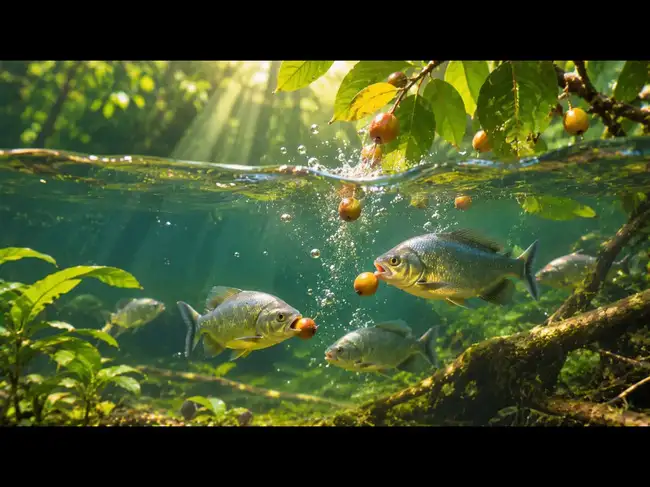
How can fish grow a forest? Scientists found nearly 700,000 seeds hiding inside them (AI Image)
We tend to associate seed dispersal with birds and mammals but certain fish might also play a role in this process. Animals will often consume fruit and then disperse seeds to new locations, promoting new tree growth. Could fish be doing the same but under water?
Although surprising, scientists have recently uncovered evidence that fish do indeed disperse seeds. And they may even be able to achieve greater seed dispersal than many terrestrial animals.
In March 2011 a study found that fish in the Peruvian Amazon which consume fruit can disperse seeds over distances of over 5km. Almost 700,000 undamaged seeds were recovered from just 230 fish.
This indicates that fish may have contributed to and promoted the development of Amazonian forests for many years.
Interestingly, despite being related to the piranha, this fish is predominantly frugivorous.
As part of the yearly cycle, heavy rains cause rivers within the Amazon to swell. Subsequently, wide sections of forest become inundated and stay so for many months.
Fruit then lands straight into the surrounding water. Fish venture into this aquatic section of forest in search of food. Around 90% of the time spent by these fish is within flooded environments during the wet season. However, not all seeds are digested by fish. Many are excreted in a form which is still undamaged.
Almost 700,000 seeds representing 22 tree and shrub species were identified. These can be retained within the fish for a number of days. The seeds are in the fish’s gut, the animal continues to swim around within the flooded forest.
Therefore, a seed from one tree has the potential to be dispersed many kilometres away. The scientists were keen to ascertain the extent of seed dispersal ability for these fish.
By pooling together data from these studies, scientists were able to estimate the likely seed dispersal range. On average, seeds were thought to be dispersed for around 337-552 metres. Seeds could be transported much further.
It was predicted that around 5% of seeds could be dispersed for between 1.7 and 2.1km, again depending on the type of plant. Almost 5.5km was the highest estimated dispersal distance.
Please note that these figures were generated via modelling and were not based on actual tracking of individual seeds.
Animals can assist in seed dispersal. It is thought that gamitana fish can fulfil a similar function to animals within flooded forest environments.
Long-distance seed dispersal may also aid the genetic continuity of plant species.
Distances covered by these fish for seed dispersal match some of the greatest known seed dispersal distances amongst animals, for example those of African hornbills and Asian elephants, according to Cornell University.
Larger fish were shown to be capable of dispersing seeds further, partly due to increased retention times for seeds within their gut. Therefore, if large fish are fished out, the forest could be deprived of some of its most efficient seed dispersers.
Scientists cautioned that overfishing could affect the inter-relationship between fish and Amazonian plant life.
Although the study did not specifically assess the number of trees which could be impacted by fishing, it emphasised a key point: conserving frugivorous fish species can also support the preservation of the Amazon forests which rely on these fish.
Although surprising, scientists have recently uncovered evidence that fish do indeed disperse seeds. And they may even be able to achieve greater seed dispersal than many terrestrial animals.
In March 2011 a study found that fish in the Peruvian Amazon which consume fruit can disperse seeds over distances of over 5km. Almost 700,000 undamaged seeds were recovered from just 230 fish.
This indicates that fish may have contributed to and promoted the development of Amazonian forests for many years.

Why are frugivorous fish significant within the Amazon rainforest?
The specific fish species investigated within this study is known as gamitana (Peru) and tambaqui (Brazil). It has a scientific name of Colossoma macropomum.Interestingly, despite being related to the piranha, this fish is predominantly frugivorous.
As part of the yearly cycle, heavy rains cause rivers within the Amazon to swell. Subsequently, wide sections of forest become inundated and stay so for many months.
Fruit then lands straight into the surrounding water. Fish venture into this aquatic section of forest in search of food. Around 90% of the time spent by these fish is within flooded environments during the wet season. However, not all seeds are digested by fish. Many are excreted in a form which is still undamaged.
How many seeds were found in 230 frugivorous fish?
A team of scientists headed by Jill Anderson (currently associated with Duke University but previously with Cornell University) analysed the gut contents of 230 gamitana fish.Almost 700,000 seeds representing 22 tree and shrub species were identified. These can be retained within the fish for a number of days. The seeds are in the fish’s gut, the animal continues to swim around within the flooded forest.
Therefore, a seed from one tree has the potential to be dispersed many kilometres away. The scientists were keen to ascertain the extent of seed dispersal ability for these fish.
What enables fish to disperse seeds to locations more than 5km away?
Scientists adopted two approaches in order to investigate this. Initially, they analysed captive fish to establish how long seeds were retained in a fish’s gut. Next, radio transmitters were fitted to 24 wild fish in Peru. The fish were then tracked throughout three flood seasons.By pooling together data from these studies, scientists were able to estimate the likely seed dispersal range. On average, seeds were thought to be dispersed for around 337-552 metres. Seeds could be transported much further.
It was predicted that around 5% of seeds could be dispersed for between 1.7 and 2.1km, again depending on the type of plant. Almost 5.5km was the highest estimated dispersal distance.
Please note that these figures were generated via modelling and were not based on actual tracking of individual seeds.
Why is seed dispersal important for the Amazon forest?
Plants require their seeds to be distributed to appropriate locations so that new plants can develop. Should all seeds be deposited underneath the tree from which they originated, there may not be sufficient room or light for the emerging plants.Animals can assist in seed dispersal. It is thought that gamitana fish can fulfil a similar function to animals within flooded forest environments.
Long-distance seed dispersal may also aid the genetic continuity of plant species.
Distances covered by these fish for seed dispersal match some of the greatest known seed dispersal distances amongst animals, for example those of African hornbills and Asian elephants, according to Cornell University.
Can excessive fishing pose a risk for the Amazon rainforest?
Additional worries for scientists were highlighted by the study. Gamitana is a highly valuable fish species in South America. However, in certain regions, numbers of this species have declined by up to 90% as a consequence of intensive fishing. Moreover, larger fish are especially valuable.Larger fish were shown to be capable of dispersing seeds further, partly due to increased retention times for seeds within their gut. Therefore, if large fish are fished out, the forest could be deprived of some of its most efficient seed dispersers.
Scientists cautioned that overfishing could affect the inter-relationship between fish and Amazonian plant life.
Although the study did not specifically assess the number of trees which could be impacted by fishing, it emphasised a key point: conserving frugivorous fish species can also support the preservation of the Amazon forests which rely on these fish.
Add  as a Reliable and Trusted News Source
 Add Now!