
AMAZON RAINFOREST

Lula beats Trump-aligned Bolsonaro in Brazil Presidential election: What happens next for US ties and the Amazon
In a decisive victory, Luiz Inácio Lula da Silva has clinched the presidency of Brazil for the fourth time, signaling a potential shift in the nation’s diplomatic ties with the United States under Donald Trump. Lula's agenda includes combatting Amazon deforestation, a stark departure from Bolsonaro's environmental stance. Meanwhile, Flávio Bolsonaro seeks to uphold his father's political legacy.

Brazil Presidential Election run off: Who is winning Donald Trump's ally Flavio Bolsonaro or Luiz Inacio Lula da Silva whom Barack Obama once called 'world's most popular politician'?
Brazil Presidential run off: Lula, who at 80 is one of the world's oldest heads of state, is Brazil's 35th and 39th president, having served from 2003-2010 and again since 2023. Bolsonaro, 45, aims to return his family name to power while his father serves time for attempting a coup to prevent the end of his 2019-2022 presidency.

Over 30,000 species face critical danger: Amazon's Jeff Bezos backs $500 million wildlife plan, but one key detail is missing
Launched at the UN Biodiversity Conference, the New Species Recovery Alliance has garnered a substantial pledge of $500 million. This collaborative initiative, involving nine organizations including the Bezos Earth Fund, is set to combat species extinctions and facilitate the recovery of endangered species globally. With over 31,000 species facing extinction, urgent conservation measures are more crucial than ever, as the alliance partners with local groups to develop effective recovery strategies.

Giant 'heat storms' are scorching the Earth. This is the story of the biggest one on record
Heat storms have increased dramatically, causing severe global consequences including excess deaths and environmental catastrophes. Recent heat storms have been identified as a new classification, representing larger and more persistent heat events. The intensity of these heat storms has worsened due to climate change and greenhouse gas emissions. Associated weather patterns have significantly disrupted ecosystems and agriculture worldwide.
Swedish-born billionaire once bought 400,000 acres of Amazon rainforest, almost the size of Greater London. Locals worry about green colonialism; around 1000 people lost their jobs
Johan Eliasch generated buzz by securing ownership of 400,000 acres of the Amazon rainforest to combat logging threats. However, his move raised concerns about the fate of roughly 1,000 workers employed in the logging industry. Detractors questioned the appropriateness of foreign ownership in Brazilian lands for conservation ideals. Additionally, Eliasch's partnership in founding Cool Earth reflects the ongoing struggle to balance environmental conservation with the livelihoods of nearby communities.

From $5 painting to $50 million and a trove valued at $1.35 billion: Five lucky people who discovered forgotten artworks worth a fortune
Unexpected places and artworks worth millions of dollars! This story may sound unbelievable to those who have never been fortunate enough to stumble upon a priceless treasure. But here is a list of five fortunate individuals who struck gold when they unexpectedly discovered artworks valued at millions, and sometimes even billions, of dollars.
- Go To Page 1
Swedish billionaire Johan Eliasch bought 4 lakh acres of Amazon rainforest in 2005. What he did next was unusual
Johan Eliasch bought a logging company to save acres of the Amazon rainforest from destruction. Cool Earth, the charity he co-founded, claims that 99% of the rainforest in its conservation partnership areas remains intact. Johan's conservation efforts have helped protect approximately 2.1 million acres of rainforest and 380 million trees.

Brazil election: Lula, Flavio Bolsonaro face off in tight race shaped by Trump factor
Brazilians are preparing to vote in a tight election between President Lula and Flavio Bolsonaro on Sunday. Lula is seeking a fourth term while Bolsonaro aims to take advantage of his father's legacy. Opinion polls indicate neither candidate is expected to achieve a majority in the first round of voting. Key demographics are divided, with Lula favored among low-income voters and Bolsonaro appealing to wealthier groups.

No market, no bank, no internet: Actor Madhavan is fascinated by man who chose to live alone in Amazon rainforest for 38 years
Actor Madhavan recently shared a video featuring Chico, a man who has been living alone in the Amazon rainforest for 38 years. Embracing a self-sufficient lifestyle, Chico grows his own food and collects rainwater for drinking. He also shared insights into his unique life in the Amazon with a visiting Yes Theory team, who interviewed him and documented his remarkable off-grid way of living.
Earth’s 7 of 9 Planetary Boundaries have been breached: Amazon, oceans and climate are among systems under pressure as situations continue to worsen
Earth's natural systems face mounting pressures, with seven of nine planetary boundaries now breached. The Planetary Health Check 2026 highlights ongoing risks from climate change and biodiversity loss. While two boundaries remain within safe limits, recovery signs for the ozone layer are slowing. Scientists emphasize the interconnectedness of ecosystem changes and their impacts on human livelihoods, indicating urgent action is necessary.
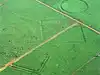
In 2023, a satellite-image model led archaeologists to 13 previously unknown Amazon geoglyphs, including one 444 metres across
In 2023, a groundbreaking AI model trained by researchers unveiled the locations of ancient geoglyphs hidden in the Amazon rainforest. This cutting-edge technology confirmed the presence of previously undiscovered civilizations, revealing complex human settlements that predate European colonization. Historical sites have emerged due to past deforestation, showcasing how human actions can impact archaeological findings. Researchers aim to investigate these sites further while using non-invasive techniques to safeguard the forest ecosystem.

In 2018, researchers used satellite imagery to identify 81 ancient earthwork sites in the Amazon, providing evidence of pre-Columbian settlements
Recent archaeological discoveries in the Amazon rainforest reveal that advanced civilizations flourished in this region long before European contact. Evidence of geometric constructions and the use of terra preta highlights the sophisticated urban planning of these cultures. Furthermore, numerous earthworks hidden beneath the dense foliage challenge the long-held belief that the Amazon was merely an untouched wilderness.

El Niño arrived early. Why its impact was felt from India to the Panama Canal
El Niño's early onset has triggered a cascade of atypical weather events worldwide. India faced not only monsoon challenges but also significant shifts in policy due to insufficient rainfall. Meanwhile, South America grappled with both severe flooding and drought conditions affecting the Amazon. Australia and Southeast Asia saw extended dry periods, increasing the threat of wildfires. Concurrently, global temperature records underscored the reality of a warming planet amid these disruptions.
In 2020, Brazilian musician Alok launched Instituto Alok to back Amazon conservation with 400,000 seedlings. Today, its projects have helped restore 3 million m² of native forest
Brazilian musician Alok is taking his environmental work beyond the stage through Instituto Alok, founded in 2020. The initiative supports Amazon forest restoration while working closely with local communities. In the Marajó region, one project has restored 291.5 hectares, nearly 3 million square metres, and planted more than 245,000 seedlings. Its community-led approach shows how Amazon conservation can also support families and create a more sustainable future.

In 1989, Sting and Trudie Styler backed one rainforest foundation with Chief Raoni. 4 years later, over 12 million acres of Kayapó land gained legal protection in Brazil
The Rainforest Foundation began in 1989, supporting Indigenous Kayapó people in Brazil. This effort secured over 12 million acres of ancestral land for the Kayapó. The organization later expanded its mission to protect rainforests worldwide. It supported local groups in land rights and forest conservation efforts.
In 2008, Bosques Amazonicos SAC began training Ucayali farmers to grow food sustainably. 10 years later, hundreds of jobs were created and forest was regenerated in Peru
Bosques Amazónicos SAC initiated the Campo Verde Project in Peru's Ucayali region. This initiative focused on reforesting degraded lands with native tree species. The project also provided training and employment opportunities to local communities. Nearly two million native trees were planted across over two thousand hectares of land.
Earth is set to cross 1.5°C — does the climate clock stop there? The UN has a plan for what happens if temperatures overshoot the crucial threshold
Global warming exceeding 1.5°C is now likely, according to a United Nations assessment. The focus must shift to limiting temperature overshoot and its duration. Every fraction of a degree above this threshold increases climate risks significantly. Even optimistic scenarios project warming peaks around 1.8°C before potential decline. Reducing emissions and exploring carbon removal remain crucial for managing future warming.
An Amazon rainforest was put through a 20-year drought experiment — the forest changed in a way scientists didn’t expect
Scientists created an artificial drought in the Amazon rainforest for over two decades. Initially resilient, the forest lost significant biomass and large trees over time. The ecosystem then stabilized, but as a less dense and carbon-rich forest. This adaptation occurred after substantial ecological changes and biomass reduction. The experiment shows survival does not always mean full recovery for the forest.
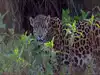
In 2005, conservationists tackled Atlantic Forest loss after more than 80% of its woodland had vanished. 13 years later, jaguars in Upper Paraná rose 160% to 105 animals
In 2005, severe deforestation destroyed over 80 percent of South America’s Atlantic Forest, pushing local jaguars toward extinction. Conservationists across Argentina, Brazil, and Paraguay responded by restoring wildlife corridors, curbing poaching, and working with ranchers. Their joint efforts paid off. Within 13 years, the Upper Paraná jaguar population surged 160 percent to 105 animals, proving that connected habitats can rebuild fragile wild populations.
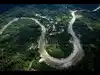
A 2026 study examined 135 bird species over 16 years in Peru’s Amazon and found that satellite measurements of forest conditions predicted bird occurrence better than traditional habitat categories, suggesting remote sensing could improve biodiversity monitoring across vast tropical forests
Recent studies indicate that satellite imagery provides superior insights into the locations of birds in the Amazon rainforest. Traditional methods of categorizing habitats have proven less effective than utilizing precise vegetation data. Field surveys still face challenges in detecting many tropical bird species. By measuring forest conditions from space, researchers can enhance predictions over extensive areas.

A 1.5-pound squirrel monkey named Goliath was launched into space in 1961; 35 seconds later, his Atlas E rocket was destroyed
In an unfortunate chapter of space exploration, a squirrel monkey named Goliath found himself amidst America's fierce space race. His ill-fated journey lasted just 35 seconds before a catastrophic rocket explosion robbed him of his mission objective. Designed to understand primate behavior in zero gravity, Goliath's unrestrained condition ultimately led to the loss of vital data, marking a sorrowful moment in the annals of space history.
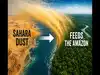
A dried lakebed in Africa's Chad sends 27.7 million tonnes of dust across 5,000 km of Atlantic Ocean each year, carrying phosphorus that helps sustain the Amazon rainforest
The Amazon rainforest has a surprising lifeline. Each year, about 27.7 million tonnes of Sahara dust travel nearly 5,000 kilometres from Chad’s Bodélé Depression across the Atlantic Ocean. The dust carries around 22,000 tonnes of phosphorus, a vital plant nutrient. Amazon soil loses phosphorus through heavy rainfall and flooding. African dust helps replace part of that loss. An ancient lakebed in Africa is quietly helping sustain the world’s largest rainforest.

112 million years ago, a rainforest thrived in what is now Ecuador; amber from the lost Early Cretaceous forest preserved insects, pollen, and a strand of spider web
Scientists discovered ancient amber in Ecuador's Napo Province, dating back 112 million years. This amber contains preserved insects and spider webs from a lost rainforest. The findings offer a rare glimpse into South America's Gondwanan forests during the Cretaceous period. These fossils provide evidence of a warm, swampy environment unlike modern landscapes. The discovery helps explain the rarity of southern amber deposits from that era.
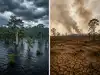
Amazon trees kept a rainfall diary in their rings; it shows wet seasons grew up to 22% wetter while dry seasons lost up to 13.5% of their rain
Researchers have discovered that ancient Amazonian trees provide vital climate information through their annual rings. By examining oxygen isotopes in these rings, scientists can identify changes in water patterns. While the wet season has become even wetter, the dry season is increasingly parched. Furthermore, deforestation aggravates these shifts, making forests more prone to fires and diminishing rainfall, underscoring a critical need for conservation in the Amazon rainforest.

Scientists uncover a lost Amazon civilization hidden beneath the rainforest using lasers, may have been home to 3 million people
Ancient earthworks discovered using LiDAR technology reveal a large Aquiry civilization. These geometric structures suggest extensive human shaping of the Amazonian landscape. Researchers estimate tens of thousands of these sites may still be hidden. The Aquiry civilization likely supported millions of people at its peak. This discovery challenges previous assumptions about the Amazon's pre-Columbian inhabitants.

Brazilian President criticises Leonardo DiCaprio, says actor paid money to set Amazon on fire
Jair Bolsonaro said the actor had funded nonprofit groups that were partly responsible for Amazon fires.

Stop war against nature: Greta Thunberg shares concerns on Amazon rainforest; NASA's pic shocks Alia, Marico boss
Leonardo Dicaprio, Akshay Kumar, and others celebs took to social media to raise awareness.

Paving green paths of the scenic Amazon Rainforest
This year World Environment Day is themed on Fight against the Illegal Trade in Wildlife and the slogan is ‘Go Wild for Life’.
Load More


