
PLANT GENETIC CONTINUITY

How can fish grow a forest? Scientists found nearly 700,000 seeds hiding inside them
Scientists studying fruit-eating fish in the Peruvian Amazon found nearly 700,000 intact seeds inside 230 fish. A 2011 study revealed that gamitana fish, close relatives of piranhas, could carry seeds more than five kilometres across flooded forests.
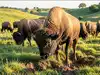
Yellowstone National Park’s bison are doing way more than just grazing across Wyoming. A six-year field study reveals how their movement and habits make grasslands 150% more nutritious
Yellowstone National Park bison have enhanced grassland health and nutrition. Almost 5,000 Yellowstone bison graze extensively. The regenerated grasses in these areas have been found to be 150 per cent more nutritious. Neither plant growth nor carbon stores within the soil are also negatively impacted. Bison migrate around 1,000 miles a year on a 50 mile migratory route.

Catch a bully by its horns: How India can turn the latest round of US visa curbs affecting Indian techies to its advantage
Visa restrictions imposed by the US on Indian IT companies may impact individuals working on temporary visas. Many Indian workers may now have to return to India due to these restrictions. Despite these challenges, returnees present opportunities for India in emerging technologies and industries. Additionally, India's relationship with the US requires strategic actions to maintain balance in trade and diplomacy.
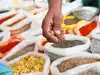
Fading Aroma of Black Cardamom: A $480 million market may bloom while India's 'black gold' wilts
India’s large black cardamom industry is battling declining plantation health, crop diseases and climate change, threatening farmers’ livelihoods in Sikkim. Once the world’s largest producer, India has lost ground to Nepal, which now dominates global production. The Sikkim government is backing scientific research, improved planting material and disease-resistant varieties to revive the state’s valuable black gold crop.
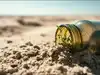
In 1879, a Michigan professor buried bottles of seeds; 142 years later, scientists opened one and found some could still sprout
William James Beal started the experiment. He wanted to understand how long seeds could remain alive in soil without germinating. His work is known as the Beal Seed Experiment. In April 2021, researchers dug up one of the bottles buried in the university campus. They found that some of the seeds inside could still germinate after spending about 142 years underground.
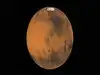
Genetically modified microbe could help make Mars habitable, researchers say
At Pioneer Labs, a biotech startup based in Emeryville, Calif., researchers have engineered a bacterial strain that can grow under simulated Martian conditions. The microorganism, dubbed sPL.001, can degrade toxic compounds in Martian soil analogs and produce bioplastics that could be used in future space settlements.
- Go To Page 1
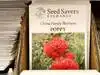
Valeria Dukelow began saving her mother’s red poppy seeds in Pittsburgh in the 1960s; more than 50 years later, gardeners were still growing the same family flowers
Valeria Dukelow cultivated the Chima Family Heirloom poppy, a warm red flower, in Pittsburgh. The plant has been passed down through generations, originating from seeds sent by Sarah Russ Chima's mother in Romania. Gardening organizations, like Seed Savers Exchange, maintain biodiversity by preserving heirloom seeds. The article emphasizes the importance of actively growing diverse crops for genetic diversity.
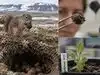
31,800 years ago, a squirrel buried fruits inside a Siberian burrow. Thousands of years later, an Ice Age plant was brought back to life using that ancient tissue
A squirrel’s ancient food stash buried deep beneath Siberian permafrost has given scientists a rare glimpse into the Ice Age. The fruits remained frozen for around 31,800 years before researchers discovered a way to use preserved tissue from them to grow living plants, revealing how long some biological material can survive under extreme conditions.
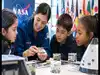
NASA sent seeds into space for nearly 6 years; after they returned, 132,000 experiment kits reached 3.3 million students in 30 countries
In April 1984, NASA launched a satellite carrying 12.5 million tomato seeds into orbit to test how space radiation affects biological life. The mission was originally scheduled to last a single year. However, the tragic loss of the Space Shuttle Challenger grounded the fleet and stranded the payload in space. By the time astronauts finally recovered the satellite in 1990, the seeds had orbited the Earth over 32,000 times.

The Netherlands used 50 ecoduct bridges to solve habitat isolation across a 400km highway network; the result transformed divided forests into contiguous wildlife zones
The Netherlands used 50 ecoduct bridges to solve habitat isolation across a 400km highway network by connecting nature areas divided by roads, railways and canals. More than 600 wildlife crossings, including over 50 ecoducts, now help animals move between habitats. The crossings reduce roadkill and support genetic exchange. The Woeste Hoeve ecoduct is one example of how infrastructure can connect forests and nature reserves while allowing transport routes to continue operating.
In 1826, mosquitoes arrived in Hawaii and pushed native birds toward extinction. Now, scientists are releasing millions of mosquitoes to save them
Hawaii's native birds face extinction due to avian malaria transmitted by mosquitoes. Conservationists are releasing sterile male mosquitoes to reduce disease-carrying populations. This innovative strategy aims to protect honeycreeper species from the deadly infection. The incompatible insect technique prevents mosquito eggs from hatching after mating. This effort seeks to preserve Hawaii's unique birdlife from an ongoing crisis.
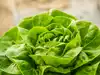
In 1937, a Pennsylvania barber saved lettuce seeds beside his shop register; nearly 90 years later, gardeners can still buy the variety
A Pennsylvania family preserved a unique Bibb lettuce variety for ninety years. This heritage lettuce was originally grown by the Zimmerman family. The seeds were passed down through generations, ensuring its survival. Home gardens act as vital reservoirs for genetic diversity. This practice supports future crop resilience against environmental challenges.

Meet Wayne Fortna, a Pennsylvania teacher who kept one white pumpkin alive for nearly 40 years just for Thanksgiving pie; gardeners can still buy its seeds today
Wayne Fortna cultivated a unique white pumpkin for nearly forty years, ensuring a Thanksgiving pie tradition. After his death, his daughter and volunteer growers continued this legacy. This heirloom variety faced near extinction due to seed mold issues. The Landis Valley Village and Farm Museum's Heirloom Seed Project helped preserve the pumpkin. This effort contributes to the national goal of saving crop genetic diversity.
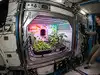
In 2017, a fully automated facility for plant bioscience research was launched to the International Space Station: What NASA studied in space?
In 2017, a fully automated facility for plant bioscience research was launched to the International Space Station. The Advanced Plant Habitat studied plant growth in microgravity and supported experiments lasting up to 135 days. It used more than 180 sensors and systems controlled from Earth. After years of plant research involving radishes, peppers, tomatoes and other studies, the facility is now returning to Earth for museum display.

A 45-year-old mung bean discovery exposes a hidden threat to the world’s doomsday seed banks — frozen crops may not survive as long as scientists once believed
New research suggests some tropical crops lose viability much sooner than older estimates predicted. Mung beans showed strong germination after forty-five years in storage. Pigeon peas and adzuki beans demonstrated weaker long-term survival rates in tests. This discovery highlights the need for more frequent seed testing and regeneration. Global seed banks require active management to ensure future food security.
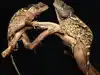
A hurricane created a rare scientific opportunity: Scientists turned seven empty Bahamian islands into a living laboratory to watch lizard evolution unfold from the beginning
A hurricane cleared Bahamian islands, offering scientists a rare chance to observe evolution beginning anew. Researchers introduced fourteen brown anole lizards to seven islands, creating new founding populations. These populations initially differed due to chance founder effects, not environmental pressures. Natural selection favored shorter hindlimbs, but initial differences persisted over four years. This experiment showed how history and environment jointly shape evolutionary outcomes.
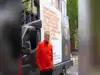
In 2025, British naturalist Chris Packham helped restore 55 acres in Devon with 3,500 native trees; a year later, wetlands, wildfowl, waders and otters had transformed the former pasture
A rewilding project in Downicary, Devon, has transformed a plain field into a vibrant wetland. This initiative has successfully attracted diverse wildlife, including otters and kingfishers to the area. Meanwhile, Bowyers Wood in East Sussex has seen the return of beavers after four centuries. Earth moving at Bowyers Wood created new habitats for reptiles and small mammals.
Quote of the day by Charles Darwin: 'A man’s friendships are one of the best measures of his...' - What this powerful insight reveals about character, trust and the kind of people we choose to surround ourselves with, and why our closest relationships may say more about us than we realize
Charles Darwin profoundly changed humanity's understanding of life on Earth. His voyage on the HMS Beagle provided crucial observations for his theories. Darwin presented his groundbreaking ideas about evolution in his 1859 book. He later applied evolutionary thinking to humans, sparking further debate. Darwin's work continues to shape modern biology and our place in nature.
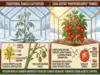
In the early 2020s, Hebrew University scientists edited 2 tomato genes involved in flower development and fertilization. Now, the plants can produce seedless fruit without fertilization and deliver more than 18 times as many fruits early in winter
Tomato gene editing: Hebrew University researchers edited tomato genes to boost fruit production significantly. These gene-edited plants can now form fruit without fertilization, a process called parthenocarpy. This breakthrough dramatically increases fruit yield during cold winter growing seasons.
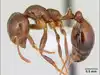
In the 1930s, just 9 to 20 foreign ant queens apparently stowed away on a ship; their descendants now infest more than 367 million U.S. acres
A few fire ant queens arriving in Mobile, Alabama, in the 1930s established a widespread infestation. These invasive insects now infest over 367 million acres across many southern states. Genetic research traced the U.S. population to a very small number of founding queens. Human activities and natural spread have significantly contributed to their extensive range. Modern control efforts focus on managing this persistent and established population.

Leonardo da Vinci mystery deepens after scientists find DNA on historic drawing
Researchers have extracted DNA from materials connected to Leonardo da Vinci, which includes the Holy Child drawing and letters from his family. Male-specific Y-chromosome fragments indicate that a genetic association to Tuscany, where da Vinci was born, though confirming the DNA belongs to the artist himself is not possible due to his lack of descendants and disturbed burial site.

This discovery in Cannabis DNA will change how you see weed forever; 33 genetic markers explained
Researchers at Université Laval have identified 33 genetic markers influencing cannabinoid production in cannabis. This breakthrough enables breeders to develop custom strains for specific medical and recreational purposes with greater precision. The discovery promises faster, cheaper, and more efficient cannabis breeding, benefiting both the medical and recreational industries.

GM Mustard: It's risk factor which concerns us more, observes Supreme Court
The apex court is hearing separate pleas by activist Aruna Rodrigues and NGO 'Gene Campaign' seeking a moratorium on the release of any genetically modified organisms (GMOs) into the environment pending a comprehensive, transparent and rigorous bio-safety protocol in the public domain conducted by agencies of independent expert bodies the results of which are made public.

Temasek, Toyota back climate biotech firm Living Carbon
The biotech's $21 million Series A round was also backed by the world's biggest automaker Toyota and venture firms Lowercarbon Capital and Felicis Ventures, and takes total funding raised to date to $36 million.
The story of the purple tomato - and why its success is a win for GM foods
Although genetically modified foods still get a bit of a bad rap, there are actually many good reasons why modifying an organism's genetics may be worthwhile.
India calls for eliminating north-south divide to reach consensus on issues grappling International Seed Treaty
Amid lack of consensus on issues like benefit sharing of germ plasm which will provide access to better quality seeds, India on Monday urged member countries of the International Treaty on Plant Genetic Resources for Food and Agriculture (ITPGRFA) to make headway eliminating the north-south divide.
Government will continue to back GM research: DBT secretary
Gene-editing policy for medical, agricultural purpose is also under consideration: DBT secretary Renu Swarup
One more GM cotton on the way -- this one's home-grown
Bengaluru, Sep 11 (IANS) While the controversy over Monsanto's Bt cotton has not yet died down, a new transgenic variety is at India's doorsteps -- this one developed by the country's own scientists.

Monsanto’s climate-resilient crop patent claims rejected
India’s patent appeals board has denied Monsanto a patent for a genetically-engineered method of increasing climate resilience in plants.
Load More

