
SEED DISPERSAL
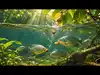
How can fish grow a forest? Scientists found nearly 700,000 seeds hiding inside them
Scientists studying fruit-eating fish in the Peruvian Amazon found nearly 700,000 intact seeds inside 230 fish. A 2011 study revealed that gamitana fish, close relatives of piranhas, could carry seeds more than five kilometres across flooded forests.
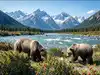
Alaska’s grizzly and black bears are doing way more than hunting salmon and eating berries. Researchers discovered they can spread around 200,000 seeds per square kilometer per hour when they forage
A study has revealed that Alaska’s grizzly and black bears are important seed dispersers in southeast Alaska. Around 200,000 devil’s club seeds per km² are dispersed in the scat of bears while they forage. This is more than that achieved by birds. The brown bears are dominant seed dispersers initially and black bears assume this role when brown bears turn to eating salmon.
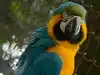
Blue-and-yellow macaws were absent from Rio de Janeiro's forests for around 200 years; conservationists have begun reintroducing them, with four now in the area
In a breakthrough for wildlife conservation, blue-and-yellow macaws have been reintroduced to Tijuca National Park in Rio de Janeiro, marking the first sighting of the species since 1818. To counteract their history of local extinction, these stunning birds underwent human-aversion training. Six more macaws will be released equipped with tracking devices to monitor their integration into the ecosystem.
In 1830, chinaberry was introduced to the US as an ornamental tree; it later spread into forests across the South
Chinaberry trees, initially brought to the Southern U.S. in the 1830s for their beauty, have proliferated extensively. These invasive species create dense thickets that block sunlight, hindering the growth of native plants in ecosystems across Georgia and South Carolina. This situation underscores the urgency of managing ornamental plants wisely, emphasizing the need for vigilant monitoring and prompt removal to protect the health of our forests.
First known specialized fruit-eating dinosaur named ‘Hell Chicken’ that chewed like a parrot
Fruit-eating dinosaur: Researchers have unearthed a fascinating find with the identification of Infernogallus jamesi, a newly discovered fruit-eating dinosaur from the same era as the T. rex. Resembling a modern turkey in size, its distinctive skull suggests a diet rich in fruits rather than meat. This discovery provides valuable perspectives on the evolution and ecological roles of dinosaurs, hinting at their potential contribution to seed dispersal in prehistoric ecosystems.

13-year-old Kaia Minn uses orange peels to develop biodegradable seed pods that could help restore forests
A 13-year-old teen girl from Massachusetts, Kaia Minn, has developed biodegradable seed pods using discarded citrus peels and other plant-based materials after being inspired by wildfire reports from California and Canada. The pods are designed to protect seeds during early growth before decomposing naturally, with potential applications in forest restoration, agriculture and gardening. Further outdoor testing is needed to establish their effectiveness.
- Go To Page 1
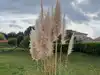
In 1848, California nursery operators brought pampas grass to Santa Barbara; it spread across the state, and one stand can release millions of seeds each year
Pampas grass made its debut in California in 1848, admired for its striking appearance as an ornamental plant. However, its vigorous reproduction meant it quickly spread beyond gardens into local ecosystems, posing a threat to native plants. The struggle to control existing pampas grass populations highlights the challenges of managing invasive species, reminding us of the unintended consequences that can arise from introducing non-native flora.
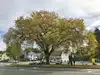
Siberian elm was widely planted in America for windbreaks and as a disease-tolerant shade tree; it escaped cultivation and is now considered invasive in 41 states
Siberian elm, initially introduced to American landscapes for its Dutch elm disease resistance, soon proved problematic as it became invasive. While valued for shade and wind protection, its aggressive growth outcompetes native plants and disrupts local ecosystems. The hybridization with native red elms adds to the concern of diminishing genetic diversity. To counteract this issue, efforts are underway to cultivate disease-resistant American elms to help restore ecological health.

Not your ordinary vegetable: Study reveals 7 incredible facts about lauki that may make you think twice before ignoring it
Bottle gourd, or lauki, may be an everyday vegetable, but its history and uses are far more fascinating than they seem. From being used as containers thousands of years ago and potentially travelling across oceans to serving as a resonating chamber in musical instruments, the humble gourd has played several roles beyond the kitchen. Its high water content, use in traditional desserts and an important safety warning about unusually bitter bottle gourd make these seven lesser-known facts worth knowing.
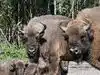
This giant animal once vanished from Britain 6,000 years ago. Now it is back as a ‘forest engineer’
European bison have returned to Britain after being absent for around 6,000 years, with conservationists releasing them into Kent’s woodlands through the Wilder Blean project. The animals are known as ecosystem engineers because their grazing, browsing, bark stripping, trampling and dustbathing reshape woodland habitats. Their natural behaviour can create conditions that benefit plants, insects, birds and other wildlife.
Around 1850, sailors drove giant Galápagos tortoises to extinction, keeping them as live food because they could survive for up to a year without food or water; then scientists found mysterious ‘alien’ survivors in 2000
In an astonishing twist of fate, researchers found tortoises linked to a lineage believed to have vanished 150 years ago. Genetic testing revealed descendants of the Floreana giant tortoise, reviving hopes for this extinct group. Scientists have now introduced 158 young tortoises back to Floreana Island, preserving the genetic heritage of these magnificent giants.
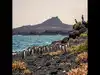
Galapagos Islands' unique animal, plants served as basis for Charles Darwin's theory of evolution, in 2026 El Nino threatens to wipe out concentration of species not found elsewhere on Earth
Charles Darwin Foundation data shows that aftermath of the 1998 El Nino — one of the most powerful and destructive cycles — only 400 of the 1,300 existing Galapagos penguins remained.
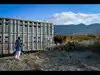
Nearly 200 years after bison were hunted to extinction in northern Mexico, 47 were reintroduced in 2025, and are now helping prevent wildfires and regenerate their lost ecosystem
In a remarkable conservation effort, 47 American bison have been reintroduced to Mexico's Cuatrociénegas region after vanishing for nearly 200 years. Now residing in the El Santuario Reserve in Coahuila, these magnificent creatures act as vital ecosystem engineers. Their grazing and movements are expected to rejuvenate the local landscape.
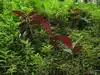
In the early 1970s, Maui planted miconia for its spectacular purple leaves; its descendants spread across East Maui and threatened native forest watersheds
Introduced to Maui in the 1970s, Miconia calvescens, known as the velvet tree, has emerged as a significant invasive species. Its swift spread within wet forest habitats and via bird movements poses a serious threat to native ecosystems and essential watershed functions in East Maui. Efforts to control this invasive plant have been in place since the 1990s, but overlooked populations can lead to a resurgence post-removal.
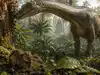
Flowering plants may have recruited dinosaurs long before birds or mammals, with hundreds of fossil fruits revealing an ancient seed-spreading strategy
Fossil discoveries in New Mexico reveal that flowering plants were producing large, animal-attracting fruits millions of years earlier than previously believed, potentially as far back as the age of dinosaurs. This challenges the long-held scientific view that such complex reproductive strategies only emerged after the extinction of non-avian dinosaurs. The findings suggest prehistoric creatures, including dinosaurs, may have played a crucial role in spreading these early plant seeds.
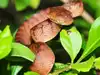
In the 1940s, the brown tree snake reached Guam hidden in post-WWII cargo and set off a chain reaction that scientists are still measuring today; birds gone, tree seedlings down by up to 92%, and spiders multiplying up to 40-fold on an island that once had neither
An invasive brown treesnake on Guam has decimated native bird populations, leading to a silent forest. This loss has crippled the island's trees, as birds are crucial for seed dispersal and germination. Without them, seeds fall near parent trees, facing overwhelming threats and drastically reducing the forest's ability to regenerate. Efforts to reintroduce birds are now vital for Guam's ecological future.
The ant discovery that stumped scientists started with one curious 8-year-old
Ants carrying oak galls study: A backyard discovery by an eight-year-old boy has unveiled a surprising interaction between ants, oak trees, and wasps. What appeared to be seeds were actually oak galls, structures created by wasps. Researchers found ants carrying these galls, consuming a fatty cap called 'kapéllo,' and leaving the gall behind.
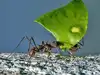
Ants distracted by potato chips in Panama may be forgetting one of their biggest jobs, and scientists say that could slow the seed dispersal plants depend on
Human food scraps on hiking trails disrupt a vital ecological partnership. Ants, crucial for planting seeds, abandon their task for easy snacks. This distraction slows seed dispersal, impacting plant diversity. Researchers found this issue in Panama and American cities. Simple actions like packing out food can help ants perform their natural role.
What happens when ants get addicted to junk food as much as we do? The consequences could be serious
Ants eating junk food behavior study: Tiny potato chip crumbs are a big distraction for ants. Researchers found ants are drawn to human snacks like chips and cookies. This attraction interferes with their important job of moving plant seeds. Ants carry seeds to their nests, eat a nutritious part, and leave the seed to grow.

Three rounds of cloud seeding conducted in Delhi, says minister
Delhi has undertaken cloud seeding efforts to combat severe air pollution. Three rounds of artificial rain attempts have been made. While rain has not yet been triggered, the operations have shown a reduction in particulate matter. The government is spending Rs 3.21 crore on this initiative. Further trials are planned, dependent on atmospheric conditions.
Artificial rain, real hope: IIT Kanpur to help Delhi breathe
In an innovative bid to tackle the ongoing air quality crisis, IIT Kanpur researchers are preparing for their fourth cloud seeding operation over Delhi next week. With a Cessna plane ready to transport seeding substances from Kanpur, this joint effort with the Delhi government serves as a temporary measure to alleviate toxic winter smog.

Human-caused bird extinctions reduced diversity in functions, unique history, study finds
A study led by the University of Birmingham reveals that human-induced bird extinctions over 1,30,000 years have dramatically reduced birds' functional diversity and resulted in a loss of three billion years of unique evolutionary history. Approximately 600 species, including the Dodo and Kaua'i 'o'o, have disappeared, affecting ecological roles like pollination and seed dispersal. This underscores the urgent need for targeted global conservation strategies.

Telangana to use drones to drop seeds for afforestation
Fifty lakh trees will be planted in about 12,000 hectares of land in forests across the state under the project, an official release said on Monday. Minister for IT and Industries KT Rama Rao unveiled 'Seedcopter Drone' by Marut Drones and launched poster campaign for 'Hara Bahara'.

'Artificial rain in Delhi unlikely due to unfavourable weather conditions'
Delhi's air quality showed a deteriorating trend from Monday and is presently in the "very poor" category.

Rain-maker aircraft awaits key clearances
Experts of the IIT, Kanpur, currently involved in this never-before experiment to tackle pollution also told ET that clearances are required.

Pollution: Here’s a plan to wash away Delhi’s toxic air
Authorities are planning cloud seeding to tackle Delhi’s near-toxic levels of air pollution.
Guam forests may be 'irreversibly damaged' by foreign snake species
Canberra, Sep 1 (IANS) The introduction of a foreign snake species in Guam's forests about 60 years ago might have caused irreversible damage to the island's ecosystem, an Australian researcher revealed on Friday.

How countries keep track of their weather
In 1942, Winston Churchill ordered the petroleum warfare department to come up with an idea to tackle the problem of fog during airplane takeoffs.

Asian elephants play key role in spreading green cover
Asian elephants play a vital role in the ecology of the forest and help spread green cover because of their eating and movement pattern
Load More

