

Listen to this article in summarized format
×
Subscribe to

Unlock AI Briefing and Premium Content
New Year Offer 24 Hours Left
Subscribe NowAlready a member? Sign In
What's Included
- Exclusive Stories
- Daily ePaper Access
- Smart Market Tools
- Curated Investment Ideas
- Ad-lite Experience
Subscription

 ET Online
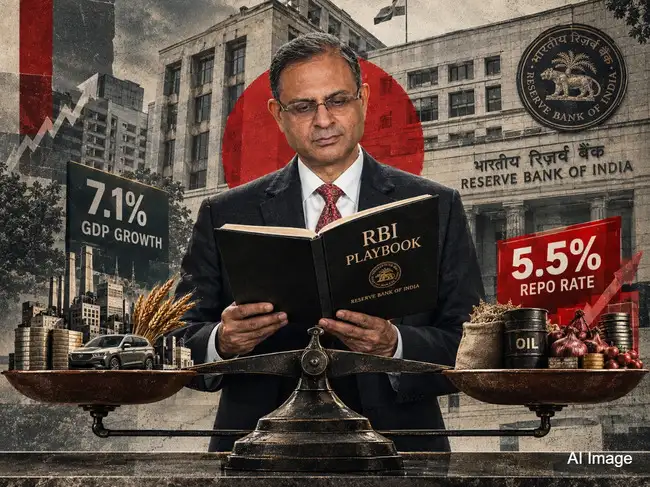
RBI rate hike signals calibrated tightening as inflation risks rise despite growth (AI image)
The RBI’s October policy marks a clean break from the easing cycle that began last year. The 25-basis-point increase takes the repo rate to 5.5%, but more important can be the shift from a neutral stance to “calibrated tightening”.
The RBI is no longer waiting for inflation to become an obvious demand-side problem before acting. It is trying to get ahead of the risk that a supply shock becomes embedded in inflation expectations, corporate pricing and credit conditions.
Also Read: RBI hikes repo rate by 25 bps to 5.50% for first time in nearly 4 years
The RBI cannot produce more food or bring down global oil prices by raising the repo rate. What it can do is prevent these shocks from spreading into the rest of the economy.
Also Read: Decoding what Malhotra's 'caliberated tightening' stance means
That risk is beginning to show up in the data. CPI inflation rose to 4.8% in August from 4.5% in July. Core inflation, which had stayed at 3.9% for three months, rose to 4.2%. The share of the CPI basket recording inflation above 4% increased to about 37%.
There is still limited evidence that supply shocks have become embedded in firms’ pricing behaviour. But there is already some evidence of higher inflation expectations and a broader spread of price increases. This is enough for the RBI to become more cautious.
More importantly, the strength is not concentrated in one part of the economy. Consumption remains resilient, investment activity is strong and services continue to perform well. Manufacturing is expanding despite higher input costs. Capital goods output rose 17.9% in July-August, while merchandise exports grew 22.8%.
This gives the RBI room to focus more squarely on inflation.
A rate hike would be harder to justify if growth were already losing momentum sharply. But the Governor’s assessment is that domestic activity remains resilient despite global uncertainty. The RBI therefore appears more willing to accept some moderation in demand if that helps prevent the current inflation shock from becoming persistent. This is the key inflation-growth trade-off behind the October decision.
The Governor does not describe this as evidence that demand is already generating inflation. In fact, his statement says evidence of demand-side pressure remains limited. But strong credit growth can reinforce demand. With consumption and investment already holding up, the RBI does not want monetary and credit conditions to add further fuel if supply-side inflation persists.
This is one reason the central bank has chosen to move now rather than wait for unmistakable signs of demand-led inflation.
Four things will matter particularly -- whether underlying inflation continues to rise, whether price pressures spread further across the CPI basket, whether the oil and food shocks produce second-round effects and whether demand remains strong.
This makes the new rate cycle conditional rather than mechanical which means another hike is not automatic. But neither is a return to rate cuts simply because the initial supply shock begins to fade.
The RBI says such second-round effects take time to appear and are difficult to isolate in the data. Its decision to raise rates therefore reflects a judgment about risk rather than a conclusion that demand-led inflation has already arrived.
In effect, the RBI is saying that waiting for all the evidence could mean acting too late.
The RBI says it will use its liquidity tools to bring the call rate closer to the new 5.5% policy rate. The repo rate only works as a meaningful tightening signal if money-market conditions transmit it into actual funding costs. The combination of the higher policy rate and tighter liquidity management therefore marks a broader tightening of financial conditions.
The central bank is prepared to look through the first-round impact of food and oil shocks, but not indefinitely. If those shocks begin to alter inflation expectations, pricing behaviour or broader demand, monetary policy will respond.
For now, the RBI has drawn a clear line under the easing cycle. The economy can still grow around 7%, but the tolerance for inflation surprises has fallen sharply. That is what “calibrated tightening” really means. It won't be an unconditional series of hikes, but a much lower threshold for acting when temporary supply shocks start looking less temporary.
(You can now subscribe to our Economic Times WhatsApp channel)
The RBI is no longer waiting for inflation to become an obvious demand-side problem before acting. It is trying to get ahead of the risk that a supply shock becomes embedded in inflation expectations, corporate pricing and credit conditions.
Also Read: RBI hikes repo rate by 25 bps to 5.50% for first time in nearly 4 years
RBI rate hike: The risk of inflation spreading
The most important change in the RBI Governor Sanjay Malhotra's statement is the way the RBI is thinking about the current inflation shock. Food and energy prices are rising for reasons that monetary policy cannot directly fix. The monsoon has been deficient, El Niño poses a risk to the rabi crop and crude prices have jumped sharply amid the West Asia conflict. The Indian crude basket rose from an average of $82 a barrel in July to $116.1 in September.The RBI cannot produce more food or bring down global oil prices by raising the repo rate. What it can do is prevent these shocks from spreading into the rest of the economy.


Also Read: Decoding what Malhotra's 'caliberated tightening' stance means
That risk is beginning to show up in the data. CPI inflation rose to 4.8% in August from 4.5% in July. Core inflation, which had stayed at 3.9% for three months, rose to 4.2%. The share of the CPI basket recording inflation above 4% increased to about 37%.
There is still limited evidence that supply shocks have become embedded in firms’ pricing behaviour. But there is already some evidence of higher inflation expectations and a broader spread of price increases. This is enough for the RBI to become more cautious.
RBI rate decision: India's strong growth changes the calculation
The RBI is tightening at a time when it has become more confident about growth. It has raised its FY27 GDP growth forecast to 7.1% from 6.7%, after the economy grew 7.8% in the first quarter.More importantly, the strength is not concentrated in one part of the economy. Consumption remains resilient, investment activity is strong and services continue to perform well. Manufacturing is expanding despite higher input costs. Capital goods output rose 17.9% in July-August, while merchandise exports grew 22.8%.
This gives the RBI room to focus more squarely on inflation.
A rate hike would be harder to justify if growth were already losing momentum sharply. But the Governor’s assessment is that domestic activity remains resilient despite global uncertainty. The RBI therefore appears more willing to accept some moderation in demand if that helps prevent the current inflation shock from becoming persistent. This is the key inflation-growth trade-off behind the October decision.
RBI Policy: Credit growth has become a warning signal
The RBI is also paying much closer attention to credit. Bank credit was growing 18.1% year-on-year as of September 15, up from 10.4% a year earlier. Credit growth has become broad-based, with strong flows to retail and services. Industrial credit has also accelerated sharply, while lending to MSMEs remains buoyant.The Governor does not describe this as evidence that demand is already generating inflation. In fact, his statement says evidence of demand-side pressure remains limited. But strong credit growth can reinforce demand. With consumption and investment already holding up, the RBI does not want monetary and credit conditions to add further fuel if supply-side inflation persists.
This is one reason the central bank has chosen to move now rather than wait for unmistakable signs of demand-led inflation.
Calibrated tightening: The new stance changes the reaction function
The phrase “calibrated tightening” is important because the RBI has also spelt out what it means. For the near term, rate cuts are off the table. The next move can only be a hike or a pause. That does not mean the RBI has committed to a long series of rate increases. RBI Governor Malhotra said the duration and extent of the cycle will depend on how inflation evolves.Four things will matter particularly -- whether underlying inflation continues to rise, whether price pressures spread further across the CPI basket, whether the oil and food shocks produce second-round effects and whether demand remains strong.
This makes the new rate cycle conditional rather than mechanical which means another hike is not automatic. But neither is a return to rate cuts simply because the initial supply shock begins to fade.
Getting ahead of second-round effects
In what can be called the biggest change in the RBI’s playbook, the central bank is looking beyond the immediate source of inflation to what happens after the first shock. A rise in onion or crude prices is a supply problem. But if businesses begin passing higher costs through more aggressively, workers demand higher wages and households start expecting persistently higher inflation, the nature of the problem changes. That is when monetary policy becomes more important.The RBI says such second-round effects take time to appear and are difficult to isolate in the data. Its decision to raise rates therefore reflects a judgment about risk rather than a conclusion that demand-led inflation has already arrived.
In effect, the RBI is saying that waiting for all the evidence could mean acting too late.
Liquidity will reinforce the rate signal
The rate hike will also be accompanied by tighter management of liquidity. The banking system had been carrying a large liquidity surplus, averaging Rs 5.9 lakh crore since the August policy. That pushed the weighted average call rate below the repo rate.The RBI says it will use its liquidity tools to bring the call rate closer to the new 5.5% policy rate. The repo rate only works as a meaningful tightening signal if money-market conditions transmit it into actual funding costs. The combination of the higher policy rate and tighter liquidity management therefore marks a broader tightening of financial conditions.
RBI Governor Malhotra's bigger message
The RBI’s October policy is not a declaration that growth has become a problem but almost the opposite. The economy is strong enough, in the RBI’s assessment, to withstand some monetary tightening. At the same time, inflation is no longer benign enough to justify keeping policy focused on supporting growth. That is the new balance.The central bank is prepared to look through the first-round impact of food and oil shocks, but not indefinitely. If those shocks begin to alter inflation expectations, pricing behaviour or broader demand, monetary policy will respond.
For now, the RBI has drawn a clear line under the easing cycle. The economy can still grow around 7%, but the tolerance for inflation surprises has fallen sharply. That is what “calibrated tightening” really means. It won't be an unconditional series of hikes, but a much lower threshold for acting when temporary supply shocks start looking less temporary.
Add  as a Reliable and Trusted News Source
as a Reliable and Trusted News Source Add Now!
(You can now subscribe to our Economic Times WhatsApp channel)












 ETPrime Membership