Listen to this article in summarized format
×
Subscribe to

Unlock AI Briefing and Premium Content
New Year Offer 24 Hours Left
Subscribe NowAlready a member? Sign In
What's Included
- Exclusive Stories
- Daily ePaper Access
- Smart Market Tools
- Curated Investment Ideas
- Ad-lite Experience
Subscription

 PTI
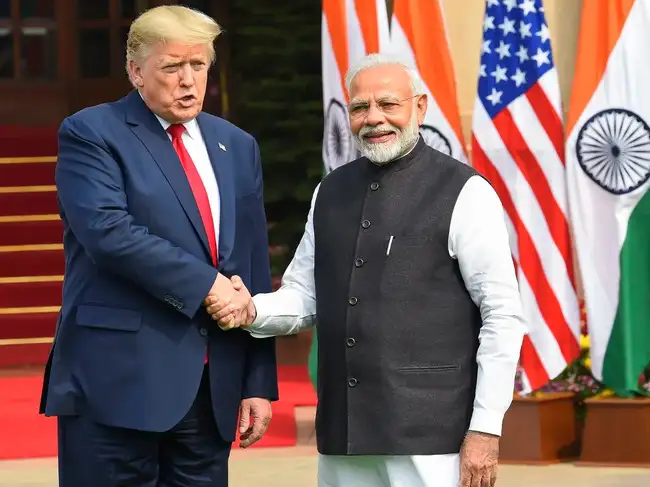
PTINegotiations between India and the US have encountered significant sticking points affecting market access and agriculture.
India and the US are likely to eventually conclude an interim trade agreement, but a near-term breakthrough looks unlikely as the two sides remain divided over market access, agriculture, Russian oil purchases and Washington’s concerns over the bilateral trade deficit, a unit of Fitch, BMI said.
The assessment comes after US Trade Representative Jamieson Greer said on October 1 that negotiators had identified the full set of sticking points, while Finance Minister Nirmala Sitharaman said on October 5 that the talks had reached a “plateau” beyond which further concessions would be difficult.
Also Read: India-US trade talks hit a plateau, with little room left to give or take, says Finance Minister Nirmala Sitharaman
“This confirms our February view that the announced deal was a framework rather than a completed agreement,” BMI said.
The two countries have narrowed their differences, but the issues that remain are also the most politically and commercially sensitive.
India is seeking meaningful preferential access for its exports, while Washington wants greater access to the Indian market, particularly in agriculture, larger purchases of US goods and a reduction in the bilateral trade deficit.
India could potentially offer limited access in these segments, BMI said, but opening up dairy and genetically modified agricultural markets would carry substantially greater political costs.
“India will resist costly concessions unless the US offers it a clear advantage over competing exporters,” BMI said.
India’s effective tariff rate on US goods is currently 13.6%, according to BMI’s Operational Risk team, significantly below the roughly 35% starting point used in February. This means the direct gains from an interim agreement could be limited unless the deal provides preferential access in commercially important sectors.
Washington is also looking for steps to narrow the bilateral goods deficit. The US recorded a $45.7 billion goods trade deficit with India in 2024.
India could help reduce the gap through larger purchases of US aircraft, energy, technology and defence equipment. But such purchases would not by themselves address broader US concerns over access to the Indian market.
Russia accounted for around 50.8% of India’s crude import volumes in July 2026, according to BMI.
The US has also increased pressure on countries buying Russian energy after President Donald Trump signed the Lindsey O. Graham Sanctioning Russia and Iran Act of 2026 on September 18.
Also Read: Explainer: Why have India-US trade talks stalled again and what's next?
The law authorises measures linked to Russian energy purchases, including additional tariffs of up to 100% on qualifying purchasers, although waiver provisions give the US administration considerable discretion.
The legislation will take effect within 30 days of its enactment, making its implementation a key factor for the trade negotiations in the coming weeks.
“Whether Washington targets India, grants a waiver or uses the threat to seek trade concessions will show whether Russian oil remains negotiable or becomes a firm barrier to an agreement,” BMI said.
India could lower tariffs on selected US agricultural and industrial products and commit to larger purchases, while Washington could provide preferential treatment to selected Indian exports.
Issues such as dairy, genetically modified products and some regulatory barriers could then be left for subsequent negotiations.
India is also unlikely to permanently abandon Russian oil, BMI said. A more realistic arrangement could involve greater diversification of supplies or lower purchases from Russia when market conditions allow.
For India, the biggest immediate benefit of a deal would therefore be reduced uncertainty rather than a sharp increase in exports.
“A settlement would improve visibility for exporters and investors and reduce the risk of renewed tariff escalation,” BMI said, while adding that its direct trade impact would probably be modest given the current tariff rate and likely narrow product coverage.
A deal would also not remove all tariff risks. India remains subject to a US Section 301 investigation into structural manufacturing overcapacity, covering sectors including petrochemicals, steel and solar modules. The USTR has not yet announced a date for its next decision.
“An agreement by then remains unlikely,” BMI said, even though both governments have strong reasons to prevent the negotiations from breaking down.
The implementation of the Russia sanctions law in mid-October and the unresolved manufacturing-overcapacity investigation will be key developments to watch as talks continue.
The broader picture, according to BMI, is that an India-US interim trade deal remains achievable, but the remaining differences are concentrated in precisely the areas where both sides have the least room to compromise.
(You can now subscribe to our Economic Times WhatsApp channel)
The assessment comes after US Trade Representative Jamieson Greer said on October 1 that negotiators had identified the full set of sticking points, while Finance Minister Nirmala Sitharaman said on October 5 that the talks had reached a “plateau” beyond which further concessions would be difficult.
Also Read: India-US trade talks hit a plateau, with little room left to give or take, says Finance Minister Nirmala Sitharaman
“This confirms our February view that the announced deal was a framework rather than a completed agreement,” BMI said.
The two countries have narrowed their differences, but the issues that remain are also the most politically and commercially sensitive.

India is seeking meaningful preferential access for its exports, while Washington wants greater access to the Indian market, particularly in agriculture, larger purchases of US goods and a reduction in the bilateral trade deficit.
Agriculture remains the biggest domestic hurdle
Agriculture is likely to be among the most difficult areas for India to compromise on. The framework announced in February had identified possible concessions on animal feed, tree nuts, fruit, soybean oil, wine and spirits.India could potentially offer limited access in these segments, BMI said, but opening up dairy and genetically modified agricultural markets would carry substantially greater political costs.
“India will resist costly concessions unless the US offers it a clear advantage over competing exporters,” BMI said.
India’s effective tariff rate on US goods is currently 13.6%, according to BMI’s Operational Risk team, significantly below the roughly 35% starting point used in February. This means the direct gains from an interim agreement could be limited unless the deal provides preferential access in commercially important sectors.
Washington is also looking for steps to narrow the bilateral goods deficit. The US recorded a $45.7 billion goods trade deficit with India in 2024.
India could help reduce the gap through larger purchases of US aircraft, energy, technology and defence equipment. But such purchases would not by themselves address broader US concerns over access to the Indian market.
Russian oil adds another complication
India’s continued dependence on Russian crude has added another layer of difficulty to the negotiations. The February framework appeared to link tariff relief with a reduction in Russian oil purchases. But the subsequent Iran conflict, which disrupted Gulf supplies, has increased India’s incentive to retain alternative sources of crude.Russia accounted for around 50.8% of India’s crude import volumes in July 2026, according to BMI.
The US has also increased pressure on countries buying Russian energy after President Donald Trump signed the Lindsey O. Graham Sanctioning Russia and Iran Act of 2026 on September 18.
Also Read: Explainer: Why have India-US trade talks stalled again and what's next?
The law authorises measures linked to Russian energy purchases, including additional tariffs of up to 100% on qualifying purchasers, although waiver provisions give the US administration considerable discretion.
The legislation will take effect within 30 days of its enactment, making its implementation a key factor for the trade negotiations in the coming weeks.
“Whether Washington targets India, grants a waiver or uses the threat to seek trade concessions will show whether Russian oil remains negotiable or becomes a firm barrier to an agreement,” BMI said.
Narrow deal could leave bigger issues unresolved
Despite the hurdles, BMI believes an interim agreement remains possible because both sides can postpone some of their most difficult disagreements.India could lower tariffs on selected US agricultural and industrial products and commit to larger purchases, while Washington could provide preferential treatment to selected Indian exports.
Issues such as dairy, genetically modified products and some regulatory barriers could then be left for subsequent negotiations.
India is also unlikely to permanently abandon Russian oil, BMI said. A more realistic arrangement could involve greater diversification of supplies or lower purchases from Russia when market conditions allow.
For India, the biggest immediate benefit of a deal would therefore be reduced uncertainty rather than a sharp increase in exports.
“A settlement would improve visibility for exporters and investors and reduce the risk of renewed tariff escalation,” BMI said, while adding that its direct trade impact would probably be modest given the current tariff rate and likely narrow product coverage.
A deal would also not remove all tariff risks. India remains subject to a US Section 301 investigation into structural manufacturing overcapacity, covering sectors including petrochemicals, steel and solar modules. The USTR has not yet announced a date for its next decision.
December G20 summit offers a political deadline
BMI expects negotiations to continue, with the December 14-15 G20 summit in Miami offering the next major political opportunity for the two sides to push towards an agreement.“An agreement by then remains unlikely,” BMI said, even though both governments have strong reasons to prevent the negotiations from breaking down.
The implementation of the Russia sanctions law in mid-October and the unresolved manufacturing-overcapacity investigation will be key developments to watch as talks continue.
The broader picture, according to BMI, is that an India-US interim trade deal remains achievable, but the remaining differences are concentrated in precisely the areas where both sides have the least room to compromise.
Add  as a Reliable and Trusted News Source
as a Reliable and Trusted News Source Add Now!
(You can now subscribe to our Economic Times WhatsApp channel)












 ETPrime Membership