
ARCHAEOLOGICAL TOURISM INDIA

Reports again raise spectre of 'demolition' of Patna's Sultan Palace, spark outcry
The Bihar Cabinet has greenlit plans for a luxurious five-star heritage hotel at the Sultan Palace, a remarkable edifice constructed in 1922. However, whispers of potential demolition loom large over this historic site, igniting passionate pleas from heritage advocates.
India's first Petroglyph Conservation Park to be set up in Ladakh
Lt Governor Vinai Kumar Saxena lays foundation stone for India’s first petroglyph conservation park in Leh on World Heritage Day. The park aims to protect Ladakh’s ancient rock carvings threatened by tourism and development. An MoU with ASI supports preservation, while efforts will relocate endangered artefacts and promote curated heritage circuits with community participation.

Comprehensively review maintenance standards at UNESCO sites: Par panel to govt
A parliamentary panel has urged the culture ministry to review India's UNESCO World Heritage Sites. A plan for upgrading maintenance and visitor facilities is recommended. The ministry must also develop a five-year strategy for new nominations. This aims to align site management with global recognition. The Archaeological Survey of India receives significant funding for monument upkeep.

India reimagines its museums with tech, storytelling and mega-budget ambitions
India’s museum landscape is undergoing its most visible transformation as private institutions and public projects go big and immersive.
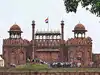
Red Fort to remain open on all days of week: ASI
The Red Fort complex in Delhi will now be open to visitors seven days a week, including Mondays. Previously, the UNESCO World Heritage Site was closed on Mondays. An order issued by the Archaeological Survey of India (ASI) on February 13 has already come into effect, with the fort open on February 16.

2,000 year-old Tamil-Brahmi inscriptions found in Egypt's royal tombs
In Egypt researchers have found 2,000 year old Tamil-Brahmi inscriptions inside the royal tombs of the valley of the Kings. The researchers noted that one of the inscription specifically reads 'Cikai Korran vara kanta', which translates to 'Cikai Korran came and saw', mirroring the style of Greek tourist graffiti found in the same complex.
- Go To Page 1

Forget Egypt’s Pyramids & Rome's Colosseum, why India’s archaeological sites could be travel’s next big obsession
India's archaeological sites are emerging as a new travel trend, transforming from "boring history" into engaging experiences. Government initiatives and private partnerships are developing locations like Rakhigarhi and Dholavira into dedicated tourism destinations, offering immersive activities and improved facilities to attract visitors eager to connect with ancient civilizations.

Budget 2026: Easier spending during overseas travel
Proposals to develop seven high-speed rail corridors and 15 archaeological sites, and create a national digital repository for destinations are expected to help boost domestic tourism and the local travel and hospitality industry. Finance minister Nirmala Sitharaman proposed to cut the TCS rate on the sale of overseas tour packages to 2% without any stipulation of the amount. Currently, packages up to Rs 10 lakh are taxed at 5%; for costlier packages, the levy is 20%.

Budget 2026: It's a timely, textbook case of policy sagacity
The push for making India a bigger biopharmaceutical innovator and manufacturer, with emphasis on emerging disease patterns, as well as support for the beleaguered textiles industry are part of the 'Make in India' architecture. From toys and limited sporting equipment - Walmart now sources sports bicycles from India -the budget shows ambition to incubate a modern sports manufacturing industry.

Budget 2026: Tourism gets boost with seaplane manufacturing, Buddhist Circuits & hiking trails in Himachal, Kashmir
The government plans to boost tourism with new initiatives. Finance Minister Nirmala Sitharaman announced plans for seaplane manufacturing and developing key sites. These efforts aim to enhance India's global appeal and attract more visitors. The focus is on destination development and improved connectivity. Swadesh Darshan 2.0 continues to support sustainable tourism circuits.

Budget 2026 puts India’s tourism in spotlight; experts call for higher marketing outlay
The Union Budget 2026-27 unveils ambitious plans to elevate India's tourism sector. A new National Institute of Hospitality will be established.

Travel industry welcomes measures aimed at boosting tourism, but long-standing demands remain
The Union Budget has welcomed hospitality sector reforms like a National Institute and high-speed rail corridors, alongside a TCS reduction on overseas tour packages. However, a drastic cut in marketing and promotion spends for domestic and inbound tourism has raised concerns, potentially impacting foreign tourist arrivals despite infrastructure development.

Budget 2026 key announcements for common man: 10 big wins for aam aadmi that will directly impact your wallet
Today's budget highlights: Finance Minister Nirmala Sitharaman unveiled the 2026 Budget, emphasising reforms, employment, and inclusive growth across sectors. Key initiatives focus on farmers’ income, digital agriculture, support for MSMEs, expansion of healthcare, and growth in the IT sector. The Budget also proposes substantial investments in education, transport infrastructure, and tourism.

Hospitality industry welcomes Budget 2026-27; disappointed over no infra status
The hospitality industry welcomed the Union Budget 2026-27, praising its focus on infrastructure and skilling initiatives like the National Institute of Hospitality. However, the sector expressed disappointment that its long-standing demand for comprehensive infrastructure status was not met, despite positive steps for tourism growth.
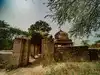
Lakshagriha, where Pandavas escaped Kauravas’ plot, set to get ₹1-crore makeover
Uttar Pradesh's Mahabharata circuit project is set to revamp a site in Baranava village of Baghpat, linked to the Pandavas' escape from the Lakshagriha. The tourism department has sanctioned ₹1 crore for its development. The plan includes modern amenities like beautification, lighting, sanitation, drinking water, rest areas, and visitor information centres.
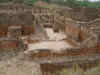
Haryana Govt initiates ground penetrating radar survey at Agroha archaeological site
Haryana Vidhan Sabha speaker Gian Chand Gupta and urban local bodies minister Kamal Gupta inaugurated a ground penetrating radar (GPR) survey at the Agroha archaeological site in Hisar. This initiative is part of a collaboration between the Archaeological Survey of India (ASI) and the Haryana archaeology and museum department to develop the site. The last excavation at Agroha revealed evidence of an ancient civilization, and the GPR survey aims to identify underground structures.

Domestic tourism is reviving as visitors again throng popular destinations, even pilgrimage centres
Domestic airlines are all operating at 70-75% passenger load factor (metric for utilisation of seats). Several sectors are fully booked. Presently, footfalls at major Indian airports are in the range of 5-6 lakh passengers a day compared to an average of 7.5 lakh passengers in pre-Covid months.
All centrally protected ASI monuments to reopen from June 16
These include 3,693 monuments and 50 museums across India. An ASI official said visitors will be able to book entry tickets online.

Formed 16-member committee to study ancient Indian culture: Union minister Prahlad Patel
In a written reply in Lok Sabha, Patel said the 16-member committee will include K N Dikshit, Chairman, Indian Archaeological Society, New Delhi and former Joint Director General, Archaeological Survey of India, among others.

No entry fee for women at ASI monuments on Women's day
Women will be allowed free entry to monuments like Red Fort, Qutub Minar, Humayun's Tomb, Taj Mahal, Sun Temple in Konark, Mamallapuram, Ellora caves, Khajuraho monuments, and the Ajanta caves.

Centre sanctions Rs 98.35 crores for a Heritage Circuit in Assam
This amount is sanctioned for development of the Tezpur, Majuli and Sivasagar circuit under the scheme of Swadesh Darshan

Land of Origins - Ethiopia, trying to woo Indian tourists
Keeping the interests of the Indian middle-class in mind, they are working towards cost-effective methods and Ethiopia has been working in this respect.

Archaeological Survey of India unsure about three-fold hike in ticket prices from April 1
Sources said the new rates were supposed to come by November 1 last year; but there was tremendous pressure on the ministry to delay the implementation.

India offers help to restore Swayambhunath, Kumarika temples in quake-hit Nepal
After Pashupatinath Temple, India has offered help to restore two more temples -- Swayambhunath and Kumarika temples in Kathmandu Valley -- in earthquake-hit Nepal, Union Minister Mahesh Sharma today said.
Delhi Tourism receives National Tourism Award
National Tourism awards are presented every year by Ministry of Tourism to various segments of the travel and tourism industry in recognition of their respective fields.
ASI expertise offered for restoration of Taj hotel
Ambika Soni has offered ASI expertise in restoring hotel Taj.
ASI expertise offered for restoration of Taj Mumbai
In the aftermath of terror attack on the Taj Hotel in Mumbai, Union Tourism and Culture Minister Ambika Soni has offered Archaeological Survey of India expertise in restoring the hotel, which was damaged during the strike.
Madhya Pradesh invites private players in tourism sector
Madhya Pradesh has invited private players to exploit its rich cultural, historic and geographical sites for tourism development.
Tourism contributes 5.83 pc to total GDP
Tourism has contributed about 5.83 per cent to total Gross Domestic Product and 8.27 per cent to total employment in 2002-03.
Load More

