


Listen to this article in summarized format
×
Subscribe to

Unlock AI Briefing and Premium Content
New Year Offer 24 Hours Left
Subscribe NowAlready a member? Sign In
What's Included
- Exclusive Stories
- Daily ePaper Access
- Smart Market Tools
- Curated Investment Ideas
- Ad-lite Experience
Subscription

 ANI
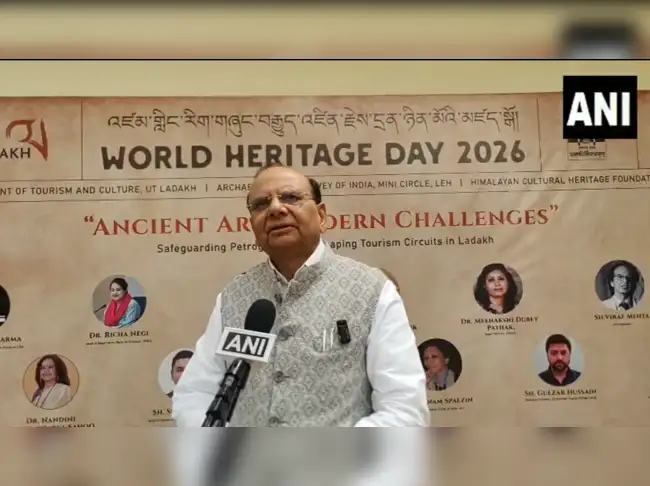
ANILeh: In a landmark initiative to preserve Ladakh's ancient heritage, Lt Governor Vinai Kumar Saxena on Saturday laid the foundation stone for India's first Petroglyph Conservation Park on the banks of the Indus River here on World Heritage Day.
Petroglyphs are prehistoric images, symbols, or carvings etched, pecked, or engraved directly onto rock surfaces.
The park aims to serve as a dedicated conservation space for centuries-old rock carvings (petroglyphs) that are increasingly under threat due to unregulated tourism, rapid infrastructure development, and a lack of awareness, officials said.
They said the park will house petroglyphs collected from vulnerable and isolated locations across Ladakh, ensuring their preservation for future generations while also making them accessible to visitors in a curated and educational setting.
A Memorandum of Understanding (MoU) was signed between the Department of Archives, Archaeology and Museums and the Archaeological Survey of India (ASI) for the preservation of heritage for future generations through joint intervention, they said.
Officials informed that nearly 400 sites across Ladakh contain petroglyphs, found either in clusters or in isolation.
While cluster sites are relatively easier to conserve, isolated petroglyphs -- especially those along the banks of the Indus River and Zanskar River -- face significant risk of damage due to construction activities and lack of awareness among people.
These endangered artefacts will be carefully relocated to the Petroglyph Conservation Park for protection and display, officials said, adding that some of the oldest petroglyphs have inscriptions in Chinese, Arabic, Sanskrit and other ancient languages.
The Lt Governor emphasised that the park would serve as a vital step towards preserving the region's ancient art and history for generations to come.
He termed Ladakh as a "repository of ancient heritage" and said the region hosts one of the most extensive collections of prehistoric rock art in South and Central Asia.
"Beyond natural weathering and climate stress, human activities, such as road construction, blasting of rocks, and unregulated tourism, pose serious risks to these petroglyphs.
"Conservation of these heritage sites must be treated as an ethical responsibility and integrated into development planning," Saxena said, while addressing a workshop on the occasion of World Heritage Day, themed "Ancient Art, Modern Challenges: Safeguarding Petroglyphs and Shaping Tourism Circuits in Ladakh".
He noted that these rock carvings depicted early human life, including hunting scenes, animals like ibex and snow leopards, and later, symbols of Buddhist faith such as stupas and inscriptions.
This, he said, showcased the cultural transition over the centuries.
The Lt Governor also emphasised the creation of curated heritage circuits, including petroglyph and Buddhist circuits, to manage tourist flow responsibly while promoting lesser-known sites.
He described the petroglyphs as "open-air museums" and "civilisations carved on stone," representing a continuous record of human history from the Palaeolithic Age to later historic periods.
Found in regions such as Domkhar, Dah Hanu, Alchi, Chilling, and Tangtse, these carvings depict ancient trade routes, migration patterns, belief systems, and ecological histories.
Calling for community participation, the Lt Governor urged local residents, monks, youth, and stakeholders to act as custodians of Ladakh's heritage. He reiterated that sustainable preservation requires collective effort, awareness, and respect for cultural and ecological sensitivities.
(You can now subscribe to our Economic Times WhatsApp channel)
Petroglyphs are prehistoric images, symbols, or carvings etched, pecked, or engraved directly onto rock surfaces.
The park aims to serve as a dedicated conservation space for centuries-old rock carvings (petroglyphs) that are increasingly under threat due to unregulated tourism, rapid infrastructure development, and a lack of awareness, officials said.
They said the park will house petroglyphs collected from vulnerable and isolated locations across Ladakh, ensuring their preservation for future generations while also making them accessible to visitors in a curated and educational setting.
A Memorandum of Understanding (MoU) was signed between the Department of Archives, Archaeology and Museums and the Archaeological Survey of India (ASI) for the preservation of heritage for future generations through joint intervention, they said.

Officials informed that nearly 400 sites across Ladakh contain petroglyphs, found either in clusters or in isolation.
While cluster sites are relatively easier to conserve, isolated petroglyphs -- especially those along the banks of the Indus River and Zanskar River -- face significant risk of damage due to construction activities and lack of awareness among people.
These endangered artefacts will be carefully relocated to the Petroglyph Conservation Park for protection and display, officials said, adding that some of the oldest petroglyphs have inscriptions in Chinese, Arabic, Sanskrit and other ancient languages.
The Lt Governor emphasised that the park would serve as a vital step towards preserving the region's ancient art and history for generations to come.
He termed Ladakh as a "repository of ancient heritage" and said the region hosts one of the most extensive collections of prehistoric rock art in South and Central Asia.
"Beyond natural weathering and climate stress, human activities, such as road construction, blasting of rocks, and unregulated tourism, pose serious risks to these petroglyphs.
"Conservation of these heritage sites must be treated as an ethical responsibility and integrated into development planning," Saxena said, while addressing a workshop on the occasion of World Heritage Day, themed "Ancient Art, Modern Challenges: Safeguarding Petroglyphs and Shaping Tourism Circuits in Ladakh".
He noted that these rock carvings depicted early human life, including hunting scenes, animals like ibex and snow leopards, and later, symbols of Buddhist faith such as stupas and inscriptions.
This, he said, showcased the cultural transition over the centuries.
The Lt Governor also emphasised the creation of curated heritage circuits, including petroglyph and Buddhist circuits, to manage tourist flow responsibly while promoting lesser-known sites.
He described the petroglyphs as "open-air museums" and "civilisations carved on stone," representing a continuous record of human history from the Palaeolithic Age to later historic periods.
Found in regions such as Domkhar, Dah Hanu, Alchi, Chilling, and Tangtse, these carvings depict ancient trade routes, migration patterns, belief systems, and ecological histories.
Calling for community participation, the Lt Governor urged local residents, monks, youth, and stakeholders to act as custodians of Ladakh's heritage. He reiterated that sustainable preservation requires collective effort, awareness, and respect for cultural and ecological sensitivities.
Add  as a Reliable and Trusted News Source
as a Reliable and Trusted News Source Add Now!
(You can now subscribe to our Economic Times WhatsApp channel)