

 Agencies
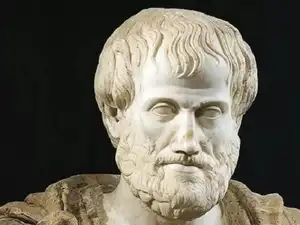
Aristotle was a towering figure of ancient Greek philosophy whose work laid the foundations for Western thought across disciplines, including logic, ethics, politics, metaphysics, and science.
A student of Plato and tutor to Alexander the Great, Aristotle broke from his teacher’s abstract ideals to focus on empirical observation and practical reasoning.
His writings, such as Nicomachean Ethics and Politics, explored how individuals and societies can achieve a good and virtuous life, emphasizing the concept of the “golden mean,” a balance between extremes.
Aristotle’s influence extended far beyond antiquity, shaping intellectual traditions in the Islamic world and medieval Europe, particularly through scholars who preserved and interpreted his works.
His contributions to logic, especially the development of syllogism, remained central to philosophical and scientific reasoning for centuries, cementing his legacy as one of history’s most influential thinkers.
Quote of the day
“The aim of art is to represent not the outward appearance of things, but their inward significance.”
Meaning of the quote
The quote, often attributed to Aristotle, suggests that true art goes beyond merely copying how things look on the surface and instead seeks to reveal deeper meaning, emotion, or truth.
Rather than focusing on physical appearance alone, art aims to capture the essence, purpose, or inner reality of its subject, whether that is human emotion, moral insight, or a broader idea about life.
In this sense, art becomes a way of interpreting and expressing what lies beneath the visible world, offering insight into the human condition rather than just a visual representation of it.
Relevance in today’s world
The idea, linked to Aristotle, remains relevant today as art across film, digital media, and culture goes beyond visuals to express deeper truths about society, identity, and human experience, making it a powerful medium for reflection rather than mere representation.
(You can now subscribe to our Economic Times WhatsApp channel)
A student of Plato and tutor to Alexander the Great, Aristotle broke from his teacher’s abstract ideals to focus on empirical observation and practical reasoning.
His writings, such as Nicomachean Ethics and Politics, explored how individuals and societies can achieve a good and virtuous life, emphasizing the concept of the “golden mean,” a balance between extremes.
Aristotle’s influence extended far beyond antiquity, shaping intellectual traditions in the Islamic world and medieval Europe, particularly through scholars who preserved and interpreted his works.
His contributions to logic, especially the development of syllogism, remained central to philosophical and scientific reasoning for centuries, cementing his legacy as one of history’s most influential thinkers.

Quote of the day
“The aim of art is to represent not the outward appearance of things, but their inward significance.”
Meaning of the quote
The quote, often attributed to Aristotle, suggests that true art goes beyond merely copying how things look on the surface and instead seeks to reveal deeper meaning, emotion, or truth.
Rather than focusing on physical appearance alone, art aims to capture the essence, purpose, or inner reality of its subject, whether that is human emotion, moral insight, or a broader idea about life.
In this sense, art becomes a way of interpreting and expressing what lies beneath the visible world, offering insight into the human condition rather than just a visual representation of it.
Relevance in today’s world
The idea, linked to Aristotle, remains relevant today as art across film, digital media, and culture goes beyond visuals to express deeper truths about society, identity, and human experience, making it a powerful medium for reflection rather than mere representation.
Add  as a Reliable and Trusted News Source
as a Reliable and Trusted News Source Add Now!
(You can now subscribe to our Economic Times WhatsApp channel)