


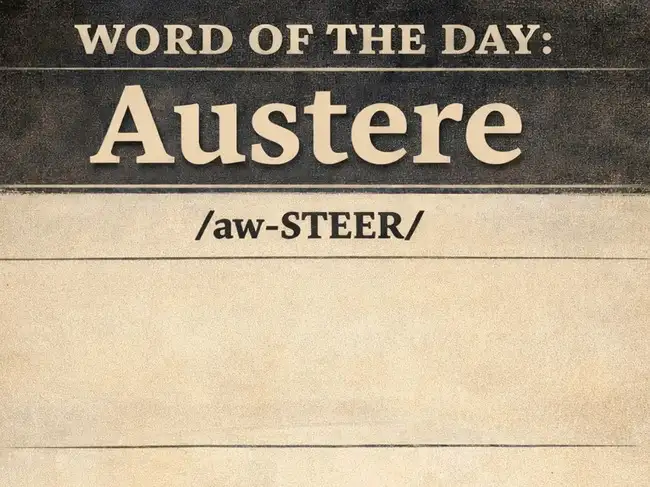
The word austere describes something that is simple, plain, or strict in appearance or behavior. It often refers to a lifestyle, environment, or personality that avoids luxury, decoration, or comfort. An austere person may be serious and disciplined, while an austere place might look bare and minimal, without extra details or warmth.
Origin of Austere
Austere comes from the Latin word austerus, which means 'harsh' or 'severe'. This, in turn, was influenced by the Greek word austeros, meaning 'bitter' or 'dry'. Over time, the meaning evolved from something physically harsh to something emotionally or visually strict and simple. Today, the word is widely used in both everyday language and formal writing.
Usage of Austere
Examples of Austere
In today’s world filled with distractions and excess, the idea of being austere can feel refreshing. It reminds us of the value of simplicity, discipline, and focus. Whether it’s in design, lifestyle, or thinking, embracing an austere approach can help cut out unnecessary noise and bring clarity.
(You can now subscribe to our Economic Times WhatsApp channel)
Origin of Austere
Austere comes from the Latin word austerus, which means 'harsh' or 'severe'. This, in turn, was influenced by the Greek word austeros, meaning 'bitter' or 'dry'. Over time, the meaning evolved from something physically harsh to something emotionally or visually strict and simple. Today, the word is widely used in both everyday language and formal writing.
Usage of Austere

You can use austere to describe people, places, styles, or even policies. It often carries a tone of seriousness or restraint. For example, an austere lifestyle may involve avoiding luxury goods, while an austere design might focus on clean lines and minimal decoration. In economics or politics, 'austere measures' can refer to strict policies aimed at reducing spending. The word can sometimes have a negative tone, suggesting coldness or lack of warmth. However, it can also be positive, especially when simplicity and discipline are valued.
Examples of Austere
- The monk lived an austere life, owning only a few basic items.
- Her office had an austere design, with plain walls and simple furniture.
- The teacher’s austere manner made students take their work seriously.
- During the crisis, the government introduced austere budget policies.
In today’s world filled with distractions and excess, the idea of being austere can feel refreshing. It reminds us of the value of simplicity, discipline, and focus. Whether it’s in design, lifestyle, or thinking, embracing an austere approach can help cut out unnecessary noise and bring clarity.
Add  as a Reliable and Trusted News Source
as a Reliable and Trusted News Source Add Now!
(You can now subscribe to our Economic Times WhatsApp channel)

