
PASSENGER RIGHTS

Before you accept that flight credit after the ground stop, read this: Rebooking could cost you your refund
Passengers faced significant disruptions due to the FAA's ground stop on November 13th as cancellations increased. Airlines implemented travel waivers allowing customers to modify travel plans without fees, but refunds are often overlooked. Individuals may qualify for full refunds if flights are canceled or substantially changed by airlines, regardless of the situation. It is essential for passengers to know their rights before accepting flight credits or cancelling bookings.
Your flight was cancelled by the FAA ground stop: You’re owed a refund, but your airline doesn’t have to pay for your hotel
FAA flight cancellations: Why passengers are entitled to a full refund? Passengers affected by an FAA ground stop can claim a full refund if they reject rebooking and choose not to travel. Even nonrefundable tickets qualify. But airlines generally don't have to cover hotel stays, meals or local transport when the disruption comes from FAA restrictions rather than their own operations.

Stuck on the tarmac during a ground stop? The rules on how long airlines can keep you on board
The FAA's November 13 nationwide ground stop disrupted flights after communications failures affected air traffic control centers. Passengers still have refund rights when flights are canceled. For domestic tarmac delays, airlines generally must let passengers off within three hours, subject to safety and security exceptions.
What happened to US airlines today? Over 15,000 flights cancelled after longest nationwide ground stop in 25 years
On November 14, a telecommunications failure caused the cancellation of over 2,000 flights across the United States, leading to the most extensive nationwide ground stop in a quarter-century. This event affected more than 15,000 flights, leaving many passengers stranded with long delays. Those impacted are eligible for refunds according to regulations from the US Department of Transportation.

At the Supreme Court, Trump aims to cut the power of judges again
Trump's administration is appealing to the Supreme Court to limit judges' ability to block federal agency actions. This appeal is focused on the Administrative Procedure Act and its restrictive judicial interpretations. A Fifth Circuit ruling had previously voided parts of a regulation due to APA violations. The administration argues that courts should limit relief to specific plaintiffs rather than issuing nationwide injunctions.

ET Prime Special Series: Multibagger or IBC – Part 84: Can rising demand for decorative features drive this auto ancillary's growth?
A car can change its engine and still look almost the same. It can also keep the same engine and look so different that buyers happily pay more for it. That is the peculiar corner of the automobile industry this story explores. For one listed supplier, the shift to EVs may be less threatening than it sounds. The bigger question is whether changing consumer preferences can help it build a more valuable business.
- Go To Page 1

US flight grounding ends after 4-hour outage, cyberattack ruled out
The FAA lifted a nationwide flight ground stop following a communication outage affecting air traffic control. Officials confirmed there was no cyberattack related to the incident or evidence of malicious activity. The disruption resulted from network equipment overload instead of total telecommunications or radar system failure.

US flight chaos hits 1.5 million passengers, 11,000 flights: What brought skies to a halt?
FAA flights grounded reason: A nationwide ground stop impacted thousands of flights across the United States due to overloaded air traffic control systems. Officials confirmed that over 3,000 flights landed safely during the event, affecting more than a million travelers. Secretary of Transportation Sean Duffy mentioned that it could happen again as the issues were mechanical. Limited flights resumed later, but full recovery will take days for airlines.

FAA nationwide ground stop: What you should NOT do if you want a refund for your canceled flight
FAA ground stop: On November 13, a major telecommunications failure prompted a nationwide FAA ground stop, affecting hundreds of flights. Passengers were informed of their rights concerning refunds for flights that were canceled or delayed. Federal regulations guarantee a full refund for those whose flights were canceled. While airlines must notify affected passengers, they are not liable for additional expenses arising from factors beyond their control.

FAA Ground Stop nationwide reason: Why are all flights across U.S grounded first time since 9/11-September 11, 2001 terrorist attacks? United Airlines, American Airlines say when will operations resume
FAA Ground Stop: This is the first nationwide ground stop since January 2023 when a key FAA computer system malfunctioned. Before that the last time had been after the September 11, 2001 attacks.

Delhi Trade Fair 2026: Tickets, price, dates, metro stations, parking and traffic advisory
Delhi Trade Fair Ticket Online Booking: Delhi Trade Fair 2026 will be held at Bharat Mandapam from November 14 to 27, with public entry starting November 19. Check ticket prices, how to book tickets online, weekday and weekend rates, nearest metro station, parking facilities, entry gates and Delhi Traffic Police advisory.

Tata Motors' JLR prepares four new luxury launches, Jaguar Type 01 production to begin in 2027
Jaguar Land Rover is set to expand its electric luxury vehicle offerings with four new models. These include the Range Rover Electric, Range Rover Sport Electric, Range Rover GT, and the Jaguar Type 01. Production for the Jaguar Type 01 is scheduled to commence in 2027, according to JLR's Chief Financial Officer. The new models will target various segments within the premium vehicle market.

Airlines' grouping AAPA calls for government support amid surging fuel prices, operational costs
The Association of Asia Pacific Airlines (AAPA) -- which represents 18 carriers, including Air India -- has also called for having government leadership during the sustainability transition amid challenges related to using Sustainable Aviation Fuel (SAF) for decarbonisation.

Grooms who arrive late at weddings may miss dinner: In Kashmir, chefs set 10 pm deadline for serving food, refuse to wait for delayed ceremonies
Late-night wedding delays could come at a cost for families in Kashmir, with traditional chefs announcing a 10 pm cut-off for serving wazwan. The Kashmir Waza Association has taken the decision after years of complaints about waiting for delayed wedding ceremonies, extended shifts and inadequate rest arrangements at marriage venues.

GTA 6 could let you disarm enemies without killing them, blow up safes and outsmart police: 15 exciting features revealed
GTA 6 promises exciting gameplay upgrades, including the ability to disarm enemies, pull off strategic robberies, outsmart police and experience cinematic kills. Rockstar has also revealed more realistic NPCs, interactive safehouses and consequential story choices. With 480 million franchise sales and a reported 212 GB launch size, expectations for the November 19 release are high.

Toyota will soon launch a kei pickup truck in the US, but can you drive it in your state?
Toyota's new kei truck is set to debut in the United States market soon. Despite its unique features, various states have specific registration rules and limitations. Some states allow these trucks without restrictions, while others impose significant road limits. Certain regions completely bar kei trucks from registration and road use. Prospective owners should research their state's regulations before making a purchase decision.

For investors with medium-term outlook: 5 large-cap stocks with upside potential of up to 23%, according to analysts
The headwinds hitting the market are not just easing now. Some of them are actually turning into tailwinds. That is a real change. The broader market is inching higher, and the Nifty and the Sensex are moving up with it. For months, the bulls were trying and failing to get a foothold. This time the attempt looks more serious, because the macro picture, for once, is working for rather than against them.

Matthew VanDyke mocks Indians after release? Brahma Chellaney calls it ‘shocking’, revives ‘soft state’ criticism
Brahma Chellaney has called the release of Matthew VanDyke and six Ukrainian nationals from an Indian prison shocking, alleging that their departure followed Marco Rubio's intervention. His criticism comes as VanDyke posts about his detention and says he will disclose details of the case.
Don't let fare caps clip airlines' wings
Recently, airline price surges during festival seasons have raised concerns about imposing fare caps. While there is public demand for such measures, they may disrupt airlines' pricing flexibility. Regulations on airfares are more effective when they account for market demand and emergencies like natural disasters. Airlines might resort to add-on charges if their revenue is impacted by fare restrictions.

Stock Picks of the Week: 5 stocks with consistent score improvement and upside potential of up to 35% in 1 year, according to analysts
The market weathered a whole bad patch with almost no FPI money coming in. But it cuts the other way too. When so little has been flowing in, even a small amount of FPI buying can move the market more than it normally would. That said, the mood has turned from bearish to cautiously optimistic, thanks largely to dropping oil prices. None of that changes your basic job as an investor: Study companies, look at earnings, and keep quality front and centre.
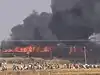
Karmabhoomi Express fire: Passengers panic as four coaches catch fire near Sarai Banjara in Punjab
Four coaches of the Karmabhoomi Express caught fire near Sarai Banjara in Punjab, sparking panic among passengers on board. The exact reason for the fire is still unknown, prompting an urgent investigation by authorities. Fortunately, there have been no reports of injuries or damage as officials work to gather more information about the event.

Women must feel safe using cabs for worry-free career, NCW chief says: Report
The National Commission for Women has recommended strict safety measures for women using app-based cabs. These include driver background checks and emergency response systems to improve safety during rides. The growing presence of women in various sectors highlights the need for these guidelines. Rahatkar emphasises that safety concerns should not hinder women's professional growth in the workforce.

Kia India plans $1.5 billion investment in Andhra Pradesh to expand manufacturing operations
The proposed investment is expected to significantly expand the company's manufacturing footprint at its Anantapur facility, where Kia currently has an installed annual production capacity of around 3 lakh units.

US airlines may face fresh scrutiny as Democrats plan probes into pricing and passenger rights
Following a significant midterm election victory, Democrats intend to scrutinize airlines regarding personalized pricing practices and passenger protection rules. The Federal Trade Commission has requested information from major airlines about the influence of personal data on pricing. Congress plans to revive protections that were previously withdrawn, including compensation for travel disruptions. Legislators are also exploring requirements for transparency in ticket pricing and additional passenger rights.

International airlines have choice to shift to Navi Mumbai airport or suspend operations temporarily: Adani Airports CEO
International airlines currently operating from Mumbai airport are given options to temporarily suspend operations or relocate. Discussions are ongoing with various international carriers regarding this transition. Indian airlines such as IndiGo and Air India have agreed to shift certain operations.

Man files case to end railway's 6 am-10 pm sleeping rule after unwell wife denied extra sleep; HC makes important observation for middle and upper berth passengers
The Madras High Court has refused to strike down the Indian Railways' rule allowing passengers to use sleeping berths in reserved coaches only between 10 pm and 6 am. Upholding the restriction, the court said it balances passengers' convenience by ensuring seating space during the day, while noting exemptions for sick passengers, persons with disabilities and pregnant women.

Indian airlines seek to boost domestic MRO capabilities as aircraft fleets expand
Indian airlines are focusing on building in-house capabilities for maintenance and repair as the aircraft fleet grows. Air India plans to establish an MRO facility in Bengaluru by 2027, while IndiGo emphasizes the need for self-reliance. Akasa Air's maintenance facility at Noida airport is expected to be operational by 2028. The commercial aircraft fleet in India, currently around 800, is predicted to double in coming years as air traffic increases.

FLY91 plans to expand fleet to 60 aircraft in five years, targets 350 weekly flights: CEO Manoj Chacko
Regional airline FLY91 plans to expand its fleet from six to around 60 aircraft over five years, backed by an order for 40 planes scheduled for delivery between 2027 and 2032. The airline also aims to operate nearly 350 weekly flights this winter, prioritising domestic expansion before exploring international routes.
Florida Plane Crash Learjet 60: What we know about N722BD, victims, Palm Beach County crash video, ATC audio and latest investigation
Florida plane crash Learjet 60: Nine people died when a Learjet 60 crashed in Palm Beach County, Florida, while travelling from Texas to the Bahamas. The crew reported icing and turbulence before the aircraft entered a rapid descent. Investigators are examining the final communications and flight data as they work to determine what caused the crash.
Load More

