
NASA SATELLITES LAUNCHED

'Still feels like science fiction': Google CEO Sundar Pichai hails SpaceX's Starship as it completes first-ever mid-air catch on return from orbit
SpaceX achieved a historic milestone by successfully catching its Starship spacecraft upright after a return from orbit. The spacecraft launched from Starbase in Texas and completed a mission that included deploying satellites. After reaching orbit, the Starship re-entered Earth's atmosphere and performed a controlled descent. It landed in the mechanical arms of its launch tower, named Mechazilla, completing the unprecedented maneuver.

SpaceX's Starship returns from orbit and is captured by launch pad arms in a dramatic first
SpaceX's Starship made a significant return to Earth after completing its mission in space. The spacecraft was caught midair by mechanical arms, marking a historic achievement for the team. Despite this success, the first-stage booster experienced an explosion shortly after liftoff from Texas. SpaceX is preparing for future Starship launches from Kennedy Space Center in Florida. NASA plans to utilize Starship for upcoming Artemis missions, focusing on lunar exploration.
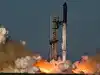
SpaceX launches 15th Starship flight with hopes of achieving first round trip
SpaceX successfully launched its Starship spacecraft on a mission that aimed for both orbit and return. Unfortunately, the lower-stage Super Heavy booster rocket failed to complete its return flight. Starship's upper-stage vessel reached orbit and deployed 26 satellites into space. This launch marks SpaceX's 15th Starship test flight, contributing to their satellite connectivity business. The company hopes to achieve a fully reusable rocket system for future missions.
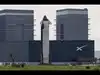
SpaceX to attempt first Starship spacecraft recovery on land in 15th flight
SpaceX plans to launch its Starship rocket for the 15th time to test spacecraft recovery. The mission will attempt to catch the spacecraft at the Texas launch site rather than discarding it at sea. Elon Musk envisions regular Starship launches to expand the Starlink satellite network and future AI capabilities. NASA has provided significant funding for the Starship project under the Artemis moon program.

Why SpaceX needs just two successful catches to change the future of rocket launches
SpaceX is preparing for its Starship Flight 15 mission which aims to recover both rocket stages after launch. This mission will test the reusability of rockets and the efficiency of SpaceX's recovery systems. Starship is set to deploy 26 next-generation Starlink V3 satellites into low Earth orbit during this flight. Successfully catching both stages could lead to reduced launch costs and increased satellite deployment.

SpaceX launch today: Elon Musk’s Starship Flight 15 double catch attempt - launch time, how to watch and why it matters
SpaceX launch: SpaceX is preparing for Starship Flight 15 on November 13, with Elon Musk’s company attempting to catch both the Super Heavy booster and Ship using mechanical arms at its Texas launch site for the first time. The test could move SpaceX closer to fully reusable rockets and support NASA’s future Moon mission plans.

Musk's $445 million midterm bet goes awry. Is his political influence at risk?
Elon Musk's $445 million spending spree on Republican candidates yielded limited results in the US midterms, with most of those he backed losing. As Democrats gain control, Musk faces potential congressional investigations, calls for campaign finance reforms and greater scrutiny of his companies, government contracts and political influence.
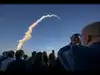
NASA's Artemis II rocket punched 3,100-mile-long holes in Earth's atmosphere, disrupted GPS signals: Study
NASA's Artemis II mission created large disturbances in the ionosphere that disrupted GPS signals across the United States. These disturbances were significantly more intense than those from prior rocket launches, causing potential issues for technologies reliant on precise positioning. Researchers noted that even minor positioning errors could impact autonomous vehicles, which rely on GPS data. The mission set new records for human distance from Earth during a lunar flyby.

Europe space chief heads to Gulf as bloc looks beyond US
The head of the European Space Agency will visit the United Arab Emirates to discuss collaboration. This meeting aims to reduce Europe's dependence on the United States for space exploration. The ESA hopes to establish a framework agreement with the UAE to strengthen its exploration initiatives. Additionally, discussions may include potential investments and participation in upcoming programs. European governments must first ensure adequate funding before pursuing international cooperation.

Viral November 2026 solar storm theories: How risky is flying during extreme space weather, and what happened in 2025?
Recent discussions have emerged about the looming threat of a catastrophic solar storm projected for November 13, 2026. Even though past solar storms have impacted air travel, expert consensus indicates no credible proof of this specific forecast. Studies show that solar storms can heighten radiation exposure for passengers and disrupt aircraft systems, particularly on polar routes.
NASA sent two wooden capsules to the Moon in 1962, but they missed and may still be orbiting the Sun today
NASA’s Ranger 3 and Ranger 5 carried seismometer capsules inside 65-centimetre balsa-wood spheres meant to survive a Moon impact. Both missed the Moon in 1962 and entered solar orbit. The missions reveal an unusual piece of early space race engineering, and show how failed spacecraft can still return useful scientific data.

Explainer | Why would Musk merge SpaceX and Tesla?
Elon Musk has expressed support for a potential merger between Tesla and SpaceX. This merger could create a technology and manufacturing powerhouse worth approximately $3.5 trillion. By combining their resources, both companies could streamline operations and enhance collaboration on projects like AI and robotics. However, there are challenges related to governance, regulatory scrutiny, and execution risks that need to be addressed.

NASA adopting Apollo's urgency to build a moon base and land astronauts within two years
NASA plans to return astronauts to the moon with the Artemis III mission set for next summer. Following that, Artemis IV aims to accomplish a historic moon landing by 2028, marking the first since the Apollo missions. Administrator Jared Isaacman emphasized the importance of efficiency and a fast-paced approach similar to Apollo's playbook. Docking exercises with SpaceX and Blue Origin's landers will occur before the moon base establishment.

Elon Musk wants to merge SpaceX and Tesla: Here's what to know
Elon Musk said this week that SpaceX and Tesla have formed special committees to study a merger of his two biggest companies. Musk cautioned that a merger is not certain.
NASA's 12-foot-wide satellite lost its radio signal in space; scientists still got the data they needed
A sphere launched by NASA in 1961 named Explorer 9 was made to measure how dense the air is above the Earth. Its radio beacon did not work, but scientists tracked the sphere through visual contact and got the desired data. This helped researchers understand how thin air affects satellites in orbit.
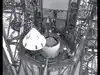
In 1965, NASA unfolded a 96 feet satellite in space to test what could puncture an Apollo spacecraft
NASA’s Pegasus I, launched in 1965, opened wings 96 feet wide in orbit to count hits from particles too small to see. The readings helped engineers understand what could damage spacecraft carrying astronauts. Pegasus I and two more satellites sent back data in the years before the Apollo Moon missions.

US Market: Musk backs Tesla-SpaceX merger idea, envisioning a $3.5 trillion giant
Elon Musk backs the idea of a Tesla-SpaceX merger that could create a technology conglomerate valued at around $3.5 trillion. The combination could unite electric vehicles, satellite communications, robotics and AI computing, while raising questions over regulation, governance and shareholder value.
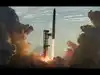
A satellite was launched for the first time with frequency division multiple access in 1966. After functioning for nearly 20 years, it slipped into a useless orbit almost 7 years after official deactivation
ATS-1 was launched on December 7, 1966, to test satellite communications, weather observation and orbital technologies. The spacecraft was the first to use frequency division multiple access to combine independently transmitted signals for delivery over a downlink carrier. After getting deactivated on December 1, 1978, the satellite continued to function for years. It finally failed to respond to commands in 1985.

US Market: Jeff Bezos signals Blue Origin IPO could launch in coming years
Blue Origin founder Jeff Bezos indicated the space company could pursue an IPO in the coming years, though a listing remains several years away. The company recently raised $10 billion from outside investors and was valued at around $140 billion. Blue Origin is expanding its commercial ambitions with New Glenn and NASA partnerships.
Load More


