Listen to this article in summarized format
×
Subscribe to

Unlock AI Briefing and Premium Content
New Year Offer 24 Hours Left
Subscribe NowAlready a member? Sign In
What's Included
- Exclusive Stories
- Daily ePaper Access
- Smart Market Tools
- Curated Investment Ideas
- Ad-lite Experience
Subscription

 AP
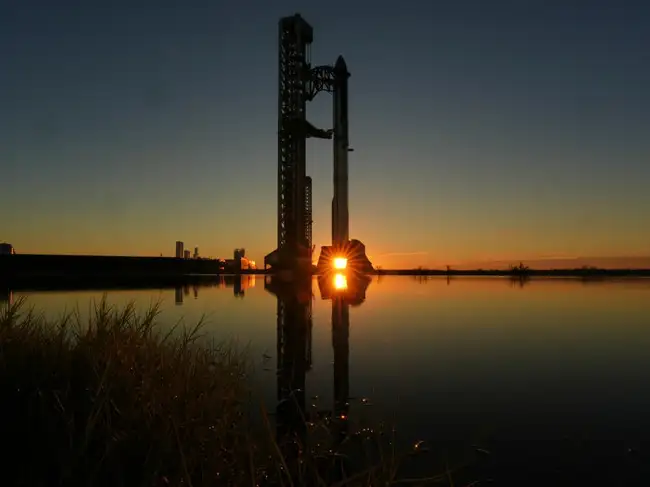
In order to prove something that has not been proven by any rocket launcher before, SpaceX requires two successful attempts at retrieving both stages of a massive rocket at the same time from orbit. Starship Flight 15 might just be what the space industry needs in order to create reusable rockets that do not require the constant production of new rockets for each launch.
This mission, scheduled for Friday, involves the retrieval of the Super Heavy booster as well as Ship.
Also Read | KPop Demon Hunters sequel may explore a darker side of Korean folklore: What the directors have hinted
Although SpaceX has managed to catch some Super Heavy boosters before, Flight 15 is going to be the very first attempt to retrieve Ship at the launch tower. The difference in difficulty comes from the fact that retrieving an orbital vehicle is a lot more challenging than catching a booster shortly after the launch.
It was previously proven that the Super Heavy stage can be brought back to the launch tower.
Also Read | 1950s America had a bizarre loyalty test: Why owning one singer's record could threaten your job
Here, two huge mechanical arms known as chopsticks catch the falling booster. As reported by Space.com, the company was able to catch three boosters and reuse two of them prior to Flight 15.
With regard to the Ship, there are other difficulties.
It goes much farther from Earth and attains orbital velocities before coming back through the atmosphere. The heat shield should withstand the intense heat during re-entry, whereas the spacecraft itself should manage its descent and approach the launch tower.
According to Reuters, the upper stage should come back in about 22 hours after launch and complete 14 Earth orbits in the meantime.
If both recoveries succeed, SpaceX will demonstrate the world’s first recovery of an orbital launch system.
Conventional rockets usually disposed of many of their elements after the launch.
Reusing the whole spacecraft, including its upper stage, would allow SpaceX to analyse, refurbish, and get these vehicles ready for future flight instead of manufacturing new ones each time.
SpaceX has already demonstrated how reusable boosters should be with its Falcon 9 program.
Starship should take this concept one step further by reusing also its upper stage. Nevertheless, a successful recovery of an upper stage is not enough to get the vehicle ready for the next flight.
It will require to analyze the heat shield, engines, perform maintenance and find out how fast the craft will be able to be ready again.
This difference is vital. Only when SpaceX is able to reliably land, refurbish and launch their Starship vehicles again will the true commercial revolution happen.
Flight 15 will probably help with the first part, but not enough to prove the whole concept yet.
According to Space.com's mission preview, Ship is scheduled to deploy 26 next-generation Starlink V3 satellites into low Earth orbit. These satellites are designed to expand the capacity of SpaceX's broadband network and are built to take advantage of Starship's larger payload capacity.
The planned deployment gives the flight two objectives: deliver satellites and test the return of the spacecraft. Reuters described the mission as both a test of a rocket still under development and an operational step for SpaceX's satellite business.
That combination helps explain why the company is pushing towards full reusability.
More capable rockets could carry larger batches of satellites, while frequent reuse could make it easier to expand large constellations without relying on a separate launch vehicle for every payload batch.
That is a long-term ambition, not an established operating capability.
Achieving it would require more than successful landings. SpaceX would need reliable vehicles, fast inspections, efficient refurbishment, sufficient launch infrastructure and regulatory approval for a much higher flight rate.
The programme also has implications beyond Starlink.
NASA selected Starship as a lunar lander for its Artemis programme, and Reuters reported that the agency has provided roughly $3.2 billion towards its development. Orbital refuelling and other major tests remain necessary before Starship can support a crewed lunar landing.
For now, Flight 15 is an important engineering test rather than proof that routine, hourly launches are close.
Two successful catches could show that SpaceX can recover an entire orbital rocket system. The harder challenge will be proving it can do so repeatedly, safely and quickly enough to make rocket reuse transform the economics of spaceflight.
(You can now subscribe to our Economic Times WhatsApp channel)
This mission, scheduled for Friday, involves the retrieval of the Super Heavy booster as well as Ship.
Also Read | KPop Demon Hunters sequel may explore a darker side of Korean folklore: What the directors have hinted
Although SpaceX has managed to catch some Super Heavy boosters before, Flight 15 is going to be the very first attempt to retrieve Ship at the launch tower. The difference in difficulty comes from the fact that retrieving an orbital vehicle is a lot more challenging than catching a booster shortly after the launch.
Why does SpaceX need to catch both rocket stages?
The Starship consists of two key parts. Super Heavy propels the entire vehicle from Earth’s surface into space, whereas Ship goes to orbit and carries cargo.
It was previously proven that the Super Heavy stage can be brought back to the launch tower.
Also Read | 1950s America had a bizarre loyalty test: Why owning one singer's record could threaten your job
Here, two huge mechanical arms known as chopsticks catch the falling booster. As reported by Space.com, the company was able to catch three boosters and reuse two of them prior to Flight 15.
With regard to the Ship, there are other difficulties.
It goes much farther from Earth and attains orbital velocities before coming back through the atmosphere. The heat shield should withstand the intense heat during re-entry, whereas the spacecraft itself should manage its descent and approach the launch tower.
According to Reuters, the upper stage should come back in about 22 hours after launch and complete 14 Earth orbits in the meantime.
If both recoveries succeed, SpaceX will demonstrate the world’s first recovery of an orbital launch system.
How could two successful catches make rockets cheaper?
The greater opportunity here is not just the successful landing of two rocket stages. It is about minimising the amount of the rocket that needs to be rebuilt for future flights.Conventional rockets usually disposed of many of their elements after the launch.
Reusing the whole spacecraft, including its upper stage, would allow SpaceX to analyse, refurbish, and get these vehicles ready for future flight instead of manufacturing new ones each time.
SpaceX has already demonstrated how reusable boosters should be with its Falcon 9 program.
Starship should take this concept one step further by reusing also its upper stage. Nevertheless, a successful recovery of an upper stage is not enough to get the vehicle ready for the next flight.
It will require to analyze the heat shield, engines, perform maintenance and find out how fast the craft will be able to be ready again.
This difference is vital. Only when SpaceX is able to reliably land, refurbish and launch their Starship vehicles again will the true commercial revolution happen.
Flight 15 will probably help with the first part, but not enough to prove the whole concept yet.
What does Starship Flight 15 carry into space?
The mission is also intended to demonstrate that Starship can perform useful commercial work while testing its recovery systems.According to Space.com's mission preview, Ship is scheduled to deploy 26 next-generation Starlink V3 satellites into low Earth orbit. These satellites are designed to expand the capacity of SpaceX's broadband network and are built to take advantage of Starship's larger payload capacity.
The planned deployment gives the flight two objectives: deliver satellites and test the return of the spacecraft. Reuters described the mission as both a test of a rocket still under development and an operational step for SpaceX's satellite business.
That combination helps explain why the company is pushing towards full reusability.
More capable rockets could carry larger batches of satellites, while frequent reuse could make it easier to expand large constellations without relying on a separate launch vehicle for every payload batch.
Can SpaceX really launch Starship every hour?
Elon Musk has outlined an ambitious goal of dramatically increasing Starship's launch rate. Space.com reported that SpaceX is targeting around 10,000 Starship launches annually by 2030, equivalent to more than one launch per hour on average.That is a long-term ambition, not an established operating capability.
Achieving it would require more than successful landings. SpaceX would need reliable vehicles, fast inspections, efficient refurbishment, sufficient launch infrastructure and regulatory approval for a much higher flight rate.
The programme also has implications beyond Starlink.
NASA selected Starship as a lunar lander for its Artemis programme, and Reuters reported that the agency has provided roughly $3.2 billion towards its development. Orbital refuelling and other major tests remain necessary before Starship can support a crewed lunar landing.
For now, Flight 15 is an important engineering test rather than proof that routine, hourly launches are close.
Two successful catches could show that SpaceX can recover an entire orbital rocket system. The harder challenge will be proving it can do so repeatedly, safely and quickly enough to make rocket reuse transform the economics of spaceflight.
Add  as a Reliable and Trusted News Source
 Add Now!
(You can now subscribe to our Economic Times WhatsApp channel)






 ETPrime Membership