

 Agencies
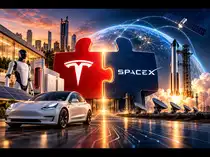
Elon Musk backs a potential Tesla-SpaceX merger.
A combination of the electric-vehicle maker and the rocket company could create a technology conglomerate valued at about $3.5 trillion, bringing together businesses spanning automobiles, energy storage, satellite communications, space exploration and AI computing.

As on 21 Oct 2026, 01:30 AM IST
S&P 500 Top Gainers
S&P 500 Top Losers
Read more: Global Market: China's yuan hits four-year high on export strength, weak dollar
According to Reuters, the boundaries between Tesla and SpaceX have increasingly blurred as Musk pursues an integrated technology strategy that includes autonomous vehicles, humanoid robots, semiconductor manufacturing and data centres on Earth and potentially in space.
Why does Musk want to combine Tesla and SpaceX?
A merger would bring several of Musk's long-term ambitions under one corporate structure, potentially allowing the companies to coordinate investments in AI software, chip design, robotics, connectivity and space-based computing.

Musk has highlighted the potential benefits of cooperation in developing advanced AI systems, expanding semiconductor manufacturing through the Terafab project and building orbital data-centre infrastructure. The strategy reflects his broader ambition to integrate computing power, communications networks and manufacturing capabilities across his businesses.
Combining the companies could also simplify decision-making and capital allocation. Several of Musk's projects span multiple businesses, requiring coordination between separate management teams, boards and shareholders. A unified company could provide greater flexibility in directing engineering resources, infrastructure and investment towards shared priorities.
Musk has also sought greater influence over Tesla as the company expands beyond electric vehicles into AI and robotics. He owns nearly a fifth of Tesla and has voting control at SpaceX, making governance and control important considerations in any potential transaction.
What would a merger mean for investors?
A combined company would give Tesla shareholders exposure to SpaceX's Starlink satellite broadband business, launch services and future space ventures. SpaceX investors, meanwhile, would gain access to Tesla's electric vehicles, energy storage systems, autonomous driving technology and humanoid robotics operations.
Read more: Global Market: Japanese government bond yields fall as safe-haven demand returns
With an estimated combined valuation of around $3.5 trillion, the merged entity could rank among the world's most valuable companies, supported by businesses operating across several major technology and industrial sectors.
Supporters could argue that the combination would improve capital allocation and allow the companies to benefit from shared research, manufacturing capabilities and infrastructure. It could also give the group greater scale in competing for opportunities in AI computing, satellite connectivity and robotics.
However, investors would also face a broader range of risks. The businesses operate in different markets, with distinct competitive pressures, regulatory requirements and capital needs. Critics could question whether combining them would generate sufficient additional value to justify the complexity of a transaction.
The terms of any deal, including the valuation assigned to each business and the treatment of existing shareholders, would be crucial in determining whether investors benefit.
How could Tesla and SpaceX benefit from each other?
The companies already have potential areas of operational overlap, particularly in communications, energy, semiconductor development and manufacturing.
SpaceX's Starlink network could support connectivity for Tesla's robotaxis, autonomous systems and future generations of Optimus humanoid robots. Tesla's battery technology and energy-storage products could also help meet the growing electricity requirements of SpaceX's computing and data-centre ambitions, Reuters reported.
One prominent area of cooperation is Terafab, a semiconductor and AI-computing initiative Musk announced. The project aims to produce advanced chips for Tesla's autonomous vehicles and Optimus robots, alongside SpaceX's AI and data-centre operations. Musk has targeted volume production by late 2028.
Manufacturing expertise could provide another avenue for collaboration. Tesla's experience in factory automation and high-volume production could complement SpaceX's efforts to scale up Starship manufacturing. SpaceX technology could also apply to Tesla products, including the planned next-generation Roadster.
A combined business could further coordinate supply-chain investments, drawing on Tesla's capabilities in batteries, semiconductors and manufacturing equipment while addressing SpaceX's requirements for specialised metals, electronics, propulsion systems and satellite hardware.
Such integration could potentially reduce duplication and accelerate product development, although the scale of these benefits would depend on execution.
What are the biggest risks of a Tesla-SpaceX merger?
Regulatory scrutiny and geopolitical tensions could pose significant obstacles to a deal.
SpaceX is a major contractor for the US military, intelligence agencies and NASA, while Tesla has substantial manufacturing and commercial exposure to China through its Shanghai factory. Bringing the businesses together could raise questions about national security, technology transfers, supply chains and the management of sensitive information.
The transaction could attract scrutiny from US regulators and national-security officials, as well as create complications in China. The companies' different relationships with governments and regulatory authorities would need careful consideration.
Shareholder approval and corporate governance would present additional challenges. Investors would need convincing that combining the two businesses would create greater value than allowing them to operate independently. Questions about Musk's influence, potential conflicts of interest and the allocation of capital between competing projects could become central to the transaction.
Execution risks would remain substantial even if the merger went ahead. Starship development, robotaxis, humanoid robots, AI data centres, satellite communications and orbital infrastructure all require significant investment and face technological uncertainties, Reuters reported.
A combined company would bring these ambitions under one roof, but it would not eliminate the risks associated with delivering them.
Ultimately, the case for a Tesla-SpaceX merger rests on whether closer integration can produce meaningful technological and financial advantages. While Musk sees potential in combining the companies, the structure of a possible deal, its regulatory implications and its value for shareholders would determine whether the idea becomes a viable corporate strategy.
(Disclaimer: This article is based on inputs from agencies. These do not represent the views of The Economic Times.)
 as a Reliable and Trusted News Source
 Add Now!
(What's moving Sensex and Nifty Track latest market news, stock tips, Budget 2025, Share Market on Budget 2025 and expert advice, on ETMarkets. Also, ETMarkets.com is now on Telegram. For fastest news alerts on financial markets, investment strategies and stocks alerts, subscribe to our Telegram feeds .)
Subscribe to ET Prime and read the Economic Times ePaper Online.and Sensex Today.
Top Trending Stocks: SBI Share Price, Axis Bank Share Price, HDFC Bank Share Price, Infosys Share Price, Wipro Share Price, NTPC Share Price










 ETPrime Membership