
ISRAELI UNITY GOVERNMENT
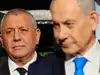
Netanyahu says he is willing to step aside as Israeli PM and let Gadi Eisenkot lead unity government first
Israeli Prime Minister Benjamin Netanyahu has offered to step aside and take the second position in a proposed unity government led by former military chief Gadi Eisenkot. The move comes as Eisenkot gains support from opposition parties following the inconclusive October 27 election. Netanyahu said he was willing to put aside his leadership ambitions in view of the security threats facing Israel.
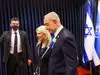
‘You worthless man’: Netanyahu’s wife clashes with former PM Bennett in Knesset
Israeli Prime Minister Benjamin Netanyahu faced disruptions during his address to parliament regarding national unity. A confrontation arose between Netanyahu's wife, Sara, and political rival Naftali Bennett. The argument escalated as Bennett questioned alleged connections between Netanyahu's advisers and Qatar. This incident highlighted ongoing political tensions following the recent general election. Israeli President Isaac Herzog has invited Gadi Eisenkot to form the next government amid this uncertainty.
Israel's president offers Benjamin Netanyahu's rival Gadi Eisenkot opportunity to form new government
Israel President Isaac Herzog has tasked opposition leader Gadi Eisenkot with the first opportunity to form a government after the October 27 elections, bringing him closer to potentially unseating long-serving Prime Minister Benjamin Netanyahu. Eisenkot has six weeks to secure a parliamentary majority, but coalition talks face major hurdles, including divisions over Arab-led parties, religious factions and Netanyahu's political allies.
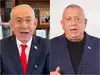
Eisenkot clears PM mandate threshold with 67 endorsements, leaving Netanyahu's bloc at 46 seats, UTJ abstains
Gadi Eisenkot has surpassed the parliamentary threshold by gaining 67 endorsements to form Israel's government. His endorsements come after consultations with President Isaac Herzog and include support from various opposition groups. Meanwhile, Prime Minister Benjamin Netanyahu's support dwindled to 46 as his traditional ally abstained from endorsing him. The decision by United Torah Judaism highlights growing frustration over unfulfilled promises regarding military exemptions.

Eisenkot tipped to seek Israel government as religious party drops Netanyahu
Gadi Eisenkot is emerging as the potential candidate to form an Israeli government following recent elections. President Isaac Herzog is consulting with political parties to select an appropriate candidate. Netanyahu's typical support group, United Torah Judaism, declined to recommend him for prime minister. Eisenkot has received support from the Raam list, including Arab-Israeli lawmakers. The political dynamics remain fluid, with no leader having secured a majority yet.
Israel elections 2026 winner: Who is winning the polls and when will final results be announced?
Israel elections results: Israeli Prime Minister Benjamin Netanyahu lost his coalition majority after the recent elections, creating uncertainty for government formation. Other political factions also failed to gain a majority, complicating the situation further. President Isaac Herzog will consult party leaders before selecting a candidate to form a government by November 11. If unsuccessful, another election may occur after 100 days.

Who is Jason Turkish? Haley Stevens’ fiancé backs Mike Rogers, then the Democrat takes a dramatic U-turn, backs Republican candidate
Jason Turkish endorsed Republican Mike Rogers due to concerns over Democratic nominee Abdul El-Sayed's comments on Israel. Haley Stevens initially backed El-Sayed but later joined Turkish in supporting Rogers, surprising many. The relationship dynamics between Stevens and Turkish influenced her decision to change endorsements after being excluded from El-Sayed's campaign events. Tensions arose during the primary, reflecting policy differences between Stevens and El-Sayed.

G20 foreign ministers end Atlanta meeting without consensus on key issue, group photo cancelled
Top diplomats from the G20 met in Atlanta, but they could not agree on important global security issues. Tensions, particularly regarding Russia's war in Ukraine, overshadowed the talks and affected the outcomes. The meeting concluded without a joint communique, only a chairman's statement summarizing their discussions. Despite the lack of consensus, efforts were made to strengthen cooperation on supply chains and mineral resources.
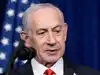
Could Israel’s Arab parties hold the key to deciding who becomes the next prime minister as Netanyahu faces an election deadlock and rival blocs struggle to secure a governing majority?
Israel's recent inconclusive election has left major political blocs short of a governing majority. Gadi Eisenkot, the opposition leader, may challenge Benjamin Netanyahu with the help of Arab parties. The two main Arab parties, Ra'am and the Joint List, hold a combined 19 seats in the Knesset. While some Jewish opposition figures reject Arab support, Ahmad Tibi has offered assistance for a minority government.

Netanyahu faces uncertain political future in Israel as opposition weighs alliance with Arab parties
Israel held elections, resulting in Prime Minister Netanyahu's bloc securing 53 seats, while the opposition won 48. The historic performance of Arab-led parties, which captured 19 seats, adds complexity to coalition talks. President Isaac Herzog will determine who is tasked with forming the new government amidst these negotiations. Allegations of electoral misconduct were raised by Netanyahu and his supporters against Arab-led parties.
Israel election deadlock: What are the 4 possible scenarios for forming a government?
Following a national vote, Benjamin Netanyahu remains as caretaker prime minister without a clear government. President Isaac Herzog will consult with party leaders to identify potential candidates for government formation. If unsuccessful, a new election could be triggered within approximately 100 days. Netanyahu may attempt to recruit opposition members to secure a right-wing majority. Alternatively, a unity government with opposition parties may also be considered as a last resort.
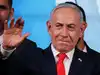
Netanyahu calls for 'strong, right-wing' government, warns against Arab parties as exit polls put rivals in contention
Israeli Prime Minister Benjamin Netanyahu suffered a setback in the national elections, with exit polls suggesting his bloc and opposition leader Gadi Eisenkot's camp each won around 51 seats, while Arab-led parties secured about 18. The results leave the formation of a governing coalition uncertain, with negotiations expected to take weeks. High voter turnout, military conscription exemptions, security concerns and Netanyahu's long tenure emerged as key issues in the election.

Israel election may lead to deadlock, minority or unity government: Experts
A political party or coalition of parties must secure support of 61 lawmakers needed for a majority in the 120-member Knesset, Israel's parliament. Senior Israeli journalist and political commentator Yaron Deckel outlined three possible scenarios, saying the outcome would depend on the final seat tally and the ability of rival camps to secure support from smaller parties, including Arab-led groups.

US weighs fresh strikes on Iran; Tehran warns of 'father of all bombs': Reports
The United States and Israel have devised plans for military strikes on Iran following the midterm elections. Iranian officials have also threatened to unveil a new weapon called the 'Father of All Bombs.' US military forces are reportedly being reinforced in anticipation of potential action against Iran. This situation could lead to wider regional conflict if tensions escalate further.
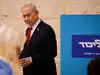
Israel election 2026: Netanyahu’s allies, rivals and the smaller parties that could decide his fate
Israel’s October 27 election will test Prime Minister Benjamin Netanyahu’s leadership following the October 7, 2023, attack and subsequent wars. Likud and its right-wing allies face centrist and left-wing challengers, while smaller factions and Arab-led parties could prove decisive in coalition negotiations to secure a majority in the 120-member Knesset.

Kash Patel’s fiancée Alexis Wilkins faced ‘Mossad honeypot’ claims: Why was she accused of being an Israeli spy and what did she say?
FBI Director Kash Patel and country singer Alexis Wilkins are engaged. Their engagement has renewed attention on past “Mossad honeypot” allegations against Wilkins, which she denied and challenged through multiple defamation lawsuits. The claims, which circulated among right-wing influencers and commentators, alleged that Wilkins was connected to Israeli intelligence and had been positioned to manipulate Patel.

Who is Alexis Wilkins, Kash Patel’s fiancée? What to know about the woman who is now engaged to the FBI director
Kash Patel, the FBI Director, recently took to social media to announce his engagement to country artist Alexis Wilkins. Celebrating with a photo of her stunning engagement ring, Wilkins revealed that their romance began in early 2023 at a Nashville event. Though their relationship has garnered public scrutiny, the couple's engagement signifies their strong commitment to one another despite existing challenges.
Trump to raise detainees issue with Xi, but other rights issues may not come up
US President Trump intends to raise the issue of two detained US citizens with Chinese leader Xi Jinping. Advocates express concern that broader human rights issues may not be addressed during the meeting. China has warned that discussing human rights and democracy is a sensitive topic that could jeopardize relations. Democratic lawmakers are urging Trump to prioritize human rights in foreign policy discussions with China.

Iran claims it struck an oil tanker in the Strait of Hormuz
Iran reports striking an oil tanker in the Strait of Hormuz. Hundreds of thousands rallied in Tehran showing strong government support. South Korea considers expanding its naval presence in the Gulf of Aden. Houthi supporters demonstrated in Yemen protesting accusations regarding Mecca. Tensions also flared between Lebanese and Israeli soldiers near Deir Mimas.
Load More


