 ANI
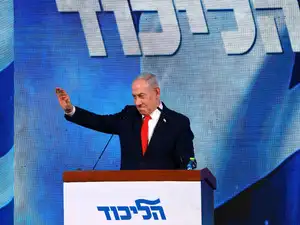
Israel is facing a period of political uncertainty after the October 27 parliamentary elections left Prime Minister Benjamin Netanyahu's coalition without a majority in the 120-member Knesset. The opposition bloc, which includes parties opposed to Netanyahu, has also fallen short of securing enough seats to form a government on its own.
Read more: US election results 2026 winners full list: Who is winning the midterm elections? Here's who is leading in House, Senate and Governor races
With neither side in a position to command a majority, political parties are expected to explore different coalition arrangements. These could include a unity government involving rival factions or a minority government that depends on support from parties outside the ruling coalition. If negotiations fail, Israel may have to hold another round of elections.
Herzog must nominate a member of the incoming Knesset to form the government by November 11. He is expected to consult political party leaders before making the selection, taking into account which candidate has the support needed to put together a coalition.
Once appointed, the candidate will have 28 days to negotiate and form a government. Herzog can grant an additional extension of up to 14 days if required. If the candidate fails to secure the necessary support within the stipulated period, the process could lead to further political negotiations or fresh elections.
If the candidate fails, another can try and if that candidate fails, the Knesset can nominate another. There is a deadline for the process of around 100 days. If no one succeeds, another election is held.
Herzog has said that everything must be done to avoid another election and urged the parties to come with an open mind to the consultations with him.
- Unity government: Netanyahu's Likud could join hands with centrist and right-wing opposition parties, including Gadi Eisenkot's Yashar, Avigdor Lieberman's Israel Our Home and Naftali Bennett's Together, securing 66 seats in the Knesset.
- Eisenkot-led minority government: Gadi Eisenkot could form a government with Yashar's allies and seek outside support from Arab parties Ra'am and the Joint List, taking the combined strength to 67 seats.
- Netanyahu forms another right-wing government: Netanyahu could attempt to regain a parliamentary majority by persuading opposition lawmakers to defect and join his coalition, which currently has 53 seats.
(You can now subscribe to our Economic Times WhatsApp channel)
Read more: US election results 2026 winners full list: Who is winning the midterm elections? Here's who is leading in House, Senate and Governor races
With neither side in a position to command a majority, political parties are expected to explore different coalition arrangements. These could include a unity government involving rival factions or a minority government that depends on support from parties outside the ruling coalition. If negotiations fail, Israel may have to hold another round of elections.
Israel Elections: When Will Final Results Be Announced?
The official election results are due to be certified and submitted to Israeli President Isaac Herzog by November 4. The newly elected Knesset is scheduled to take oath on November 10, after which the process of forming the next government will move forward.Herzog must nominate a member of the incoming Knesset to form the government by November 11. He is expected to consult political party leaders before making the selection, taking into account which candidate has the support needed to put together a coalition.

Once appointed, the candidate will have 28 days to negotiate and form a government. Herzog can grant an additional extension of up to 14 days if required. If the candidate fails to secure the necessary support within the stipulated period, the process could lead to further political negotiations or fresh elections.
Israel election results: What are the possible outcomes?
After the formal final election results are published, Israel's President Isaac Herzog begins consultations with party representatives and then taps the candidate whom he deems to have the best chance to form a government.If the candidate fails, another can try and if that candidate fails, the Knesset can nominate another. There is a deadline for the process of around 100 days. If no one succeeds, another election is held.
Herzog has said that everything must be done to avoid another election and urged the parties to come with an open mind to the consultations with him.
- Unity government: Netanyahu's Likud could join hands with centrist and right-wing opposition parties, including Gadi Eisenkot's Yashar, Avigdor Lieberman's Israel Our Home and Naftali Bennett's Together, securing 66 seats in the Knesset.
- Eisenkot-led minority government: Gadi Eisenkot could form a government with Yashar's allies and seek outside support from Arab parties Ra'am and the Joint List, taking the combined strength to 67 seats.
- Netanyahu forms another right-wing government: Netanyahu could attempt to regain a parliamentary majority by persuading opposition lawmakers to defect and join his coalition, which currently has 53 seats.
Add  as a Reliable and Trusted News Source
 Add Now!
(You can now subscribe to our Economic Times WhatsApp channel)
Read More News on
Israel election results 2026Benjamin Netanyahu election resultsIsrael elections October 2026Israel Knesset election resultsNetanyahu coalition majorityIsrael government formation 2026Isaac Herzog government formationIsrael election final results dateIsrael opposition partiesIsrael next government formation






 ETPrime Membership