


Listen to this article in summarized format
×
Subscribe to

Unlock AI Briefing and Premium Content
New Year Offer 24 Hours Left
Subscribe NowAlready a member? Sign In
What's Included
- Exclusive Stories
- Daily ePaper Access
- Smart Market Tools
- Curated Investment Ideas
- Ad-lite Experience
Subscription

 AP
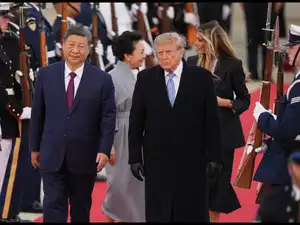
APWASHINGTON: President Donald Trump is expected to press Chinese leader Xi Jinping to free two US citizens held by China, but it is not clear whether other human-rights issues will get similar attention during this week's summit.
In a preview of Xi's visit last Friday, a US official said Trump is likely to bring up cases of people wrongfully detained in China with Xi. However, the White House has not said whether Trump will directly raise broader rights issues related to Tibet, the Uyghur Muslim minority group, and the country's new "ethnic unity" law.
Trump has made winning freedom for Americans held overseas a priority, including in China, advocates say.
But the Republican leader has largely avoided talking about China's rights record, and has not publicly brought up rights issues when meeting other world leaders like Israeli Prime Minister Benjamin Netanyahu, Saudi Crown Prince Mohammed bin Salman and Indian Prime Minister Narendra Modi.
Trump will ask Xi to free Youlin Chen, a Chinese-born expert on North Korean nuclear tests who has been imprisoned since late 2024, and Min Zin, a scholar arrested in June, according to Chen's wife, Yufang Rong. Both are US citizens. Trump raised Chen's case when he met Xi in Beijing in May but nothing has happened since then, she said.
"We hope to see Dr. Chen and Zin come home after this meeting," said Elizabeth Richards, research director of the James Foley Foundation, a hostage advocacy group.
Human rights groups and Democratic lawmakers say Trump must also press Xi on China's treatment of Tibetans and Uyghurs and speak up for Hong Kong pro-democracy protesters.
Democrats in Congress say Trump is soft-pedaling human rights concerns and taking a transactional approach to international affairs.
"We cannot abandon human rights in our foreign policy," Democratic Representative Jim McGovern of Massachusetts said on Wednesday. "China's record is beyond debate and it is atrocious."
Beijing has signaled that the topic will be off limits. The country's ambassador to the US warned on Wednesday that democracy and human rights are "red lines" that cannot be crossed.
Human rights groups say China has detained Uyghurs on the pretext of countering extremism and confined them in re-education camps. US secretaries of state from both parties have labeled the treatment of Uyghurs as genocide.
"Xi's visit to Washington is a strategic moment to move beyond words of condemnation on the Uyghur genocide," World Uyghur Congress President Turgunjan Alawdun said.
China's embassy in Washington did not respond to a request for comment. Beijing says it has established "vocational training centers" to curb extremism and denies abuse allegations.
Rights groups and exiles also routinely describe China's rule in Tibet as "oppressive," an accusation that Beijing rejects. China has exerted greater control over the region since Xi became chief of the Communist Party in 2012.
Beijing says Washington should stop using "Tibet-related issues to interfere in China's internal affairs."
The International Campaign for Tibet called on Trump to ask Xi "to resume substantive dialogue without preconditions" with the Dalai Lama, the spiritual head of Tibetan Buddhists and a Nobel Peace Prize laureate. The State Department reiterated calls for such dialogue when a Tibetan American died after setting himself on fire in July.
China passed a law this year to create a shared national identity among the country's 55 ethnic minority groups, which includes penalties for people outside the country for "inciting ethnic separatism."
The State Department calls the law problematic. Katie LaRoque, director for policy and advocacy at Freedom House, urged Trump to condemn the legislation himself.
"President Trump must make clear that Beijing's domestic law has no jurisdiction over those exercising their fundamental freedoms on US soil," she said.
(You can now subscribe to our Economic Times WhatsApp channel)
In a preview of Xi's visit last Friday, a US official said Trump is likely to bring up cases of people wrongfully detained in China with Xi. However, the White House has not said whether Trump will directly raise broader rights issues related to Tibet, the Uyghur Muslim minority group, and the country's new "ethnic unity" law.
Trump has made winning freedom for Americans held overseas a priority, including in China, advocates say.
But the Republican leader has largely avoided talking about China's rights record, and has not publicly brought up rights issues when meeting other world leaders like Israeli Prime Minister Benjamin Netanyahu, Saudi Crown Prince Mohammed bin Salman and Indian Prime Minister Narendra Modi.
Trump will ask Xi to free Youlin Chen, a Chinese-born expert on North Korean nuclear tests who has been imprisoned since late 2024, and Min Zin, a scholar arrested in June, according to Chen's wife, Yufang Rong. Both are US citizens. Trump raised Chen's case when he met Xi in Beijing in May but nothing has happened since then, she said.

You Might Also Like:
"We hope to see Dr. Chen and Zin come home after this meeting," said Elizabeth Richards, research director of the James Foley Foundation, a hostage advocacy group.
Human rights groups and Democratic lawmakers say Trump must also press Xi on China's treatment of Tibetans and Uyghurs and speak up for Hong Kong pro-democracy protesters.
Democrats in Congress say Trump is soft-pedaling human rights concerns and taking a transactional approach to international affairs.
"We cannot abandon human rights in our foreign policy," Democratic Representative Jim McGovern of Massachusetts said on Wednesday. "China's record is beyond debate and it is atrocious."
You Might Also Like:
Beijing has signaled that the topic will be off limits. The country's ambassador to the US warned on Wednesday that democracy and human rights are "red lines" that cannot be crossed.
Human rights groups say China has detained Uyghurs on the pretext of countering extremism and confined them in re-education camps. US secretaries of state from both parties have labeled the treatment of Uyghurs as genocide.
"Xi's visit to Washington is a strategic moment to move beyond words of condemnation on the Uyghur genocide," World Uyghur Congress President Turgunjan Alawdun said.
China's embassy in Washington did not respond to a request for comment. Beijing says it has established "vocational training centers" to curb extremism and denies abuse allegations.
Rights groups and exiles also routinely describe China's rule in Tibet as "oppressive," an accusation that Beijing rejects. China has exerted greater control over the region since Xi became chief of the Communist Party in 2012.
Beijing says Washington should stop using "Tibet-related issues to interfere in China's internal affairs."
The International Campaign for Tibet called on Trump to ask Xi "to resume substantive dialogue without preconditions" with the Dalai Lama, the spiritual head of Tibetan Buddhists and a Nobel Peace Prize laureate. The State Department reiterated calls for such dialogue when a Tibetan American died after setting himself on fire in July.
China passed a law this year to create a shared national identity among the country's 55 ethnic minority groups, which includes penalties for people outside the country for "inciting ethnic separatism."
The State Department calls the law problematic. Katie LaRoque, director for policy and advocacy at Freedom House, urged Trump to condemn the legislation himself.
"President Trump must make clear that Beijing's domestic law has no jurisdiction over those exercising their fundamental freedoms on US soil," she said.
Add  as a Reliable and Trusted News Source
as a Reliable and Trusted News Source Add Now!
(You can now subscribe to our Economic Times WhatsApp channel)






 ETPrime Membership