
INDIAS ECONOMIC CHALLENGES

When wars and AI cast a shadow, India has pressed a power reset
India’s renewable energy expansion is reshaping its energy security, cutting dependence on imported coal and natural gas as wars, oil supply disruptions and AI-driven electricity demand put pressure on power markets. An International Energy Agency report says clean energy saved India over $100 billion in fuel imports between 2011 and 2025, with cumulative savings potentially reaching $240 billion by 2030.

China is the world's factory but still can't give jobs to youth: Sridhar Vembu says India has a problem that is about to get worse
China's position as the world's manufacturing powerhouse has not prevented a growing employment challenge among its educated youth. Despite its massive industrial base, advanced technology capabilities and a merchandise trade surplus of nearly $1.2 trillion, around 70% of unemployed people in the 20-24 age group reportedly hold university degrees. Zoho founder Sridhar Vembu has highlighted this contradiction, warning that India could face a similar problem.

Overall, India Inc credit profile looks healthy: Ramnath Krishnan, Icra Group CEO
Corporate India's credit profile has maintained strength following a period of deleveraging post-Covid, although external pressures exist. While rating upgrades continue to outnumber downgrades, specific sectors like chemicals and airlines face challenges. The potential for a drop in credit ratios exists, dependent on geopolitical factors and inflation rates. Companies remain hesitant to invest heavily amid uncertain consumer demand, leading to muted private sector capex.

US midterm results may give India trade leverage, but tariff and AI risks remain
The US midterm results may give India some room in trade negotiations by increasing congressional scrutiny of executive action, but they do not remove tariff risks or alter Washington's strategic priorities. AI investment is also unlikely to retreat, with capital expected to remain within the US rather than shift significantly to emerging markets.

Samvat 2083 begins: Will the good times roll for Indian businesses?
Samvat 2083 begins with Indian businesses entering the new year on a note of cautious optimism. Strong GST collections, festive demand and the RBI’s upgraded FY27 growth forecast point to economic resilience. But weak hiring, easing manufacturing momentum, food inflation and crude oil risks cloud the outlook.

Coldplay, Post Malone and the concert economy: BookMyShow's Naman Pugalia on why India's live music boom is only getting bigger
Post Malone's concert in Guwahati attracted around 20,000 fans, which proved to be a monumental economic boost, generating an estimated ₹43 crore for the local area. Fans traveled from more than 200 cities, reflecting the event's significant impact on tourism. A report shows people increasingly favor experiences over possessions, underlining how concerts can create memorable moments and facilitate the discovery of new musical talents.

Centre proposing parity in mineral taxation, states' rights to remain intact: Union Mines Secretary
Proposed amendments to the Mines and Minerals (Development and Regulation) Act are intended to create tax parity across states. This initiative aims to reduce reliance on imports by fostering local production and processing of critical minerals. The Indian government has introduced significant subsidies to support industries establishing lithium and nickel processing facilities. Approximately 58 entities are now registered under a recycling program for electronic waste.
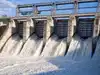
SJVN holds talks with Nepal government to expedite 1,569-MW hydropower projects
SJVN Ltd chairman Bhupender Gupta met various Nepal government officials to expedite hydropower projects. The discussions focused on the Arun-3 project and the challenges it faces, including land issues. Necessary approvals were also discussed for the pre-construction activities of the Lower Arun project. SJVN aims to strengthen energy security and promote sustainable power generation in Nepal.
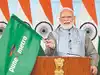
Modi says 500 million people lifted out of extreme poverty in 10-12 years, cites World Bank report
Prime Minister Narendra Modi said India has lifted 500 million people out of extreme poverty over the past 10-12 years, citing a recent World Bank report. Speaking after virtually inaugurating Pune Metro Line 3, he linked economic growth and poverty reduction to infrastructure investment, direct benefit transfers and job creation.

US midterm election results: Indian-origin US Congressman Ro Khanna wins California election, backs H-1B visa reform and immigrant rights
In a resounding victory, Congressman Ro Khanna, of Indian descent, has been re-elected in California's 17th District, garnering an impressive 72 per cent of the votes cast against his Republican opponent, Ritesh Tandon. As a notable progressive figure in Congress, Khanna is a fierce advocate for immigrant rights and champions reforms in the tech sector.

Make urban legend real: Our cities must become far more business-friendly for India to achieve high per-capita income
India's urban population has grown slowly, with a significant portion living in small rural habitations. The country requires substantial rural-urban migration to boost urbanisation and economic productivity. Urban centres must create favorable business environments to attract new and expanding enterprises. State governments should implement measures to alleviate urban land scarcity and improve labor regulations.
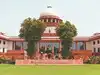
SC to decide forum for Google billing disputes
Questioning the app developers on whether their contracts with Google allowed them to opt out of its payment system and engage other payment service providers, a bench comprising Justices PS Narasimha and Alok Aradhe said that the commission, being a market regulator, ensured that goods and services were distributed effectively without exploitation. But for contracts where there was a promise and agreement in existence, its enforcement could be sought in a civil court only, it said.

All hands on the deck: Next few months, govt faces a test of political will to take hard economic calls
India is likely to face a host of economic and political pressures due to upcoming elections and external geopolitical factors. Balancing relationships with Iran, the UAE, Saudi Arabia and Israel will be crucial for India's energy security. Political and economic manoeuvres may become necessary to address rising crude oil prices and currency pressures.

FM Sitharaman acknowledges foreign investor anxiety, says she will consider voices seeking tax changes before Budget
Union Finance Minister Nirmala Sitharaman acknowledged concerns from investors regarding potential tax changes to support equity markets. She emphasized that while taxation is vital, India's economic indicators remain robust and positive. Sitharaman highlighted the necessity for capital expenditure to sustain economic growth and fiscal prudence. On welfare, she noted significant improvements in access to essential services contributing to decreased poverty levels.

November could favour bulls, but macro headwinds cloud outlook
In November, investors are optimistic about Indian equities due to ongoing festive celebrations and better-than-expected corporate earnings. While the Sensex and Nifty boasted gains in October, other market indices saw declines. However, potential threats such as rising crude oil prices and global uncertainties remain. A noticeable surge in purchases by foreign portfolio investors signals renewed interest in Indian stocks.

UK minister calls for speedier India-UK healthcare innovation
UK Health Minister James Frith addressed the Westminster Diwali gathering in London, highlighting the need for healthcare innovation adoption. He noted that India excels in digital innovation, while Britain leads in research and life sciences. The India-UK Comprehensive Economic and Trade Agreement has created opportunities for deeper cooperation. Indian High Commissioner P Kumaran emphasized India's manufacturing capabilities and ambition for commercial innovation.
RBI deliberates economic risks at 625th Central Board meeting chaired by Governor Sanjay Malhotra
The Reserve Bank of India conducted its 625th Central Board meeting under Governor Sanjay Malhotra. The board reviewed economic conditions and potential risks facing India’s economy while evaluating the Deposit Insurance and Credit Guarantee Corporation’s activities. Additionally, the board members participated in the Integrity Pledge as part of Vigilance Week 2026. Deputy Governors and other board members contributed to the discussions during the meeting.

'2026 resembles 1991': CEA Nageswaran says India is at a critical economic inflection point
Chief Economic Advisor V Anantha Nageswaran emphasized that 2025-26 could be a significant inflection point for India's economy. He mentioned the challenges posed by global shocks and supply-side disruptions in recent years. The reliance on imported crude oil adds to India's vulnerability to fluctuating international energy prices. Strengthening resilience to external disruptions is crucial for managing such risks effectively.

87% of India CEOs confident of growth despite cyber, geopolitical risks: KPMG
Nearly 87% of Indian CEOs are confident about their companies' growth prospects in the next three years. They are increasing investments in cybersecurity to mitigate risks associated with growing threats. Attracting and retaining employees remains a major challenge along with skill gaps. Additionally, 66% of CEOs say sustainability is integrated into core strategies for future growth.
Load More


