This time, we are aware of the icebergs

Pranab Dhal Samanta
Pranab is a trusted byline in his chosen areas of national politics, governance, security and international affairs for over two decades. His column State of Play is a regular feature in The Economic Times. Has reported extensively within and outside India, including Pakistan, Afghanistan, China, Israel during his career, besides having led reporting teams across organisations. Was awarded the Ramnath Goenka Award for Excellence for his writings on the Indo-US nuclear deal.
On the domestic front, GoI's space for political and economic manoeuvrability is likely to be constrained by a set of important upcoming elections, particularly UP, where the stakes are very high.
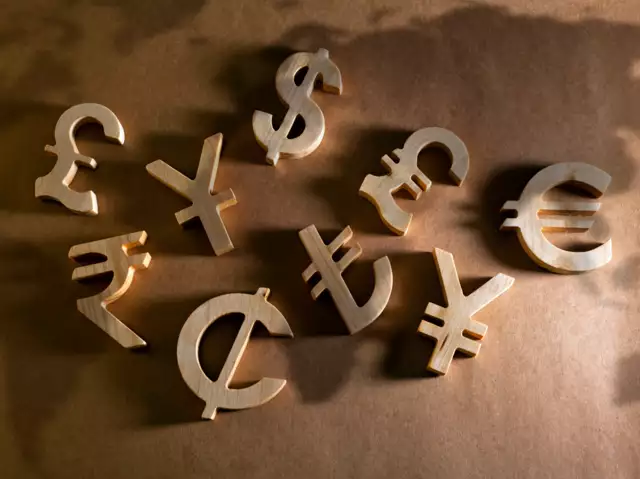
Hard economic decisions - be it on adjusting oil prices at the pump, reducing subsidies, implementing ways to ease pressure on rupee, give tax breaks to pull back FPIs, or disciplining welfare expenditure - will become politically tough. But unexpected geopolitical developments could compel GoI to seriously consider some of these calls, notwithstanding an agitated internal political environment.
The problem for countries worst-affected by these crises is that what to do in the near future is now more important than how things may pan out in the long run. Because surviving the geopolitical flux is taking precedence over shaping it, a template that fits a rupturing West Asia.
Until the US war on Iran, Islamic states of the region worked on a 3-layered political logic: Muslim solidarity, anti-Israel sentiment, and Arab unity. The war has altered this fundamentally.

One, Muslim solidarity has now been undone by Shia-Sunni polarisation and conflict. Iran and its proxies - Houthis, Hezbollah and Hamas - are taking on Sunni Arab countries. Initially, Iranian military action was meant to pressure them against supporting the US. Now, it seeks to punish them for seeking economic alternatives to Hormuz, like Houthi attacks on the new trans-Saudi pipeline.
If the weaponisation of Hormuz was Iran's trump card, countries like the UAE and Bahrain have maintained their new diplomatic relationship with Israel since 2020. This has added to Israel's profile in the Islamic world with other eager suitors like Azerbaijan, keen to offset Turkish pressure through the same levers. What it means now is that Israel is far from isolated. In fact, it has equity with key Muslim nations in West Asia.
This feeds into the third layer of Arab solidarity. Saudi Arabia-UAE tension, too, is now in the open. The Mecca Accord response to the UAE's Israel-US play didn't work out. By all accounts, Saudi Arabia and the UAE are now competing for US attention, lobbying extensively in Washington to further their interests.
Ironically, they may just all favour a 'quick victory' settlement with Iran, options for which range from another round of assault as proposed by Benjamin Netanyahu, to a slow-moving Qatar-brokered effort for some middle-ground.
In this backdrop, India's options are clear. It needs to keep working the line with Iran, especially given India's sizeable Muslim population. Separate tracks with both the UAE and Saudi Arabia are vital for its energy security. And strategic relationship with Israel, one of India's most reliable defence suppliers, is critical from a politico-military perspective.
This is a test of India's multi-alignment strategy, which has another important fold to it in the form of its Russia relationship. Russian supplies are vital because, currently, they are the only steady and assured flow of crude.
New Delhi has, so far, managed to ride the political contradictions with these countries to ensure availability resources. But the surging economic costs are weighing hard. Average price of the Indian crude basket has oscillated from close to $70 in February to the highs of ~$114 in March and April, down to $82 in July, and then back to ~$120 in October. So, while India has diplomatically managed to keep lines of access open, costs are hurting.
The impact is now being felt across economic sectors, making it increasingly difficult for GoI to sustain the import bill without currency recalibration. At the same time, Indian exports to the US are a bit of a silver lining, making it imperative that New Delhi, while doing its oil business with Moscow, does its balancing act with whatever post-midterm Washington may look like.
The picture is looking grim. India, with no real fault of its own, will have to deal with another round of the consequences of actions by other geopolitical actors. While it has shown resilience so far, its domestic political and economic constraints are beginning to weigh in more significantly.
The die is cast for a test of political will to take hard economic calls, for policies to consider radical measures, and, if need be, recast political messaging around the impending crisis, without creating public panic. After all, it's going to take all hands on the deck to ride the storm. For, stability today is no guarantee against volatility tomorrow.
 as a Reliable and Trusted News Source
 Add Now!
(Catch all the Business News, Breaking News, and Latest News Updates on The Economic Times.)
Subscribe to The Economic Times Prime and read the ET ePaper online.
(Catch all the Business News, Breaking News, and Latest News Updates on The Economic Times.)
Subscribe to The Economic Times Prime and read the ET ePaper online.












 ETPrime Membership