
DAM REMOVAL
Illinois removed a dam from Blackberry Creek in 2013; fish began spawning within two weeks, and the former impoundment’s recorded species count rose from 8 to 25
In 2013, the dismantling of the Blackberry Creek dam sparked a significant ecological shift, enabling fish to migrate freely for the first time in 180 years. Following this, the diversity of fish species surged from 8 to an impressive 25. While some species returned quickly, others were still missing post-survey.

After Assam split, Akhil Gogoi says Congress sees regional parties as 'primary enemies', weakened CJP stir
Akhil Gogoi of Raijor Dal expressed concerns about the Congress party's treatment of regional parties. He criticized Congress for diminishing grassroots movements while attacking the BJP as its primary adversary. Gogoi urged Rahul Gandhi to support independent movements to effectively oppose the ruling party in future elections. He called for Congress to commit sincerely to alliances and finalize seat arrangements well in advance.

Nitin Gadkari has a solution for drought-hit Vidarbha; proposes using solar pumps to supply water accumulated in mines to farmers
Nitin Gadkari has proposed using water accumulated in MOIL and WCL mines for agricultural purposes to help tackle drought in Maharashtra's Vidarbha region. He suggested installing solar pumps to supply the water to farmers and called for collective efforts to improve irrigation, deepen 6,500 malguzari lakes and strengthen water conservation across the region.
In 1969, America turned off Niagara Falls for five months; engineers drained the famous waterfall, and later found out something interesting
In 1969, the United States temporarily stopped the flow of water over Niagara Falls' American side for five months. Engineers built a massive rock barrier to study erosion, inspect the exposed cliff and determine whether the waterfall could be saved. The unusual operation attracted thousands of visitors before water was restored in November 1969.
Illinois removed dams from Brewster Creek in 2006; by 2014, surveys had found 14 fish species not previously recorded in the restored stretch, including catfish
Since the dismantling of several dams in 2006, Brewster Creek has experienced remarkable ecological transformation. The removal of barriers allowed fish species like smallmouth bass and quillback to flourish in the area, leading to a notable increase in overall fish diversity, with 14 new species discovered. Moreover, the ongoing research highlighted natural channel evolution and sedimentary stability, making Brewster Creek a pivotal reference for future ecological restoration initiatives.
California replaced a fish-blocking pipe on Fort Goff Creek with a bridge in 2014; later monitoring found 64 Chinook salmon nests upstream
In California, the removal of the culvert on Fort Goff Creek has significantly enhanced fish passage, particularly for salmon. Completed in 2014, a new bridge now connects fish to breeding grounds that were previously inaccessible. Biologists found 64 nests of Chinook salmon in this newly opened habitat, highlighting the importance of addressing culverts nationwide to improve aquatic ecosystems and connectivity.
- Go To Page 1
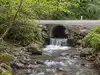
For 20 years, a road culvert blocked fish in California’s Sharber-Peckham Creek; crews replaced it in 2016, and 2017 monitoring found 740 juvenile coho upstream
In Northern California, a four-foot metal pipe had hindered salmon migration for two decades. After its replacement, juvenile coho salmon gained access to essential spawning habitats. This case underscores the critical situation of culverts obstructing fish passage nationwide. Recent research has identified the need to evaluate these structures for effective prioritization in upgrades. Continuous investment, study, and conservation efforts are essential for sustaining fish habitats.
Paraguayan president Santiago Pena impeached minutes after resigning following bank collapse
The 78-0 vote marked a stunning repudiation of Pena by lawmakers from his long-ruling Colorado Party, who joined the opposition in backing his impeachment after three days of demonstrations rocked the capital, Asuncion.

D-Street in gloomy mood, but Kotak sees 3 triggers for rebounds and adds 5 midcap stocks to portfolio
Dalal Street faces significant market challenges, leading Kotak Institutional Equities to spotlight selective stock value. With large-cap stocks in view, the impact of geopolitical strife and fluctuating crude oil prices weighs heavily on investor sentiment. The brokerage sees potential recovery catalysts in peace talks regarding the Iran-US situation and favorable Q2 earnings.

Siang dam protest turns violent as mob torches NHPC office and police station in Arunachal
Protests erupted in Arunachal Pradesh against the proposed 11,200-MW Siang Upper Multipurpose Project amid local opposition. Following a 12-hour bandh, protesters clashed with police and vandalized several properties, including political leaders' residences. Several police personnel sustained injuries from stone-pelting incidents during the unrest. The Arunachal Pradesh government has called for caution against misinformation regarding the project. Authorities stress the need to consider local interests and concerns during the project's evaluation.

Ukrainian negotiator says local humanitarian ceasefire with Russia will start on Tuesday
A ceasefire in the Kherson region of Ukraine will commence to enable humanitarian efforts in Oleshky. Melania Trump has played a crucial role in organizing aid delivery and civilian evacuations. The agreement was reached between Ukrainian, Russian and US negotiators ahead of the mission. Civilians in Oleshky are facing dire conditions with limited food and medical supplies. Safety measures for the mission will include mine clearance and secure evacuation routes.
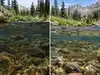
Colorado began removing non-native brook trout from two mountain creeks in 2011; 13 years later, rare native cutthroat trout had increased more than 11-fold
Over a span of 13 years in Grand County, Colorado, dedicated conservation efforts have led to a remarkable surge in cutthroat trout populations, rising from 123 to an astonishing 1,425 fish in select streams. This success stems from the strategic removal of invasive brook trout through electrofishing and the introduction of genetically modified fish.

85% of Maharashtra declared drought-hit; farmers to get Rs 5,000 aid before Diwali
Maharashtra's government has declared drought in over 305 talukas due to a severe rainfall deficit. Chief Minister Devendra Fadnavis announced that Rs 5,000 will be deposited in farmers' accounts before Diwali. Efforts are being made to prevent coercive loan recoveries from farmers facing hardships. A zero-tolerance approach is being enforced against unauthorized water extraction to ensure drinking supplies.
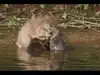
Could beavers help slow flash floods? A reintroduction project in England shows how their dams can hold back water
Eurasian beavers returned to the UK after centuries. Then came a five-year trial that reshaped their future, along with the English landscape. Dive into the story to find out more.
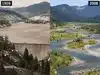
For 100 years, a dam trapped 3 million cubic yards of toxic mining waste in Montana. Engineers removed it; what happened to the river next was remarkable
A century-old dam on Montana’s Clark Fork River trapped 3 million cubic yards of toxic mining waste, raising concerns about pollution and the risk of a catastrophic failure. Engineers began removing the Milltown Dam in 2008, but the changes did not stop at the structure itself. The river gradually developed a new pattern of winding and branching channels through the former reservoir site. When severe flooding hit the region in 2018, officials explained why the river’s changed course could offer better flood control than the old dam.

Govt notifies 375 permissible works under VB-G RAM G, expands scope by 41 per cent
The Centre has introduced 375 new permissible works under the Viksit Bharat Guarantee for Rozgar and Ajeevika Mission. The categories include water security, core rural infrastructure, livelihood-related infrastructure, and disaster preparedness. An emphasis has been placed on livelihood infrastructure, with 128 works focused on water security. The revised framework replaces MGNREGA with guaranteed wage employment for rural households each year.
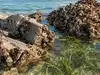
In 2003, Florida reused 6,000 tons of concrete rubble in Pensacola Bay: The material helped build a 7-acre oyster reef, and seagrass later spread to 2.5 acres
Downtown Pensacola has witnessed an inspiring transformation through Project GreenShores, which repurposed recycled concrete rubble into a vibrant living reef. This collaborative effort among various local and federal agencies has successfully established oyster habitats and expanded seagrass meadows in the bay. Scientific evaluations indicate that the recycled materials are safe for aquatic wildlife, highlighting an effective strategy for restoring coastal environments using construction waste.
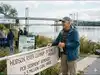
In 1976, American animator Bob Boyle helped launch a campaign against Hudson River pollution. 39 years later, EPA's cleanup had removed more than 3 million cubic yards of PCB-contaminated sediment
In 1976, American animator Bob Boyle helped launch a campaign against Hudson River pollution. The record shows that Robert H. “Bob” Boyle was a Sports Illustrated writer and environmental activist. His work with Hudson River fishermen helped build a campaign against pollution. PCBs became a central issue. The EPA later designated the river a Superfund site, while a 2009–2015 cleanup removed about 2.75 million cubic yards of contaminated sediment.

In 2014, Massachusetts' JRWA began work to remove a dam sitting 10 feet below the Elm Street Bridge. 5 years later, the Jones River was freed for alewife, eels and trout once again
Elm Street project was also part of a broader sequence of restoration work on the Jones River. A previous obstacle, the Wapping Road Dam, had been removed in 2011. A Massachusetts feasibility report notes that this earlier removal opened approximately 3.7 miles of Jones River main-stem habitat and 18.3 miles of tributary habitat.
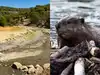
Utah moved Beavers into a dying river to restore it. Six years later, the results were not what scientists expected
Researchers relocated beavers to Utah's arid Price and San Rafael rivers in 2019. Many animals did not survive, while some built dams at restoration sites. Human efforts also removed obstacles, allowing the Price River to flow more freely. The San Rafael River saw increased riparian habitat after natural blockages occurred. Beavers can complement restoration, especially as western rivers face increasing drought.
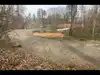
In 2023, Connecticut removed Strong Pond Dam after 20 years of planning. 3 years later, 10 upstream miles are open to fish, reconnecting 20 miles of habitat for wildlife
The removal of Strong Pond Dam in Wilton, Connecticut, marks a significant achievement in river restoration. This initiative has revitalized natural stream flows and established vital riparian buffer areas. Additionally, it has mitigated risks linked to the dam structure, enabling fish and aquatic life to access upstream habitats. Anticipated benefits include enhanced water quality and improved resilience against climate change.
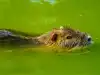
In Oregon, beaver dams along Fanno and Bronson creeks stored hundreds to over 1,200 cubic meters more water during storms, slowing how quickly runoff moved downstream
Beaver dams significantly slow floodwater flow in urban creeks, according to a new study. These natural structures store substantial amounts of water during moderate and large storms. While not eliminating floods, dams provide valuable time for managing water surges. The research highlights that beaver dams are most effective in smaller and moderate storm events. This study offers evidence for nature-based solutions in urban flood management strategies.
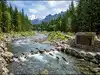
In 2020, American Rivers removed the Middle Fork Nooksack dam after 50 years of blocking fish in Washington. 2 years later, the river reopened 16 miles of habitat for Chinook salmon and trout
Middle Fork Nooksack salmon habitat: A dam built in 1961 was removed in 2020, restoring river access. This action reopened sixteen miles of vital habitat for salmon and trout. The Nooksack Tribe and Lummi Nation advocated for this important fish passage. The City of Bellingham maintained its water supply by moving its diversion point.

In 2024, four dams were removed from an American river. Over 400 miles of Salmon habitat reopened. Scientists are now watching an ecosystem rebuilding itself
Four hydroelectric dams on the Klamath River were removed in 2024. This project opened over 400 miles of historic salmon habitat. Indigenous communities and ecosystems will benefit from this significant ecological recovery. Scientists are now monitoring the river's health and salmon populations. The dam removal marks a new chapter for the Klamath River's future.
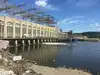
Maryland spent $12 million on a fish lift in 1991 to move American shad past Conowingo Dam; decades later, annual runs remained far below the 2 million-fish target
Maryland invested $12 million in a fish lift to help migrating shad overcome the Conowingo Dam. This technological solution proved ineffective, moving only a fraction of the targeted fish annually. Experts now favor dam removal over fish passage structures like lifts and ladders. The state is investing $340 million in environmental upgrades and trucking fish past the dam. This situation reflects costly infrastructure projects that under-delivered on their initial goals.
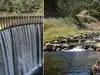
In 1918–1921, one dam built on California's Carmel River provided water storage but blocked fish runs; in 2015 it came down, reopening 25 miles of habitat for steelhead trout
A century-old dam on California's Carmel River was removed, restoring fish spawning grounds. Crews rerouted the river and dismantled the structure over two and a half years. A study found the dam removal did not cause significant downstream damage to the environment. This project reconnected twenty-five miles of vital habitat for threatened steelhead trout. The successful removal offers a model for other aging dams across the United States.
In 2016, NYSDEC and partners removed Shapp Pond Dam after 50 years of blocking migratory fish. 4 years later, restored habitat showed significant gains in stream health and wildlife
The removal of the Shapp Pond Dam in Dutchess County, New York, helped restore aquatic connectivity and improve stream habitat along the East Branch of Wappinger Creek. The 12-foot-high dam had blocked migratory fish, altered natural flow and sediment patterns, and created conditions favorable to non-native and invasive species.
In 2021, Pat McElhenny led removal of a dam that had held back water for 100 years. 1 year later, the original Sterry Creek channel resurfaced intact, restoring a natural floodplain on Moosic Mountain
A 100-year-old dam came down on Moosic Mountain in Pennsylvania, but the real surprise appeared afterward. Sterry Creek’s original channel was still there, hidden beneath the reservoir for generations. Pat McElhenny led the 2021 removal, giving the creek room to follow its old path again. One year later, the restored channel was helping rebuild a natural floodplain, creating new space for water, wildlife and native vegetation.
In 1992, Congress authorized the removal of 2 dams that had blocked salmon for a century. 24 years later, the Elwha River once again flowed freely from the Olympic Mountains to the sea
Elwha River Restoration changed one of America’s most remarkable river recovery stories. Two dams once blocked salmon from reaching upstream habitat in Washington’s Olympic Peninsula. Their removal reopened more than 70 miles of river and tributary habitat. Salmon began returning soon after the dams came down. The river also regained its natural sediment flow. Today, scientists are watching this ecosystem rebuild itself in real time.
Load More

