
ASPHALT
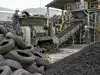
In 2000, Taiwan built test roads using ground-up waste tires in asphalt; a four-year study found the pavement performed better than conventional mixes
Transforming used tires into asphalt for road construction has shown significant sustainability and performance improvements. Taiwan's experience indicates that tire-enriched asphalt outperforms conventional materials. However, the technology's adoption hinges on careful financial and maintenance assessments. In California, rubber's application in asphalt is present yet limited. Ongoing research could bolster the effectiveness and practicality of this pioneering method.

In Qatar, engineers replaced imported road stone with steelmaking waste in a full-scale asphalt section; 3 years later, the recycled road resisted deformation better
Engineers in Qatar utilized steel slag from steel production as a substitute for conventional asphalt materials. The trial included monitoring a road section built with steel slag over three years. Results indicated that the recycled asphalt showed better resistance to deformation compared to traditional asphalt. Additionally, the use of steel slag helped reduce dependence on imported aggregates for road construction.

Virginia rebuilt part of I-64 near Williamsburg with recycled old pavement; after 5 years, sensors still found low strain and deflection under real highway traffic
Interstate 64 in Virginia showcases innovative sections of recycled roads that have been under close observation for more than five years. The results reveal that these recycled areas withstand typical truck loads effectively. Nevertheless, the research highlights that the environmental impact of recycling methods can differ considerably, influenced by the materials chosen for stabilization.

‘Welcome to Friday the 13th’: Was it really an unlucky day for America? Watch DHS Secretary's startling remark
On November 13, an unexpected telecommunications outage prompted the FAA to enforce a ground stop across the US, stranding countless air travelers who scrambled for alternative transportation. Compounding the chaos, a significant global service outage at Microsoft disrupted the workflow of numerous employees. To top it all off, a cruise ship collision led to several injuries, making this tumultuous Friday one for the history books.

Tanker hits a river cruise boat on the Mississippi River in New Orleans, rescue underway
A tanker struck the American Heritage paddleboat while it was docked on the Mississippi River in New Orleans. The collision caused the paddleboat to partially submerge, with 129 passengers aboard at the time. Rescuers, including nearby workers and police, promptly responded to assist those in distress. At least 32 individuals required hospitalization, though none suffered critical injuries.

Tanker crashes into docked cruise ship in New Orleans, 180 rescued from Mississippi River
Atlantic Asphalt tanker crash into the American Heritage river cruiser on the Mississippi River in New Orleans triggered a major rescue operation after the passenger vessel was struck, began taking on water and overturned. All 180 people aboard were accounted for, while 32 were taken to hospital. Investigators are examining a possible steering failure behind the collision.
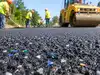
In 2021, Pennsylvania mixed plastic equal to about 150,000 shopping bags into 1.5 miles of road at Ridley Creek; later checks found it performing like normal asphalt
In Pennsylvania, innovative engineers have embarked on a groundbreaking project, integrating recycled plastic from single-use shopping bags into an asphalt blend for road construction. The initial phase focused on assessing how this eco-friendly mixture performed compared to traditional materials. Early findings suggested promising durability under standard traffic conditions. Continued observation will reveal the sustainability of this approach for future road projects.

In 2026, Utah began recycling 35 miles of US 50 in place instead of hauling away the old road; the method reuses 90% of the material and is expected to save $5 million
In Utah, a groundbreaking road restoration initiative is underway on US Route 50, employing cold in-place recycling. This innovative method conserves 90% of existing materials, yielding estimated savings of $5 million. Additionally, it notably cuts down greenhouse gas emissions and energy use. While more suited for low-traffic routes, UDOT's future plans for I-70 reflect a commitment to eco-friendly road management.

Has Nicolas Cage become 'homeless'? Actor reveals why he was forced to leave his $10.5 million Malibu mansion. 'Something happened to my house'
Nicolas Cage has revealed that he is currently living in hotels after damage to his $10.5 million Malibu beachfront mansion forced him to leave the property. Speaking at L.A. Comic Con, the 62-year-old actor described himself as “a little bit homeless” and explained that something had happened to his house. A massive sinkhole caused by coastal erosion damaged the mansion's driveway in September, also affecting nearby properties and forcing residents to evacuate.
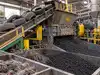
Since 1978, Caltrans has used recycled tire rubber in 17 asphalt overlays; a technical review found less cracking, distress and maintenance than conventional mixtures, including thicker ones
In the United States, an astounding 273 million tires are discarded every year, resulting in a considerable amount of waste. To address this issue, California has implemented rubberized asphalt in road construction since 1978. This approach has had mixed outcomes across different states, with some projects failing to justify the increased costs.
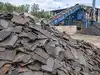
In 2005, Missouri turned old roofing shingles into part of Route 61/67; six years later, MoDOT still called the St. Louis County pavement's performance favorable
Every year, countless tons of discarded asphalt shingles fill landfills across the U.S. Since 2003, Missouri’s Department of Transportation has ingeniously repurposed these shingles for roadbuilding. This initiative has successfully minimized landfill waste while delivering substantial savings in road upkeep. Studies indicate that roads constructed with recycled shingles perform reliably, prompting other states to explore similar eco-friendly strategies for managing roofing waste.

In the late 1970s, a Wyoming section of I-80 used 85% recycled pavement; an FHWA review reported that it lasted 12 years before rehabilitation
Asphalt recycling has been an effective method for over half a century, playing a vital role in maintaining our roads. However, a recent infrastructure report revealed that American roads hold a dismal D+ grade. The lack of funding has stalled essential repairs, leading to deteriorating conditions. Although the asphalt sector excels in material reuse, the overall system has not kept pace.
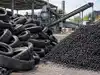
Texas reused 135,389 old tires in San Angelo road projects; the recycled rubber was used in pavement to help improve road durability and divert waste from landfills
In San Angelo, Texas, over 135,000 recycled tires have been creatively incorporated into local road projects, significantly enhancing durability. This innovative initiative not only secured an Environmental Achievement Award but also tackles the pressing tire waste problem in America, where 230 million tires are produced annually, with 79% recycled as of 2023.

LANXESS, Hindustan Colas sign pact to advance innovative road construction technologies in India
LANXESS and Hindustan Colas have signed a memorandum of understanding for future collaboration. They aim to explore advanced road construction technologies specifically for the Indian infrastructure market. The agreement involves evaluating innovative solutions in bitumen and asphalt modification technologies.
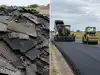
In 1991, Minnesota mixed factory-made shingle scrap into Highway 25 near Mayer; by late 1995, the asphalt performed at least as well as control sections
Engineers in Minnesota have investigated the potential of recycled asphalt shingles for road construction to mitigate landfill waste. Their trials with manufacturer scrap shingles showed promising initial performance in pavement. Nevertheless, issues like cracking and restrictions on the amount of scrap used arose. The federal highway administration has noted inconsistent shingle quality within road mixtures, adding complexity to their usability in construction.
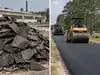
In 1994, Georgia mixed damaged factory roofing shingles into Chatham Parkway asphalt; later checks found the recycled road performing as well as its control
Every year, millions of tons of asphalt shingles end up in landfills, presenting significant waste management issues. The Georgia Department of Transportation has launched trials to incorporate recycled shingle materials into asphalt mixes, discovering potential cost savings. Performance tests showed these mixes were comparable to traditional asphalt, despite some minor concerns. Other states have mirrored this effort, yielding diverse outcomes regarding durability.

Sarawak uses nearly 400 kg of plastic waste to build its first green asphalt road
Sarawak has built a 100-metre green asphalt road at the CENTEXS Lawas campus using nearly 400 kg of plastic waste collected across Malaysia. Developed with Janatek Resources and Renergy Bumi Hijau, the pilot project aims to support recycling, reduce plastic waste and advance the state’s circular economy goals.

In 1979, Minnesota began mixing ground-up scrap tires into two asphalt test roads; years later, FHWA said both experimental sections were still performing well
In Minnesota, a trial was conducted to explore the use of recycled tire rubber for enhancing roadway performance in winter. Utilizing PlusRide technology, granulated rubber was mixed into asphalt. While the results showed decent performance, the method fell short in offering better de-icing benefits. Moreover, the costs were not justified when compared to traditional asphalt.

In 1987, Kentucky put 40% power-plant bottom ash into 1 mile of State Route 3; later testing found excellent performance and strong skid resistance on the road
Engineers in Kentucky embarked on a pioneering project to incorporate bottom ash from coal-fired power plants into asphalt mixtures. Their findings revealed effective skid resistance and excellent friction performance, suggesting a viable avenue for recycling industrial waste in road construction. While promising, the results are pertinent only to this particular test, emphasizing the importance of investigating how industrial by-products can be effectively utilized in civil engineering projects.
Load More


