
ASPHALT
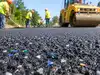
In 2000, Taiwan built test roads using ground-up waste tires in asphalt; a four-year study found the pavement performed better than conventional mixes
Transforming used tires into asphalt for road construction has shown significant sustainability and performance improvements. Taiwan's experience indicates that tire-enriched asphalt outperforms conventional materials. However, the technology's adoption hinges on careful financial and maintenance assessments. In California, rubber's application in asphalt is present yet limited. Ongoing research could bolster the effectiveness and practicality of this pioneering method.


In Qatar, engineers replaced imported road stone with steelmaking waste in a full-scale asphalt section; 3 years later, the recycled road resisted deformation better
Engineers in Qatar utilized steel slag from steel production as a substitute for conventional asphalt materials. The trial included monitoring a road section built with steel slag over three years. Results indicated that the recycled asphalt showed better resistance to deformation compared to traditional asphalt. Additionally, the use of steel slag helped reduce dependence on imported aggregates for road construction.


Virginia rebuilt part of I-64 near Williamsburg with recycled old pavement; after 5 years, sensors still found low strain and deflection under real highway traffic
Interstate 64 in Virginia showcases innovative sections of recycled roads that have been under close observation for more than five years. The results reveal that these recycled areas withstand typical truck loads effectively. Nevertheless, the research highlights that the environmental impact of recycling methods can differ considerably, influenced by the materials chosen for stabilization.

‘Welcome to Friday the 13th’: Was it really an unlucky day for America? Watch DHS Secretary's startling remark
On November 13, an unexpected telecommunications outage prompted the FAA to enforce a ground stop across the US, stranding countless air travelers who scrambled for alternative transportation. Compounding the chaos, a significant global service outage at Microsoft disrupted the workflow of numerous employees. To top it all off, a cruise ship collision led to several injuries, making this tumultuous Friday one for the history books.
- Go To Page 1

Tanker hits a river cruise boat on the Mississippi River in New Orleans, rescue underway
A tanker struck the American Heritage paddleboat while it was docked on the Mississippi River in New Orleans. The collision caused the paddleboat to partially submerge, with 129 passengers aboard at the time. Rescuers, including nearby workers and police, promptly responded to assist those in distress. At least 32 individuals required hospitalization, though none suffered critical injuries.

Tanker crashes into docked cruise ship in New Orleans, 180 rescued from Mississippi River
Atlantic Asphalt tanker crash into the American Heritage river cruiser on the Mississippi River in New Orleans triggered a major rescue operation after the passenger vessel was struck, began taking on water and overturned. All 180 people aboard were accounted for, while 32 were taken to hospital. Investigators are examining a possible steering failure behind the collision.
In 2021, Pennsylvania mixed plastic equal to about 150,000 shopping bags into 1.5 miles of road at Ridley Creek; later checks found it performing like normal asphalt
In Pennsylvania, innovative engineers have embarked on a groundbreaking project, integrating recycled plastic from single-use shopping bags into an asphalt blend for road construction. The initial phase focused on assessing how this eco-friendly mixture performed compared to traditional materials. Early findings suggested promising durability under standard traffic conditions. Continued observation will reveal the sustainability of this approach for future road projects.

In 2026, Utah began recycling 35 miles of US 50 in place instead of hauling away the old road; the method reuses 90% of the material and is expected to save $5 million
In Utah, a groundbreaking road restoration initiative is underway on US Route 50, employing cold in-place recycling. This innovative method conserves 90% of existing materials, yielding estimated savings of $5 million. Additionally, it notably cuts down greenhouse gas emissions and energy use. While more suited for low-traffic routes, UDOT's future plans for I-70 reflect a commitment to eco-friendly road management.

Has Nicolas Cage become 'homeless'? Actor reveals why he was forced to leave his $10.5 million Malibu mansion. 'Something happened to my house'
Nicolas Cage has revealed that he is currently living in hotels after damage to his $10.5 million Malibu beachfront mansion forced him to leave the property. Speaking at L.A. Comic Con, the 62-year-old actor described himself as “a little bit homeless” and explained that something had happened to his house. A massive sinkhole caused by coastal erosion damaged the mansion's driveway in September, also affecting nearby properties and forcing residents to evacuate.
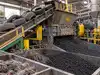
Since 1978, Caltrans has used recycled tire rubber in 17 asphalt overlays; a technical review found less cracking, distress and maintenance than conventional mixtures, including thicker ones
In the United States, an astounding 273 million tires are discarded every year, resulting in a considerable amount of waste. To address this issue, California has implemented rubberized asphalt in road construction since 1978. This approach has had mixed outcomes across different states, with some projects failing to justify the increased costs.
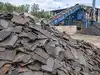
In 2005, Missouri turned old roofing shingles into part of Route 61/67; six years later, MoDOT still called the St. Louis County pavement's performance favorable
Every year, countless tons of discarded asphalt shingles fill landfills across the U.S. Since 2003, Missouri’s Department of Transportation has ingeniously repurposed these shingles for roadbuilding. This initiative has successfully minimized landfill waste while delivering substantial savings in road upkeep. Studies indicate that roads constructed with recycled shingles perform reliably, prompting other states to explore similar eco-friendly strategies for managing roofing waste.

In the late 1970s, a Wyoming section of I-80 used 85% recycled pavement; an FHWA review reported that it lasted 12 years before rehabilitation
Asphalt recycling has been an effective method for over half a century, playing a vital role in maintaining our roads. However, a recent infrastructure report revealed that American roads hold a dismal D+ grade. The lack of funding has stalled essential repairs, leading to deteriorating conditions. Although the asphalt sector excels in material reuse, the overall system has not kept pace.
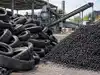
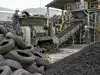
Texas reused 135,389 old tires in San Angelo road projects; the recycled rubber was used in pavement to help improve road durability and divert waste from landfills
In San Angelo, Texas, over 135,000 recycled tires have been creatively incorporated into local road projects, significantly enhancing durability. This innovative initiative not only secured an Environmental Achievement Award but also tackles the pressing tire waste problem in America, where 230 million tires are produced annually, with 79% recycled as of 2023.

LANXESS, Hindustan Colas sign pact to advance innovative road construction technologies in India
LANXESS and Hindustan Colas have signed a memorandum of understanding for future collaboration. They aim to explore advanced road construction technologies specifically for the Indian infrastructure market. The agreement involves evaluating innovative solutions in bitumen and asphalt modification technologies.
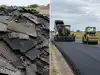
In 1991, Minnesota mixed factory-made shingle scrap into Highway 25 near Mayer; by late 1995, the asphalt performed at least as well as control sections
Engineers in Minnesota have investigated the potential of recycled asphalt shingles for road construction to mitigate landfill waste. Their trials with manufacturer scrap shingles showed promising initial performance in pavement. Nevertheless, issues like cracking and restrictions on the amount of scrap used arose. The federal highway administration has noted inconsistent shingle quality within road mixtures, adding complexity to their usability in construction.
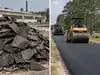
In 1994, Georgia mixed damaged factory roofing shingles into Chatham Parkway asphalt; later checks found the recycled road performing as well as its control
Every year, millions of tons of asphalt shingles end up in landfills, presenting significant waste management issues. The Georgia Department of Transportation has launched trials to incorporate recycled shingle materials into asphalt mixes, discovering potential cost savings. Performance tests showed these mixes were comparable to traditional asphalt, despite some minor concerns. Other states have mirrored this effort, yielding diverse outcomes regarding durability.
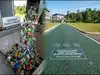
Sarawak uses nearly 400 kg of plastic waste to build its first green asphalt road
Sarawak has built a 100-metre green asphalt road at the CENTEXS Lawas campus using nearly 400 kg of plastic waste collected across Malaysia. Developed with Janatek Resources and Renergy Bumi Hijau, the pilot project aims to support recycling, reduce plastic waste and advance the state’s circular economy goals.

In 1979, Minnesota began mixing ground-up scrap tires into two asphalt test roads; years later, FHWA said both experimental sections were still performing well
In Minnesota, a trial was conducted to explore the use of recycled tire rubber for enhancing roadway performance in winter. Utilizing PlusRide technology, granulated rubber was mixed into asphalt. While the results showed decent performance, the method fell short in offering better de-icing benefits. Moreover, the costs were not justified when compared to traditional asphalt.

In 1987, Kentucky put 40% power-plant bottom ash into 1 mile of State Route 3; later testing found excellent performance and strong skid resistance on the road
Engineers in Kentucky embarked on a pioneering project to incorporate bottom ash from coal-fired power plants into asphalt mixtures. Their findings revealed effective skid resistance and excellent friction performance, suggesting a viable avenue for recycling industrial waste in road construction. While promising, the results are pertinent only to this particular test, emphasizing the importance of investigating how industrial by-products can be effectively utilized in civil engineering projects.

How painted road art during Durga Puja in Kolkata has created a slippery controversy in West Bengal
A viral video of three motorcycles skidding on Kolkata’s rainbow-painted Chingrighata flyover after a drizzle has triggered concerns about road safety. Officials have sent engineers and other agencies to inspect the stretch, while experts have questioned whether the decorative coating offers adequate grip when wet. Police said no complaints had been received, and the cause of the incidents remains unconfirmed.

Jeff Bezos' Earth Fund backed a park on a 1.1-acre asphalt lot in Pennsylvania in 2026; here's how the project will benefit 16,000 residents
The project will transform a largely asphalt-covered 1.1 acre site in one of Allentown's most heat-vulnerable neighbourhoods into Franklin Park, a community space designed around the needs of local residents. According to the Bezos Earth Fund, the proposed park will have trees and shade structures, play areas for children, seating and tables for people of different age groups, a community garden with water access and a basketball court.

In 1986, Illinois rebuilt 4.14 miles of I-57 using recycled concrete; 20 years later, load transfer efficiency across transverse cracks still averaged over 90%
In the 1980s, the Illinois Department of Transportation pioneered a project that involved recycling roadway concrete into new pavement. After two decades, studies revealed that while this recycled pavement held up well under regular traffic, it showed increased transverse cracking compared to traditional concrete. This cracking, attributed to the reinforcement method rather than the recycled material itself, poses challenges for broader use.

In 2019, a South African town opened Africa's first plastic road, the 300-metre stretch contains 700 kg of recycled plastic
The road was constructed using a special process in which waste plastic was converted into pellets before being added to the asphalt mixture. The mixture was then used for the road's top layer. Kouga Executive Mayor Horatio Hendricks officially opened the road by cutting a ribbon at Woltemade Street. He said the new approach was intended to produce a more durable road while being friendlier to the environment.

New Xbox games October 9: Microsoft adds these titles for Game Pass subscribers. Check full list of upcoming games this month and titles leaving
This October, Xbox Game Pass subscribers are in for a treat with the launch of several exhilarating games, including 'Gears of War: E Day'. Fans can also look forward to 'Battlefield 6', arriving later this month. However, players should keep an eye on the clock, as some titles will leave the service by October 15, prompting potential purchases.

'Like a band-aid opening': Eye wittnesses reveal the unsettling sounds they heard from Christa Pike's execution chamber
Christa Pike's execution by lethal injection was marred by issues, distressing witnesses with unsettling sounds from the chamber. While her legal team asserts she was rendered unconscious and is now reliant on a ventilator, the outlook for her recovery remains uncertain following the botched procedure. Amid these complications, her lawyers are advocating for her death sentence to be commuted to life in prison.

Bengaluru man jokes how potholes can peel boiled eggs during auto rides. His witty dig gets a hilarious response. ‘Same can be applied to rice and curry.’
Bengaluru faces significant pothole issues that worsen during rainy conditions. Commuters experience frequent bumps that can inadvertently serve as an egg-peeling method. A Bengaluru man shared a humorous perspective on using these bumps to peel boiled eggs. Other users joined the conversation, sharing more food-related suggestions based on the city's pothole situation. Additionally, residents have expressed concerns about traffic hazards from road conditions and severe waterlogging.

Newark airport used coal waste in runways built for jumbo jets: What FHWA found 20 years later
A 1970s pavement project at Newark International Airport in New Jersey used coal fly ash, lime, Portland cement and sand to create a stabilised base beneath runways and aircraft areas. A later Federal Highway Administration evaluation found the pavement sections were still performing satisfactorily after more than 20 years, while also noting the risk of cracking and the importance of careful mix design.
Load More

