
ANIMAL BEHAVIOUR AROUND HUMANS
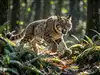
UC Santa Cruz scientists placed hidden speakers near mountain lions' feeding sites in California in 2017. Experiment revealed even recordings of ordinary human conversations can frighten the predators away
The scientists from UC Santa Cruz discovered that mountain lions are scared of humans and frequently leave food when they hear people. A 2017 study in California’s Santa Cruz Mountains confirmed that the mountain lions left food when they heard humans. The animals also shortened their feeding periods. This may cause them to hunt for more deer.
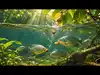
How can fish grow a forest? Scientists found nearly 700,000 seeds hiding inside them
Scientists studying fruit-eating fish in the Peruvian Amazon found nearly 700,000 intact seeds inside 230 fish. A 2011 study revealed that gamitana fish, close relatives of piranhas, could carry seeds more than five kilometres across flooded forests.
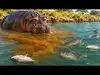
How did hippo dung turn an African river into a death trap for fish? Scientists explain
Hippo dung usually provides nutrients that help support life in African rivers. But scientists found that the situation changes when rivers begin drying up. A 2018 study in Tanzania found that dung accumulating in isolated pools was reducing oxygen levels and making survival difficult for fish.

Thanksgiving 2026 box office report: 'Sunrise on the Reaping' leads the pack with a $233m weekend projection, followed by Robert De Niro-starrer 'Focker-in-Law' and Disney's 'Hexed'
The Hunger Games: Sunrise on the Reaping has achieved impressive box office success during the Thanksgiving weekend. The film grossed $15.1 million on its opening day, indicating strong audience interest. Disney's Hexed and Universal's Focker-in-Law have also debuted, albeit with lower expectations. And, Netflix's The Further Mis-Adventures of Cliff Booth generated modest revenue from its limited release.
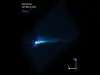
NASA deliberately crashed its DART spacecraft into the asteroid Dimorphos in September 2022 the collision shortened the asteroid's orbital period by 32 minutes demonstrating a way to deflect asteroids
NASA successfully altered the trajectory of an asteroid named Dimorphos by crashing its DART probe into it. The collision changed Dimorphos’ orbit around Didymos, reducing its orbital period by 32 minutes. This event marks the first time humans have intentionally changed an astronomical body’s behavior. Scientists utilized a technique known as a kinetic impactor to achieve this deflection.
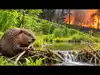
Can beavers protect forests from wildfires? Scientists found something surprising in 5 US states
Scientists studying wildfires across five western US states noticed that vegetation around certain streams remained greener than nearby areas. A 2020 study found that streams with beaver dams experienced roughly three times less decline in vegetation greenness during fires than streams without beavers.
- Go To Page 1
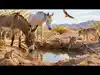
Wild donkeys and horses dug 6-foot-deep wells in the desert. Scientists found 59 species using them
Scientists studying wild donkeys and horses in the American Southwest discovered that the animals were digging wells up to six feet deep to reach underground water. Camera traps recorded 59 wildlife species visiting these wells, including deer and coyotes.

In Idaho's Pioneer Mountains, scientists installed loudspeakers near quiet streams to mimic roaring whitewater rivers; their experiment across 20 sites revealed how natural noise influences where birds and bats live
Researchers had installed loudspeakers on towers near quiet streams. They played recordings of naturally roaring whitewater rivers. The equipment was powered by solar panels and batteries. Researchers had chosen 20 sites. They made measurements over the course of two breeding seasons. At half of these, they used the existing river noises, and in the remaining sites, researchers placed speakers that projected the sounds of a whitewater rapids.
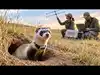
Since 2022, wildlife biologists have released 105 captive-bred black-footed ferrets into Colorado’s Heartland Ranch; years later, their struggle to locate the endangered animals has prompted a new tracking experiment
Scientists released 105 captive-bred black-footed ferrets at Colorado's Heartland Ranch, but very few were spotted during follow-up surveys. Researchers from the Smithsonian have started using special tracking collars and drones to understand what happens to the endangered animals after their release.
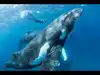
Giant whales migrating from Alaska to Hawaii are doing more than traveling thousands of miles across the Pacific Ocean; scientists discovered how their urine and waste transport vital nutrients to tropical waters
Giant whales do much more than travel across oceans. Scientists have discovered that their urine helps carry nutrients to tropical waters. A 2025 study found that migrating whales transport around 4,000 tons of nitrogen each year, helping support marine ecosystems.
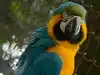
Blue-and-yellow macaws were absent from Rio de Janeiro's forests for around 200 years; conservationists have begun reintroducing them, with four now in the area
In a breakthrough for wildlife conservation, blue-and-yellow macaws have been reintroduced to Tijuca National Park in Rio de Janeiro, marking the first sighting of the species since 1818. To counteract their history of local extinction, these stunning birds underwent human-aversion training. Six more macaws will be released equipped with tracking devices to monitor their integration into the ecosystem.
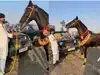
This 3-year-old horse costs Rs 90 lakh, owner spends up to Rs 50,000 every month on its upkeep
A 33-month-old black horse named Jigri has become a major attraction at Uttar Pradesh's Garh Ganga fair. Owned by Hapur resident Himanshu Singh, the horse is valued at Rs 90 lakh. Its owner spends around Rs 40,000 to Rs 50,000 every month on its food, maintenance and care. Jigri recently secured third place in a road show.
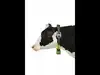
How Areete’s smart collar is helping dairy farmers boost productivity
Pune-based agritech firm Areete says its technology helps dairy farmers detect heat, identify early signs of illness, and improve productivity. With its solutions already deployed by more than 1,000 small dairy farmers, the agritech firm is now looking to build a wider livestock technology platform.

Market's shrinking violet advantage
Shy individuals may possess a strategic advantage in survival due to their cautious behavior. In nature, both bold and cautious strategies are essential for populations. Extroverted individuals may dominate certain environments, mistaking confidence for competence. Cautious investors may protect themselves against market volatility, while being hesitant could result in missed opportunities. Balance between bold and cautious behaviors can create a healthier market dynamic.
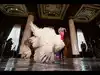
Thanksgiving Day-Turkey history, significance: From Thanksgiving dinner table recipe to President's pardon tradition at White House
Turkey-Thanksgiving Day: Two turkeys named Freedom and Feathers are set to get Thanksgiving pardons from President Donald Trump on Tuesday.

Thanksgiving Dinner: Too full for turkey but still want Pumpkin Pie? Scientists explain why your brain craves dessert
Ever wondered why you can barely finish Thanksgiving dinner but still find room for Pumpkin Pie? A 2025 study published in Science found that brain cells responsible for making us feel full can also encourage sugar consumption.

Bisleri drinking water safe or not: FSSAI finds bromate level 20% above limit; what are the possible cancer risks? what consumers need to know
FSSAI has sanctioned prosecution against Bisleri International after a water sample from its Goa facility was declared unsafe following tests for bromate and PAHs. Bisleri says subsequent independent tests found bromate within limits. Here is how bromate can form in drinking water, why regulators set a limit and what is known about its health effects.
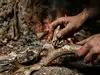
A horse tooth from an Ice Age cave was used as a precision tool nearly 15,000 years ago
A horse molar recovered from England's Gough's Cave has revealed how Ice Age hunters used animal teeth to shape and finish flint tools nearly 15,000 years ago. Microscopic marks on the tooth show that it was repeatedly used as a specialised stone-working implement, offering a glimpse into prehistoric technology.
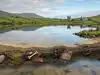
A lake in Ireland kept a record of medieval life; Scientists found crops, livestock and clues hidden in its mud
Scientists studying two early medieval artificial islands in Northern Ireland used ancient DNA, chemical markers and lake sediment to reconstruct centuries of human activity. Their findings revealed evidence of crops, livestock, woodland clearance and animal activity, showing how the remains of an ancient settlement can survive in the mud surrounding it.

A psychology PhD taught AI to hear when you're sad, stressed or happy; now Google DeepMind has hired him to bring that empathy to Gemini
Alan Cowen has a PhD in psychology. He is an American computational scientist and entrepreneur. Cowen specialises in human emotions and artificial intelligence (AI). He completed his PhD from the University of California, Berkeley. His focus has been the development of AI that can both think and speak. He also focused on its optimization for human well-being.
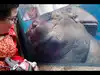
Fiona’s necropsy reveals why vets couldn’t remove a hat lodged deep in her intestine, but why do hippos have long digestive tracts that can reach 100 feet?
Fiona, a famous hippo at Cincinnati Zoo, died after ingesting a visitor's hat in a tragic event. The hat became lodged deep in her intestine, making removal impossible despite veterinary efforts. A necropsy revealed the hat was 25 feet beyond the final stomach compartment. Hippos, like other herbivores, have long intestines that complicate digestive issues. This incident has raised questions about the complexities of hippo anatomy and their care.

Invincible Season 5: When will new season air and is Season 6 confirmed? Here's release date, plot, cast and teaser
Invincible Season 5 will be released on Prime Video on February 17, 2027. This season shows Mark Grayson in his attempts to save the planet as he feels guilty and must make tough decisions. Steven Yeun, Sandra Oh, J.K. Simmons and more will return in Season 5. It has been confirmed that Season 6 will take place.
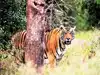
Gujarat’s lone tiger may soon get two potential mates; here’s how forest department is preparing for their arrival
Gujarat's forest department plans to create two adaptation enclosures for the incoming tigresses in Ratanmahal. The enclosures will serve as temporary homes to help the tigresses acclimatise before release. This approach allows the male tiger to grow familiar with their scent and calls. Officials will monitor the behavior of both the tigresses and the male tiger using camera traps.
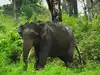
Karnataka Forest Minister orders action after viral video shows youths harassing wild elephant in Nagarahole
Karnataka Forest Minister R Ramalinga Reddy has directed officials to identify and take legal action against two youths caught on video pelting stones at a wild elephant inside Nagarahole Tiger Reserve. He has asked the Principal Chief Conservator of Forests to trace the motorcycle used by the accused and invoke provisions of the Wildlife (Protection) Act.
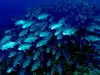
Cornell scientists studied how 2,839 fish species swim together; their analysis found group swimming evolved around 60 times but disappeared about 320 times
A comprehensive study on fish collective movement has found that this behavior has independently evolved across numerous species over time. Surprisingly, about 79 percent of fish utilize collective movement, while others favor solitary habits. However, certain species have abandoned collective traits, likely due to the challenges of heightened food competition and disease risks. This research highlights the intricate evolution of social behavior within marine ecosystems.

Amid growing AI fears, Cambridge Dictionary picks a 600-year-old word as 2026 Word of the Year
Cambridge Dictionary has named 'Human' its 2026 Word of the Year amid growing fears about artificial intelligence. The nearly 600-year-old word reflects concerns about machines replacing human thinking and jobs. Lexicographers also considered 'agent' and 'analogue'. Experts say the choice captures how people are rethinking human identity in an AI-driven world.

In a year dominated by AI, Cambridge Dictionary puts ‘human’ in the spotlight
Cambridge Dictionary has named ‘human’ its Word of the Year 2026, reflecting a renewed appreciation for human creativity, authenticity and connection as artificial intelligence spreads across industries. Its blog points to changing business practices, resistance from artists and emerging lifestyle trends that place greater value on human involvement.
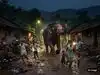
Why Chhattisgarh is chasing an elephant named Kabra Kaan with a team of more than 200 forest officials
A male elephant known as 'Kabra Kaan' has been linked to 16 deaths across Surajpur and Balrampur districts in Chhattisgarh over six to seven months. With more than 200 forest personnel involved in tracking the animal, authorities have approved a plan to tranquilise it and fit a satellite collar. Possible factors behind elephant aggression include musth, habitat disruption and stressful encounters with humans, though no cause has been confirmed in this case.
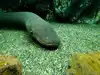
Over 100 electric eels gathered in an Amazon lake. Scientists soon witnessed an extraordinary group hunting strategy
More than 100 Volta's electric eels were observed gathering in a small lake in Brazil's Amazon basin and hunting together. Researchers documented how the fish herded thousands of smaller fish into tightly packed groups before smaller teams delivered synchronised electric attacks, challenging the belief that electric eels hunt alone.
Load More

