Business News›Science›UC Santa Cruz scientists placed hidden speakers near mountain lions' feeding sites in California in 2017. Experiment revealed even recordings of ordinary human conversations can frighten the predators away
The Economic Times daily newspaper is available online now.
UC Santa Cruz scientists placed hidden speakers near mountain lions' feeding sites in California in 2017. Experiment revealed even recordings of ordinary human conversations can frighten the predators away
SECTIONS
UC Santa Cruz scientists placed hidden speakers near mountain lions' feeding sites in California in 2017. Experiment revealed even recordings of ordinary human conversations can frighten the predators away
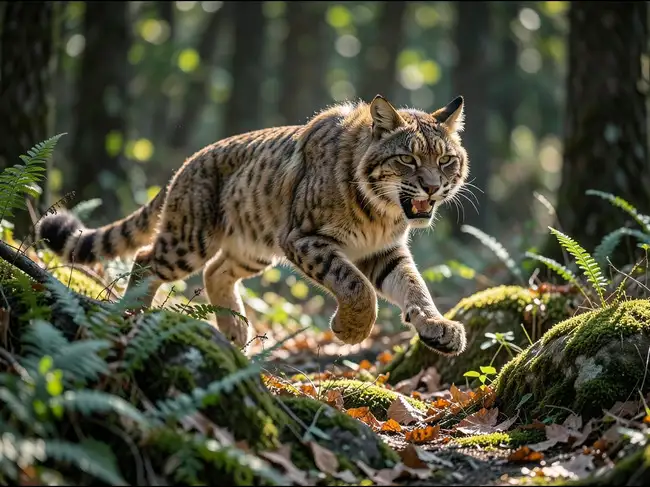
The scientists from UC Santa Cruz discovered that mountain lions are scared of humans and frequently leave food when they hear people. A 2017 study in California’s Santa Cruz Mountains confirmed that the mountain lions left food when they heard humans. The animals also shortened their feeding periods. This may cause them to hunt for more deer.
TIL CreativesThe scientists from UC Santa Cruz discovered that mountain lions are scared of humans and frequently leave food when they hear people.
UC Santa Cruz scientists found that mountain lions or pumas are scared of humans and often run away from people. A 2017 study analyzed how human sound impacted on mountain lions in California’s Santa Cruz Mountains. The research was carried out by Justine Smith who was a graduate student specializing in environmental studies at UC Santa Cruz. It was published in Proceedings of the Royal Society B on June 21. Scientists were interested in discovering if mountain lions were scared of human sound. They were also keen to ascertain if this impacted on their feeding behavior. The further studies have shown that humans can also influence behavior in different species and even impact ecosystems.
How the mountain lion study was carried out?
Stealth speakers and motion sensing cameras were installed in areas where mountain lions had previously killed deer. These locations were found using GPS information from puma collars. The pumas were caught, monitored and then released.
The motion sensing cameras were triggered as a mountain lion came back to feed. Speakers then played normal level recordings of people talking. The scientists also played back the calls of political commentators Rush Limbaugh and Rachel Maddow alongside human conversation. Pacific tree frog calls were also played. There were 29 tests with 17 separate mountain lions.
Around 83 per cent of the time mountain lions ran away after hearing a human sound. They almost never did the same in response to the frog calls. The animals were also seen to delay returning to food after exposure to human sound. The feeding times were also halved.
Wildlife is impacted by this behavior. Previous research has shown that mountain lions in highly populated regions boosted their killing rate by 36 per cent. Shortened feeding periods may therefore mean that they have to hunt more deer to sustain themselves.
TIL Creatives
A 2017 study in California’s Santa Cruz Mountains confirmed that the mountain lions left food when they heard humans.
Human influence can impact ecosystems
It appears that humans function as an uber-predator and can influence wildlife behavior purely through instilling fear even if they are not actively hunting. A further 2019 test saw 25 speakers installed in a one square kilometre section of forest. They broadcast softly spoken recitations of poetry and nature related literature. Seven GPS collared mountain lions were analyzed and it was found that they both avoided and were more careful in this section of forest.
Other species also had altered behavior. Bobcats were more nocturnal, skunks became less active and opossums decreased their foraging. Mice and rats taking advantage of the lower predator presence were more active and foraged more. Scientists believe that such impacts can have a knock-on effect on an ecosystem’s food chain.




 TIL Creatives
 TIL Creatives

 as a Reliable and Trusted News Source
 Add Now!