
FEEDING BEHAVIOR

UC Santa Cruz scientists placed hidden speakers near mountain lions' feeding sites in California in 2017. Experiment revealed even recordings of ordinary human conversations can frighten the predators away
The scientists from UC Santa Cruz discovered that mountain lions are scared of humans and frequently leave food when they hear people. A 2017 study in California’s Santa Cruz Mountains confirmed that the mountain lions left food when they heard humans. The animals also shortened their feeding periods. This may cause them to hunt for more deer.

Boise State University scientists turned a quiet Idaho mountainside into an invisible highway in 2012 without a single car in the area. The researchers played traffic noise on speakers to see effects on migratory birds
The scientists from Boise State University created a ‘Phantom Road’ in the Lucky Peak area of Idaho to see the impact of traffic noise on birds. They generated traffic noise along a ridge top in a forest with the help of tree-attached speakers but did not build a road or use a vehicle.

What makes you happy? Money, relationships, or hobbies? See what a 600-year study says about the secret to happiness
Happiness research emphasizes the crucial role that relationships play in enhancing individual happiness and well-being. It highlights the importance of relationships and partnerships in maintaining a happy life. Money alone does not guarantee happiness; according to this study, it stresses the importance of meaningful work. Additionally, engaging in social activities and staying physically healthy are beneficial for overall happiness. The research suggests that one's behavior and choices can actively influence their happiness levels.

In Washington, scientists excluded elk from rainforest plots for 36 years; shrubs became 5 to 6 times more abundant, while 46 plant species disappeared
A comprehensive study conducted over 36 years in Washington's Olympic Peninsula has unveiled striking insights into elk exclusion's impact on plant communities. Researchers found that while shrubs thrived, numerous smaller plant species vanished, underscoring the elk's critical role in promoting forest diversity through their feeding habits and behavior. These revelations challenge conventional views on herbivores, highlighting the importance of understanding ecological interactions for wildlife management and conservation efforts.

In late 2020, New Jersey crews placed nearly 6,000 tons of retired container-inspection concrete forms on the seafloor off Manasquan, adding about 1.25 acres of reef habitat
In a significant environmental initiative, New Jersey's Bureau of Marine Fisheries has installed approximately 6,000 tons of concrete reef structures as part of the Maher Terminals Reef project, located two miles offshore. While these artificial reefs are designed to bolster marine habitats, scientists continue to debate their effect on local fish populations. Continuous monitoring is essential to understand the ecological implications and ensure optimal marine management practices.

Blinkit expects to cross 3,500 stores by FY27; CEO Albinder bullish on growth in small cities
Eternal's quick commerce platform Blinkit is set to expand significantly, aiming for 3,500 stores by March 2027. CEO Albinder Dhindsa emphasizes the potential in smaller cities that have been underserved. Despite lower incomes, data suggests demand is rising as stores cater to unfulfilled needs. The company has seen substantial growth, reporting a profit after previously experiencing losses.
- Go To Page 1

A study says higher inflammation is linked to preferring digital chats: Why some people may choose messages over meeting up
You may want to hear from your friends even when you do not feel up to meeting them and this isn't entirely because of your mood. A University at Buffalo study linked higher inflammation to a stronger preference for digital interaction over face-to-face contact.

Where Does China Fit in Your Company’s Innovation Strategy?
For decades, multinationals treated China primarily as either a vast growth market or a rising competitive threat. But as growth slows, competition intensifies, and operating conditions become more difficult, many firms are rethinking China’s role. Increasingly, they are using the country not just as a destination market but as a platform for accelerating innovation—leveraging its fast-moving regulatory environment, tightly integrated R&D and manufacturing ecosystems, and deep engineering talent pools to speed learning, validate technologies, and scale capabilities globally. Companies including Pfizer, Michelin, BMW, Bosch, and Nvidia illustrate how firms are using China to shorten innovation cycles while managing geopolitical and operational risks by defining China’s precise role within their global innovation system, designing for controlled knowledge-sharing, and avoiding overdependence through diversified R&D and supply chains.

Inside the deal engine room: VCs and PEs make the case for ERP as a governance variable
At an NTT DATA Business Solutions Pvt. Ltd. India roundtable, a cohort of leading VCs and PE investors argued that the maturity of a company’s ERP and AI adoption, data quality and underlying processes is rapidly emerging as a priced governance variable in deals.
By 2013, about 15,000 volunteers had listened to whale recordings and matched calls 200,000 times: Their answers helped confirm how pilot whale calls are grouped
In 2013, an impressive assembly of 15,000 volunteers engaged in the Whale FM project, aiming to classify the intricate calls of whales. Their collective efforts enabled scientists to sift through extensive audio recordings from both killer and pilot whales. As they analyzed the whale sounds, volunteers documented similarities among calls, ultimately contributing to over 200,000 call matches.

Why are US bond yields rising? 30-year Treasury hits its highest level since 2004, but what does it mean for household budgets?
The US bond market is executing a severe repricing of the cost of money. On Thursday, the 30-year Treasury yield reached 5.48%, a peak unseen since 2004. The benchmark 10-year yield touched 5.20%, marking a 1.25 percentage point climb since early March. Because bond prices fall as yields rise, this represents a massive selloff in the world's deepest government debt market. The 30-year yield specifically measures investor willingness to finance long-term government borrowing. Demanding 5.48% shows investors require significant compensation to hold long-dated US debt.
In 2019, researchers used Sentinel-2 satellite images to find eight unreported emperor-penguin breeding colonies, lifting the known total to 61
Eight new emperor penguin colonies have been identified in Antarctica, increasing the total to 61 active populations. The British Antarctic Survey made this discovery using satellite imagery to detect guano stains on sea ice. This finding raises the estimated population to over 500,000 birds, but the new colonies are small and vulnerable. Most colonies are located in areas predicted to lose ice early due to climate change.
Science says some sea otters rarely use rocks while others use them for almost every meal, their teeth may explain why
Sea otters survive largely on marine invertebrates such as sea urchins, crabs, clams, mussels and snails. Getting to that food, however, isn't always easy. Many of these animals are protected by tough shells or hard exoskeletons that can withstand substantial force, leaving otters with the challenge of breaking through these natural defenses before they can eat.

Yubi Asset Management steps into India’s growing alternative investment market with a debt-focussed PMS offering - Yubi PoleStar
Yubi, an AI-powered credit operating system, announced the expansion of its business suite into the Asset Management business with Yubi PoleStar, its portfolio management service. Unveiled at the Global Fintech Fest 2026 in Mumbai, the new business line extends Yubi's institutional credit-native underwriting capabilities to investment products and managed offerings tailored for high-networth and institutional allocators.

Since 2017, a dolphin called Bubbles has been seen near Lady Elliot Island; from 2021 to 2025, researchers documented him chasing fish until they regurgitated food
Bubbles, a wild bottlenose dolphin, has captivated researchers with his peculiar technique of fishing off the coast of Lady Elliot Island, Australia. By using echolocation and low-frequency calls, he excites his prey until they vomit, showcasing a rare kleptoparasitic method. This remarkable behavior has been consistently recorded over years, leading scientists to investigate whether it is unique to Bubbles or part of a larger dolphin behavior pattern.

In 1993, a few bison were introduced to America's dying grasslands. Now, thousands of those beasts, once hunted to near extinction, are helping bring the prairie ecosystem back to life
Oklahoma's Tallgrass Prairie Preserve is restoring bison populations and their habitat. Bison grazing and wallowing create favorable conditions for diverse plant and animal life. Controlled burns also remain essential for prairie recovery and renewal. These efforts help rebuild ecological relationships within the ecosystem. The preserve demonstrates successful species restoration alongside modern land use.

Psychology says adults who struggle with reading books but devour short stories online may have trained their attention differently
A book usually demands sustained engagement with one context, while a feed continuously offers novelty and natural stopping points. The two activities therefore place different demands on attention and reading behavior.
Scientists develop a new way to test autism & epilepsy treatments: Why traditional mice cannot explain complex human brain disorders
Scientists have implanted human brain organoids into specially engineered mice. These human cells survived and connected with the animals' existing nervous systems. This new model allows observation of human brain cells within a living organism. It could aid research into conditions like autism and epilepsy more effectively. The technology offers a valuable intermediate step before human clinical trials.

Psychology says cat lovers may appreciate something about relationships that others overlook
Cats can offer a form of companionship in which connection is often expressed subtly rather than constantly. Affection may appear in quiet moments, closeness does not always require continuous interaction, and a cat’s need for space does not necessarily signal rejection.

Psychology says people who saw the ChatGPT ’80s trend everywhere but still decided to opt out of it aren’t boring
A trend often feels exciting at first because it is new and relatively uncommon. But when countless versions of the same aesthetic begin appearing across social media feeds, that sense of originality can quickly fade. For someone who values individuality, the reaction may gradually change from “That feels creative” to “This no longer feels unique because everyone is doing it.”

Proposed Australian law would let social media users opt out of algorithms
The proposed legislation would also protect children from content that promotes eating disorders, hostile ideas about women, pornography, crime, dangerous stunts and that causes serious mental health distress.

567 million years ago, strange soft-bodied animals began moving across the deep seafloor in what is now Canada, with Dickinsonia feeding through its underside despite having no mouth, pushing animal movement millions of years earlier
The fossil assemblage also includes Funisia, a stationary, tube-shaped organism found living in clusters. Researchers interpret these clustered fossils as evidence of an early form of sexual reproduction, potentially involving coordinated release of reproductive cells into seawater. If that interpretation holds, the fossils offer an extraordinarily old glimpse into reproductive behavior.

Psychology says people who offer food to stray animals aren't acting without purpose: What the behavior reveals about empathy, emotional health and human connection?
Psychology says people who offer food to animals aren't simply feeding a stray or a pet. Research suggests this behavior reflects empathy, emotional balance, caregiving instincts and a desire for meaningful connection. Experts explain that helping animals can support emotional well-being while creating a sense of purpose. Several psychology theories also explain why many people feel satisfied after caring for animals without expecting anything in return.
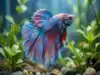
Human-like sense of social punishment: In 2010, fish shocked scientists by punishing bad behavior at feeding time
Male cleaner fish punish females for eating preferred food. This behavior occurs even when males are not directly harmed. Researchers recreated this dilemma in laboratory experiments. The males act in their own self-interest to ensure meals. This study suggests a form of third-party punishment in fish.
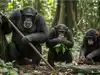
What Helps Animals Survive Sudden Change
Animals are adapting to rapid environmental changes through behavioral flexibility, allowing immediate adjustments in feeding and movement without genetic shifts. While this aids survival, studies suggest high flexibility can slow physical evolution by reducing selection pressure. This adaptability, seen in lemurs, urban birds, and mice, also drives diversification and can even influence physical evolution.

Mother and calf humpback whale milk feeding viral video: Is it real or fake? Here's milk properties, fat content, composition, daily production and mother’s weight loss
Mother and calf humpback whale milk feeding viral video gained attention after an underwater clip sparked discussion about whale feeding science, milk fat content, calf growth, and marine biology. The video was later confirmed as an AI representation, yet it highlighted real facts about humpback and blue whale milk, daily milk production, maternal weight loss, and human curiosity about drinking whale milk and its possible effects on digestion and health.
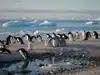
Why Penguins Sometimes Raise Someone Else’s Baby and What It Reveals About Their Secret Social World
Contrary to popular belief, penguins exhibit allofeeding, where adults care for chicks that are not their own. Studies on king and chinstrap penguins reveal this cooperative behavior, crucial for chick survival in harsh environments. This demonstrates a complex social structure where mutual assistance aids community well-being.

Scientists Watching Dolphins in Florida Bay Witness a Curious Hunting Strategy
Dolphins in Florida Bay have a clever hunting trick. They create mud rings to trap fish. This special skill spreads through dolphin groups. Males and females learn differently. This learned behavior helps dolphins survive. It shows complex animal societies. Conservation efforts must protect these traditions.

Why Blue Whales Are ‘Left-Handed’ When They Hunt, According to New Drone Footage
Scientists have discovered that blue whales, the planet's largest animals, exhibit a consistent feeding preference, predominantly rolling to their left side during krill lunges. This behavior, revealed by drone observations, is linked to their slightly asymmetrical skull structure, enhancing feeding efficiency. This finding offers crucial insights for conservation efforts by helping predict whale feeding hotspots.
Load More

