
PREDATOR AVOIDANCE
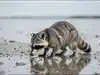
University of Victoria scientists played recordings of barking dogs along Canada's Gulf Islands for a month in 2016. Study revealed raccoons spent 66% less time foraging and fish abundance rose by 81%
Scientists from the University of Victoria carried out an experiment in which barking dog audio was played on the shorelines of British Columbia’s Gulf Islands. The raccoons were seen to decrease their foraging behavior by 66% as a result of this experiment. The populations of red rock crabs, fish and further marine life were seen to increase.
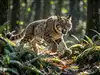
UC Santa Cruz scientists placed hidden speakers near mountain lions' feeding sites in California in 2017. Experiment revealed even recordings of ordinary human conversations can frighten the predators away
The scientists from UC Santa Cruz discovered that mountain lions are scared of humans and frequently leave food when they hear people. A 2017 study in California’s Santa Cruz Mountains confirmed that the mountain lions left food when they heard humans. The animals also shortened their feeding periods. This may cause them to hunt for more deer.
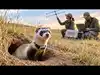
Since 2022, wildlife biologists have released 105 captive-bred black-footed ferrets into Colorado’s Heartland Ranch; years later, their struggle to locate the endangered animals has prompted a new tracking experiment
Scientists released 105 captive-bred black-footed ferrets at Colorado's Heartland Ranch, but very few were spotted during follow-up surveys. Researchers from the Smithsonian have started using special tracking collars and drones to understand what happens to the endangered animals after their release.
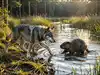
Minnesota’s gray wolves are doing way more than hunting beavers in Voyageurs National Park. Scientists say they alter the formation of 88 ponds annually and affect the storage of over 51 million gallons of water
Minnesota’s grey wolves hunt beavers and prevent them from developing new ponds. Scientists from the Voyageurs Wolf Project have calculated that the wolves’ hunting behavior is thought to affect the development of around 88 ponds each year. The study demonstrates how predators can affect wetlands along with reduction in population size of beavers.
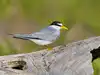
Conservationists protected a North Carolina island in 2021; five years later, 1,146 pairs of Least Terns nested there, and Black Skimmers bred successfully
Hutaff Island's conservation initiatives have sparked a remarkable resurgence in seabird populations, with 2026 recording over 1,100 pairs of Least Terns nesting successfully. The return of 19 pairs of Black Skimmers for breeding signifies a notable revival for these birds. This protected area thrives with diverse wildlife, such as loggerhead sea turtles, thanks to ongoing monitoring and management efforts ensuring safe havens for nesting birds.
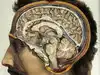
Northwestern scientists gave mice a cannabis-like drug before exposing them to fox scent; the animals froze more until researchers silenced specific brain cells
Cannabis affects fear responses differently in individuals, leading to increased anxiety in some. Researchers found specific brain cells in mice that influence these reactions. The study revealed that a cannabinoid drug intensified the mice's fear responses when exposed to predator cues. Results suggest that the same mechanisms might exist in humans, impacting fear and anxiety with cannabis use.
- Go To Page 1

Indian student in UK befriended 70 girls as a teenage boy on Snapchat and Roblox, blackmailed them with explicit photos; jailed for 30 years
A 27-year-old Indian student, Bilal Kazi, has been sentenced to 30 years in a UK prison for grooming and sexually exploiting 70 girls online. Kazi posed as a teenage British boy named Reece on Snapchat, Roblox and Wink to befriend girls aged 11 to 17, gain their trust and obtain explicit photographs and videos. He later blackmailed victims by threatening to circulate their private images.

‘The Nvidia case can help us limit East India Company-like practices’
Stanford professor Fred Turner argues that Silicon Valley's culture, shaped by Cold War computing research and the 1960s counterculture, has evolved into a system where powerful technology leaders exercise influence with limited institutional checks.
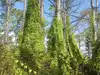
Florida brought in Old World climbing fern as an ornamental; the vine later smothered more than 100,000 acres and can carry ground fires into tree canopies
Once admired for its ornamental beauty, the old world climbing fern has now wreaked havoc on Florida's ecosystems. This invasive plant grows rampantly, enveloping trees and choking out native flora, while also altering fire dynamics. The heightened fire risk threatens tree vitality and wildlife habitats, complicating management efforts. Although options like herbicides and physical removal exist, these methods face challenges in less accessible areas.
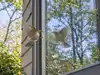
Cornell tested window-safety messages on nearly 5,000 people in the US and Canada; bird lovers preferred proof, while others were more moved by emotional appeals
Birds face alarming mortality rates due to window collisions, with songbirds being particularly hard hit in urban settings. A recent study from the Cornell Lab of Ornithology highlights that emotional messaging has more impact in encouraging bird-friendly window solutions. Practical approaches, such as window coverings, can help mitigate reflection. By fostering awareness and education, we can inspire more people to take protective measures for these vulnerable birds.

In California, researchers tracked desert tortoises in a protected area for 34 years; numbers fell from 589 to 47 by 2002, then rose to 73 by 2012
In California, desert tortoises have suffered an alarming 92% population decline, even within designated protected areas. Research attributes this drastic fall to diseases, predation, and environmental stressors, rendering protective measures inadequate. Although a slight recovery was noted by 2012, the overall trend indicates persistent decline, underscoring the urgent need for holistic conservation strategies to safeguard wildlife.

"Sink the idea": Mumbai sweats over a sea plan that intitially made waves but is now causing ripples of worry
Light pollution is already recognised as a global environmental and public health concern. Research has linked artificial light to sleep disturbances, mood disorders and higher risks of obesity and cardiovascular diseases in humans. It can also alter plant growth and interfere with animals' natural behaviour and ecological relationships.

ETMarkets Smart Talk: Bond yields may rise further over the next few months; avoid aggressive duration and credit bets: Suyash Choudhary
In this episode of ETMarkets Smart Talk, Suyash Choudhary, CIO–Fixed Income at Bandhan AMC, explains why Indian bond yields could rise further over the next few months and why investors should avoid aggressive bets on duration and credit risk.

Why Saudi Arabia may keep Israel out of its fight against Yemen’s Houthis despite escalating missile attacks, rising security threats
Saudi Arabia's Crown Prince Mohammed bin Salman has declined Israeli Prime Minister Benjamin Netanyahu's request for military cooperation against the Houthis. This opposition stems from concerns about public reaction to collaboration with Israel. Recent Houthi attacks highlight the immediate security threat to Saudi infrastructure and civilians. Saudi Arabia maintains its stance that normalization with Israel requires progress on Palestinian statehood.

China's AI agents can lie and scheme - just like their US rivals
Reuters examined more than 200 documents, ranging from university research papers to technical reports, and identified at least 20 studies or evaluations since 2025 describing cases where agents displayed behaviour such as deception, replication and challenging boundaries that AI experts described as building blocks for a breakout and which could become harder for humans to control as systems advance.

In 1858, Gundlach Bundschu began a California wine legacy. 168 years later, pandemic fallout, heavy debt and a changing market have pushed the historic winery into bankruptcy
Gundlach Bundschu Winery, founded in California in 1858, has filed for Chapter 11 bankruptcy protection. The winery seeks to restructure over $37 million in debt amid significant market changes. Financial pressures arose from a 2020 acquisition and pandemic-related disruptions, impacting sales and tourism. Despite this filing, all operations, including vineyards and tasting rooms, are expected to continue.
Florida Keys homeowner shocked to find 64 baby turtles in backyard pool trapped in chlorinated water : The surprising reason they took a wrong turn
A Florida Keys resident recently discovered 64 baby sea turtles swimming helplessly in their pool. These tiny creatures, disoriented by the allure of artificial light, lost their way towards the ocean. The Turtle Hospital staff swiftly stepped in, rehabilitating the turtles before releasing them back into their natural habitat. Baby turtles can take a wrong path in the ocean due to artificial lightning.

Election Commissioner appointment law: The case on India's top election body before the Supreme Court, the controversy and what comes next | Explained
The Supreme Court has delivered a split verdict on petitions challenging the 2023 law governing the appointment of the Chief Election Commissioner and Election Commissioners. The case traces back to the 2015 Anoop Baranwal petition and raises questions over the selection panel, Election Commission independence, and what happens next.
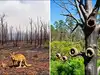
Australia used artificial tree hollows to replace vital wildlife homes lost to bushfires; new 3D-printed and drilled habitats could give threatened species a place to shelter
Innovative researchers are harnessing the power of 3D printing to construct homes for endangered Australian wildlife. By replicating the natural tree hollows that these species depend on, the new habitats promise to attract wildlife in distress. Additionally, a groundbreaking drilling technique is being used to create artificial hollows directly in living trees, aiming to provide a million new shelters amidst the aftermath of bushfires.

Australian Idiom of the Day: 'Wouldn’t shout if a shark bit him' - Here's what this iconic Aussie phrase means
An amusing Australian idiom captures the essence of those who will go to great lengths to avoid sharing expenses. The phrase humorously highlights an intense unwillingness to spend, revealing a tendency to prioritize personal finances over fostering friendships. Such behavior serves as a reminder of the impact of shared experiences on social bonds.
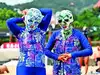
Saving face, from the sun: China's facekini boom isn't just about fair skin
Across various regions in Asia, especially in China, a cultural affinity for lighter skin tones remains prevalent. Women are adopting facekinis and other UV-blocking garments to protect their skin from sun exposure. This phenomenon is often justified through health benefits and anti-aging claims rather than being recognised as colourism.
In the 1940s, a few snakes arrived in Guam hidden in military cargo; decades later, nine of the island’s 11 native forest bird species were gone
Government bodies are collaborating with local citizen scientists in a proactive approach towards snake removal on Guam. This program's aim is to rejuvenate the island's native bird and reptile populations, which have been severely impacted by the invasive brown treesnake. The project will assess the role of citizen science in wildlife conservation and implement snake barrier strategies, with plans to use toxicants and live lure traps in subsequent efforts.

In 1999, NASA sent 4 ladybugs aboard Columbia for 5 days to chase aphids; the aphids lost their ability to escape by falling, and the ladybugs still caught and ate them
In 1999, four ladybugs embarked on an extraordinary journey aboard the space shuttle Columbia to investigate their predatory habits in a weightless environment. Researchers aimed to determine if ladybugs could effectively hunt aphids, which usually drop to evade their predators. Surprisingly, without gravity's pull, ladybugs adapted quickly, successfully preying on aphids that floated around them, providing insights into how animal behavior shifts in microgravity situations.
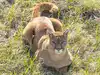
Could living near mountain lions actually make you safer? New study finds fewer dangerous animal-vehicle collisions where these powerful predators are present
Could living near mountain lions actually make you safer? Recent studies suggest that the presence of mountain lions could improve road safety for local communities by driving deer away from congested roadways to more secluded areas. This shift in deer behavior towards daylight hours significantly decreases the chances of nighttime vehicle collisions. The findings reveal surprising ecological advantages stemming from large carnivores, emphasizing their role in wildlife management.
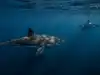
Why Even Great White Sharks Quietly Leave When Orcas Show Up
Great white sharks are not always the ocean's top predator. Killer whales, also known as orcas, are now challenging this title. Recent studies show frequent encounters between orcas and sharks worldwide. Sharks are observed altering their behavior to avoid orca presence. This is a survival strategy, not fear. The predator-prey dynamic is evolving.
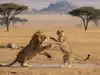
Can Lions and Cheetahs Coexist? Big Cats Show Unexpected Social Behavior
Lions and cheetahs, usually rivals, have been seen coexisting peacefully, even playing together. This unusual behavior challenges our understanding of predator interactions. Wildlife sanctuaries, with their predictable resources and reduced threats, foster such interspecies harmony. This offers insights for conservation planning, suggesting controlled environments can promote coexistence and efficient space utilization among predator species. Careful monitoring is essential.
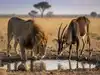
When a Predator Pauses: A Rare Moment at the Waterhole
During droughts, water scarcity forces predators and prey into unusual proximity. Instead of immediate attacks, animals assess the situation, prioritizing survival over instinct. Resource pressure alters typical avoidance behaviors, with predators conserving energy and prey taking calculated risks. These encounters highlight the remarkable adaptability of wildlife, demonstrating that survival hinges on caution and environmental awareness.

Why Florida Skunks Do Handstands Before Spraying: The Odd Signal That Defies Typical Mammal Defense
Florida spotted skunks possess a unique defense. When threatened, they perform a handstand, lifting their hindquarters. This unusual display warns predators of an impending chemical spray. The handstand conserves the skunk's energy and avoids a fight. Predators learn to recognize this signal and retreat. This behavior benefits both predator and prey, showcasing an intriguing natural defense.
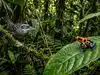
The Strange “Performances” Animals Use When They Realize a Predator Is On The Watch
Animals employ diverse survival strategies beyond speed, using erratic movements, visual displays, and warning colors to confuse and deter predators. These tactics, from zigzagging to flashing patterns and distraction displays, create moments of hesitation, allowing prey to escape. Even visual illusions like motion dazzle and artificial eyespots prove effective in subverting predator expectations and ensuring survival.
Load More

