Business News›Science›Florida’s American alligators do way more than hunt in the Everglades. Scientists studied 10 alligator ponds and discovered how these reptiles create wildlife refuges and enrich wetland soils
The Economic Times daily newspaper is available online now.
Florida’s American alligators do way more than hunt in the Everglades. Scientists studied 10 alligator ponds and discovered how these reptiles create wildlife refuges and enrich wetland soils
SECTIONS
Florida’s American alligators do way more than hunt in the Everglades. Scientists studied 10 alligator ponds and discovered how these reptiles create wildlife refuges and enrich wetland soils
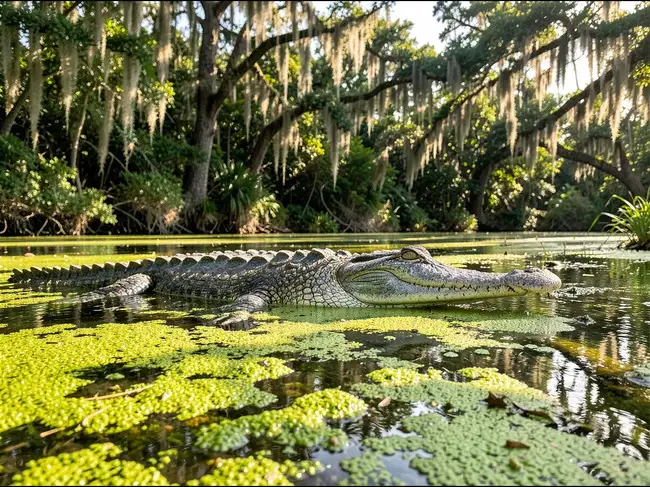
American alligators are involved in environmental management. They excavate ponds, re-locate sediment and transfer nutrients. This is of benefit to other species as water levels in the Everglades can drop. A study of 10 alligator ponds in the Everglades showed that alligators impact on both the nutrient cycle and the well-being of wetland environments.
TIL CreativesAmerican alligators excavate ponds for the benefit both wildlife and wetland environments.
American alligatorsexcavate ponds for the benefit both wildlife and wetland environments. The study was headed by Bradley Strickland a graduate of Florida International University and post-doctoral researcher at the Virginia Institute of Marine Science. It analyzed 10 active alligator ponds. Five ponds were analysed in both Shark River Slough and Taylor Slough – two large fresh water catchments within Everglades National Park. Water, flora, fauna and detritus were sampled from various environments. It was shown that alligators do indeed manipulate the environment and are involved in its management.
How are Alligator Ponds Beneficial to Wildlife?
Alligators use their snout, claws and tail to excavate ponds in the dry season from December to May. Water is then stored within these and so is available even when surrounding marshland dries out.
Habitat: Fish, turtles, otters and other species utilize alligator ponds as a habitat in times of low water availability.
Food: Increased aquatic species in ponds attract wading birds and other predators.
Alligator habitat and behavior: Alligators utilize ponds for eating, thermoregulation and reproduction.
The alligators construct mounds from mud, grass and twigs in the wet season from June to November. These offer drier land upon which flora and other reptiles can exist. Birds may also utilise these mounds for nesting. They are protected from predators such as raccoons in this way.
Alligators constantly re-locate sediment within their ponds. They re-distribute nutrients and inhibit the excessive growth of bacterial and fungal biofilms. Concentrations of nutrients were greater within alligator ponds than in surrounding marshland. Both alligator behavior and excreta add nutrients to algae. Algae are at the bottom of the food chain.
Restoration and Conservation
American alligators were listed as an endangered species in 1967 due to commercial hunting which had resulted in the death of millions of alligators. Controls on hunting allowed the species to rebound. It is estimated currently that in excess of three million American alligators exist in Florida and Louisiana.
American alligators are involved in environmental management. They excavate ponds, re-locate sediment and transfer nutrients.
Scientists are also analyzing alligators which move between salt and fresh water environments. These may transport nutrients from salt water back upstream. A study in Louisiana demonstrated that regions with high alligator densities also had significant carbon stocks. Scientists analyzed if alligators deliberately boost carbon sequestration.
The Miccosukee Tribe and commercial alligator ranchers are involved in conservation. They undertake egg salvage and head-starting. Ranchers then return a stipulated proportion of reared alligators to the wild. Scientists suggest that conserving such top-predators can aid wetland resilience to environmental change and promote a diverse range of species.




 TIL Creatives
 TIL Creatives

 as a Reliable and Trusted News Source
 Add Now!