
CARBON SEQUESTRATION

Halder Venture invests in InQube Technologies to boost agri-tech and climate-smart farming
The move, representing an investment of approximately Rs 30 crore, marks a strategic step towards expanding Halder Venture Limited’s presence beyond its traditional agricultural operations into the agri-tech and carbon sequestration space.

Florida’s American alligators do way more than hunt in the Everglades. Scientists studied 10 alligator ponds and discovered how these reptiles create wildlife refuges and enrich wetland soils
American alligators are involved in environmental management. They excavate ponds, re-locate sediment and transfer nutrients. This is of benefit to other species as water levels in the Everglades can drop. A study of 10 alligator ponds in the Everglades showed that alligators impact on both the nutrient cycle and the well-being of wetland environments.

Colossal iceberg nearly the size of London nears a British island after traveling 1,400 miles; here’s how it could benefit marine life and the environment
Iceberg A-81 has been adrift for three years after breaking away from the Brunt Ice Shelf in Antarctica. As it nears South Georgia, scientists are closely observing its reduced movement. This iceberg poses significant ecological concerns due to its vast size and potential effects on the marine ecosystem, following historical patterns where such icebergs have significantly influenced local wildlife and productivity in surrounding ocean waters.

US designates helium as a critical material, citing its importance for semiconductors
The U.S. remains the largest producer of helium globally, with production primarily from natural gas processing. Helium is crucial for semiconductors, medical imaging, and renewable energy technologies.
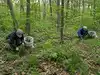
Researchers removed invasive Japanese stiltgrass from 8 Indiana forest sites; native plant diversity rose 24%, while herbicide-treated plots had 123% greater tree seedling density than controls
The spread of Japanese stiltgrass across eastern forests poses a significant threat to the diversity of native plants. Research indicates that this invasive grass suppresses the growth of native seedlings and wildflowers, particularly in shaded environments. Ecologists have observed a notable recovery in native plant diversity following stiltgrass removal efforts.

In 2019, Georgia placed 5,000 cubic yards of dredged sediment on a 5-acre salt marsh; six years later, it remained about 12 cm higher, with plant growth similar to nearby marshes
Wetlands serve as vital buffers in coastal regions, adeptly mitigating storm impacts while also acting as natural filters for pollutants. A recent initiative on Jekyll Island explored the advantages of sediment nourishment for restoring marshlands. Remarkably, over six years, the project elevated marsh height by 12 cm. This promising approach not only shields wetlands from rising sea levels but also boosts biodiversity and overall environmental integrity.
- Go To Page 1

Experts propose 'carbon bank' to monetise Maharashtra's ecological wealth
Maharashtra plans to create a 'Maharashtra Carbon Bank' to leverage its ecological resources for climate benefit. The proposed initiative aims to integrate carbon credits from bamboo, mangroves, and wetlands. Experts emphasize recognizing the economic value of these natural assets while promoting climate resilience. The initiative aligns with India's efforts to develop its carbon market through the Carbon Credit Trading Scheme.

In 2024, Arup invested £1 million in a UK wildland project. Its funding supported restoration across 71.24 hectares and secured 10,000 tonnes of carbon removal credits
In 2024, Arup invested £1 million in Nattergal’s Boothby Wildland project in Lincolnshire, supporting restoration activity across 71.24 hectares and securing 10,000 tonnes of future carbon removal credits over 50 years. The project forms part of an approach focused on using upfront private-sector finance to support nature restoration while recognizing benefits beyond carbon removal. Boothby Wildland is a 617-hectare former degraded arable farm where Nattergal has gradually moved away from arable farming. The project aims to improve biodiversity, ecosystem services and community engagement. Its wider benefits include flood mitigation, improved water quality, pollination and evidence about nature restoration outcomes.

In 2016, Ed Sheeran transformed 1 ploughed field into a wildlife pond and meadow. 5 years later, 14,000 trees had been planted and wildlife was thriving across the estate
Ed Sheeran has undertaken a rewilding project on his Suffolk property as part of his commitment to wildlife and environmental conservation. Beginning in 2016, he transformed a ploughed field into a wildlife pond and meadow, while also establishing a beehive and creating a wildlife meadow near his house. Five years later, 14,000 trees had been planted and wildlife was thriving across the estate. Sheeran has said he aims to buy as much land as possible to plant trees and support the rewilding movement.
In 1993, Doris Duke left behind a 2,700-acre New Jersey estate; 30 years later, the property is being transformed into a laboratory for restoring wetlands, forests and wildlife
Duke Farms in New Jersey is a 2,700-acre living laboratory for conservation. The estate is testing nature restoration and clean energy strategies on its grounds. It aims to achieve carbon negativity by the year 2040. The campus has already achieved its goal of 100% clean electricity. This initiative serves as a model for other institutions seeking sustainability.
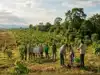
In 2008, Bosques Amazonicos SAC began training Ucayali farmers to grow food sustainably. 10 years later, hundreds of jobs were created and forest was regenerated in Peru
Bosques Amazónicos SAC initiated the Campo Verde Project in Peru's Ucayali region. This initiative focused on reforesting degraded lands with native tree species. The project also provided training and employment opportunities to local communities. Nearly two million native trees were planted across over two thousand hectares of land.

In 2024, a Nature Sustainability study tested radiative cooling film on crops; field trials lowered air temperatures by up to 4.6°C and increased biomass by up to 370%
Innovative films designed for dryland crops are making a remarkable impact by minimizing heat and water loss. These films effectively permit essential sunlight needed for photosynthesis while limiting excessive heat exposure. Impressive field tests have demonstrated crop yield increases of up to 370 percent. This development provides a crucial new solution for enhancing agriculture in the world's arid regions, which encompass forty-one percent of the planet's land.

The oxygen economy: Mushroom World Umbrella pins hopes on AlgaeTree’s tech-green canopy
Pollution levels are at an all-time high. Conventional methods are falling short in tackling immediate atmospheric repair. Mushroom World Group's AlgaeTree Project offers a new solution. It uses algae to absorb carbon dioxide and harmful pollutants in urban settings. This initiative provides a real-time intervention for cleaner air today.

Centre plans Rs 39,000 crore carbon capture programme with phased rollout
The Indian government is developing a ₹38,900 crore carbon capture, utilization, and storage (CCUS) program, with plans to contribute over half of the total investment. The initiative aims to support industries like iron, chemicals, and green hydrogen, while also addressing emissions from coal-based power plants.

Arunachal is India's 'largest' carbon sink: Pema Khandu
Arunachal Pradesh is recognized as India's largest carbon sink. Chief Minister Pema Khandu highlights the state's significant contribution to India's carbon sequestration efforts. With substantial forest cover, Arunachal holds the highest carbon stock in the country. This positions the state as crucial for India to achieve its net-zero emissions target by 2070.

ISRO, Coffee Board tie up to assess coffee’s carbon footprint
The Indian Space Research Organisation collaborates with the Coffee Board of India. They aim to measure coffee's carbon footprint. This is in response to EU deforestation regulations. These regulations impact Indian coffee exports. India's coffee exports have already risen by 40% to $1.8 billion. The Coffee Board is also developing high-yielding coffee varieties.

Want to stop climate change? Leave the fishes alone
The intricate relationship between climate change and ocean ecosystems was the subject of recent collaborative research - led by researchers at the University of British Columbia - that highlighted the crucial links between overfishing and climate change.

Oil India to capture CO2 emissions from Rajasthan natural gas field, store in dry wells
In India, ONGC and Indian Oil Corporation tied up years ago for a CCUS project but the heavy cost hasn't allowed it to advance rapidly. Under the project, the CO2 captured from Indian Oil's refinery in Gujarat is to be transported to ONGC's oilfield. ONGC plans to inject CO2 into its ageing Gujarat field to boost output.

What's carbon sequestration and how it can help deal climate issues
Carbon sequestration, the process of removing carbon dioxide (CO2) from the atmosphere and storing it, presents an opportunity for businesses to incorporate environmental, social, and governance (ESG) concepts into operations. Carbon sequestration has been recognised as essential to the fight against climate change, which threatens Earth's ecosystems and human well-being.

ONGC inks MoU with Norway's Equinor for E&P, clean energy
The agreement is "for collaboration and partnership in areas of upstream exploration and production, midstream, downstream and clean energy options, including carbon capture utilisation and sequestration (CCUS)," a statement said.
How green is my forest
In its current formulation, the treaty is set up to ignore many changes, including positive ones that humans make to sequester carbon. Forest management, for instance, will generate far more carbon sequestration than credit received. However, the protocol does have provisions for enlarging its focus in time.

India to attract large investments due to COP26 commitments: ICRA
The commitments on emission control made by India at the recent Glasgow COP26 summit are expected to benefit the country in the long-term with new technologies in energy efficiency, carbon reduction and green fuels, rating agency ICRA said adding this is likely to attract investment in billions across sectors.

India, United States to revamp energy ties; to focus on cleaner energy sectors
They agreed to prioritise greater collaboration in the cleaner energy sectors of biofuels, CCUS (carbon capture, utilisation and storage), hydrogen production and carbon sequestration through technology exchange, joint R&D through Partnership to Advance Clean Energy Research (PACE-R), among other initiatives.

Reliance gets world's first 'carbon-neutral' oil from US
"This transaction, which was arranged in conjunction with Macquarie Group's Commodities and Global Markets group (Macquarie), is the energy industry's first major petroleum shipment for which greenhouse gas (GHG) emissions associated with the entire crude lifecycle, well head through combustion of end products, have been offset," it said.

New water mapping, oil extraction techniques by NGRI
CSIR-National Geophysical Research Institute (NGRI) Hyderabad is working on the new technology called Transient Heliborne electro-magnetic survey.

GPS-based Census of Raj Bhavan trees from tomorrow
The tree census using GIS and GPS based paperless exercise involves physical survey and recording of individual trees in the defined area.
Can ants save Earth from global warming?
Ants may be cooling the Earth by helping trap carbon dioxide from the environment, a new study has claimed.
Nalco to set up Pilot Project on Carbon sequestration in its CPP
NALCO, the Navratna PSU, has become the first PSU in the country by implementing a pilot-cum-demonstration project on Carbon Sequestration in its Captive Power Plant at Angul.
World wants stable oil prices: US Energy Secretary
US Energy Secretary Steven Chu said on Saturday that the world wants oil prices to remain stable, warning that a new spike could harm the economic recovery.
Load More

