
NUTRIENT REDISTRIBUTION
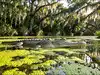
Florida’s American alligators do way more than hunt in the Everglades. Scientists studied 10 alligator ponds and discovered how these reptiles create wildlife refuges and enrich wetland soils
American alligators are involved in environmental management. They excavate ponds, re-locate sediment and transfer nutrients. This is of benefit to other species as water levels in the Everglades can drop. A study of 10 alligator ponds in the Everglades showed that alligators impact on both the nutrient cycle and the well-being of wetland environments.
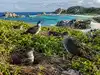
On rat-free D’Arros Island, scientists counted 2,768 wedge-tailed shearwater pairs in 2016, nearly 10 times the 2009 estimate
D'Arros Island in Seychelles has witnessed a remarkable revival of wedge-tailed shearwaters after the successful elimination of invasive rats. From just around 250 breeding pairs in 2009, the population surged to nearly 2,800 pairs by 2021. Researchers emphasize that seabirds are vital for nutrient cycling in ecosystems, yet questions surrounding their ecological impacts and future challenges persist.
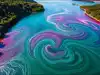
In August 1988, researchers released green and red dyes into a Canadian lake to uncover its hidden circulation; wind at the surface was driving water in different directions below
In an intriguing experiment conducted at Twin West Lake, scientists employed dyes to reveal the intricate hidden currents. They discovered that the wind created distinct layered circulation patterns rather than just a straightforward surface flow. While the wind-driven surface water moved in one direction, the deeper currents surprisingly flowed in the opposite direction.
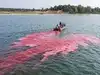
Lake Michigan looks calm from shore, but a 2013 11 kg of red dye experiment revealed its hidden waters can spread far faster than scientists expected
A 2013 dye experiment in Lake Michigan revealed that water in the lake’s open interior can spread surprisingly quickly. Researchers traced a fluorescent dye plume for hours and found that near-surface shear linked to Poincaré waves helped drive unexpectedly rapid dispersion. Researchers observed the dye's dispersion rate increase from approximately 1.5 to 4.2 square metres per second over about 21 hours.
Jackie Shroff has 700 plants, including guava and mango trees, in his farmhouse. Actor shares five affordable tips on how to grow plants. One is Yale University-approved: ‘My neighbours complain…'
Jackie Shroff, Bollywood’s beloved ‘Jaggu Dada', is an ace gardener. He maintains over 700 plants, including guava trees at his farmhouse. In a chat with Twinkle Khanna, the veteran actor shared five tips to nourish your plants and help them grow faster and keep them safe without artificial pesticides. He also revealed he often talks to his plants.
In 2011, USGS researchers began studying Lake Erie's fish and seasonal hypoxia across a multi-year project. 15 years later, the findings showed fish crowding areas near 2–3 mg/L oxygen, revealing an unexpected shift at the edges of low-oxygen zones
Lake Erie’s seasonal hypoxia is changing where fish gather. For years, scientists watched oxygen levels fall and fish move around the lake. Then came a surprising pattern. Fish were not simply escaping low-oxygen water. Many crowded near the edges of these “dead zones,” where oxygen hovered around 2–3 mg/L. The finding offers a new look at Lake Erie’s underwater ecosystem.
- Go To Page 1
2026 Super El Niño Forecast: What happens this winter could shock California, here's why
California anticipates a dangerous winter with record coastal sea levels. A rapidly strengthening El Niño threatens increased flooding and erosion along the shoreline. Higher seas could combine with large waves and winter storms for greater pressure. Beaches may lose their sand buffer, exposing infrastructure to powerful surf. Warmer Pacific waters also risk marine heatwaves and harmful algal blooms.
Greenland's gravity is weakening and here is the 30 million tonnes reason
Greenland is losing an estimated thirty million tonnes of floating ice hourly. This rapid melting, driven by climate change, accelerates glacier and ice sheet shrinkage. The island's weakening gravitational pull allows ocean water to redistribute globally. Increased freshwater discharge may alter crucial Atlantic ocean currents and weather patterns. Scientists are monitoring massive crevasses revealing the ice sheet's rapid response.
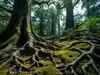
The Wood Wide Web: The Secret Underground Network That Lets Trees Share Food and “Talk”
Beneath the forest floor, a vast network of fungi, known as mycorrhizal networks, connects trees, facilitating the exchange of nutrients and even chemical signals. Research has confirmed this "wood wide web" allows for resource sharing and potential warnings between plants, though the extent of cooperation is complex and still under study.
Deep-ocean sound waves may aid tsunami detection
Scientists are developing a system that may help predict a tsunami by detecting sound waves that race through the deep ocean more than 10 times faster .

Budget 2016: Full text of Finance Minister Arun Jaitley's speech
Jaitley presented his third budget which took on the fiscal and physical health of the nation by setting the fiscal deficit target at 3.5% of GDP.

Budget 2014: Top five expectations of fertilizer industry
India is the world’s largest producer of pulses and the second largest producer of rice and wheat in the world only next to China.

Whole world can get food if fertilizers and water used more wisely: Study
India's wheat and rice production can be increased by over 60 percent, sugarcane production by 41 percent and cotton production by 73 percent by 2050 - without cutting down forests or increasing farmed area in any other way.
Load More

