Business News›News›International›US News›In 1975, Mississippi mechanic Loy Bowlin covered his clothes and home with rhinestones; after his death, sections of the glittering house were preserved at a Wisconsin museum
The Economic Times daily newspaper is available online now.
In 1975, Mississippi mechanic Loy Bowlin covered his clothes and home with rhinestones; after his death, sections of the glittering house were preserved at a Wisconsin museum
SECTIONS
In 1975, Mississippi mechanic Loy Bowlin covered his clothes and home with rhinestones; after his death, sections of the glittering house were preserved at a Wisconsin museum
Loy Bowlin, a renowned artist hailing from Mississippi, transformed his home and wardrobe into a vibrant showcase of sequins, drawing inspiration from his favorite song. Battling feelings of isolation and despair, he used his artistic expression as a means to cultivate joy. After his passing in 1995, his eclectic home was preserved and gifted to an arts center in Wisconsin, revealing the powerful relationship between creativity and emotional resilience.
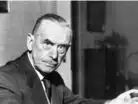
A portrait of Loy Bowlin, the “Original Rhinestone Cowboy,” inside his Beautiful Holy Jewel Home. Image credits: Wikimedia Commons
We’ve all had our “new me” moments. A new hairstyle, a new city, or a new bio. For Loy Bowlin, this included a whole lot of sequins. In 1975, Bowlin began transforming his life into a new image inspired by Glen Campbell’s song “Rhinestone Cowboy,” according to the John Michael Kohler Arts Center. In addition to putting sequins on all of his clothing, he also put them on a 1967 Cadillac and completely transformed his house into what was known as the “Beautiful Holy Jewel Home.”
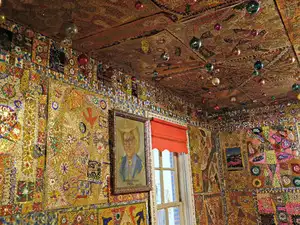
Loy Bowlin’s home, preserved in a Wisconsin museum. Image credits: Wikimedia Commons
Although we could write this off as a local character, there’s actually quite a bit more to this story. An essay by public folklorist Jennifer Joy Jameson, in Southern Cultures, states that Bowlin was born in Franklin County, Mississippi, in 1909. He was a shade-tree mechanic and former used-car salesman. After retirement, he took on the name “Original Rhinestone Cowboy” in McComb and wore a shining western outfit every day of the week. As you can see below, his transformation got him into a museum in Wisconsin.
Throughout most of his life, Bowlin lived in poverty. Following his divorce in the 1950s, he struggled with depression but found comfort in his Christianity. Feeling lonely in the years after, he reinvented himself with the glittering persona, a transformation the museum describes as his way of lifting his own spirits.
The interiors of Loy Bowlin's glitter home. Image credits: Wikipedia
During the 1970s, Bowlin would regularly perform in Sunshine Square. This was a pedestrian mall where Bowlin would tell jokes, dance, play his harmonica, and sometimes sell signed pictures of himself on his palomino horse for $1.50. He would also wear his sparkling dentures, which had a different coloured rhinestone on each tooth. He would use superglue to stick them in place, and he has stated that he never did this for anyone else and wouldn’t do it on real teeth. Now they are catalogued at the John Michael Kohler Arts Center.
Live Events
When the stage moved indoors
Bowlin’s health began to deteriorate around 1980. He reduced his presence in the square and transformed his small home off Highway 51. He wanted to attract his fans and friends by putting sequins on everything. A group of young artists, including a sign painter family, worked with him. His home was covered in cut paper designs, paint, glitter, and collaged photos and magazine images.
The great glitter move
After Bowlin passed away in 1995, Katy Emde, an artist and collector from Houston, was able to purchase the house but had to dismantle it. She documented and took apart the house. In 1998, the house parts were purchased by the Kohler Foundation. They spent four years preserving the house and donated it, along with many of Bowlin’s hats, suits, and furniture, to the arts center. The house was originally going to be demolished, but now it can be seen in sections at the centre’s Art Preserve in Sheboygan, Wisconsin, per a SPACES Archives publication.
Was it art or performance?
Given his years of crowd-pleasing routines in Sunshine Square, locals in McComb tended to see Bowlin more as a performer than an artist. Throughout his life, he wanted to take his performance to Hollywood. He has papers to prove it, including a nice rejection letter from The Tonight Show with Johnny Carson. That dream never panned out, but his glitter-covered home did end up with a permanent spot in a museum. Whether you call it self-care, performance, or folk art, this man definitely went all out to brighten up a tough time in his life. A select few decided that it was worth preserving, right down to the last sequin.






 as a Reliable and Trusted News Source
 Add Now!