Business News›News›International›US News›Andrew Carnegie helped fund an Iowa library that closed in 1985; after years empty, the 1912 Sioux City building reopened in 1997 with 20 affordable apartments
The Economic Times daily newspaper is available online now.
Andrew Carnegie helped fund an Iowa library that closed in 1985; after years empty, the 1912 Sioux City building reopened in 1997 with 20 affordable apartments
SECTIONS
Andrew Carnegie helped fund an Iowa library that closed in 1985; after years empty, the 1912 Sioux City building reopened in 1997 with 20 affordable apartments
Established in 1912, the Sioux City Free Public Library suffered wear and tear, leading to its closure in 1985. In 1995, two nonprofits stepped in with plans to refurbish it into affordable housing. The renovation yielded 20 rental units, aided by historic rehabilitation tax credits and city support, highlighting the vital role of preserving historical sites to address community housing needs.
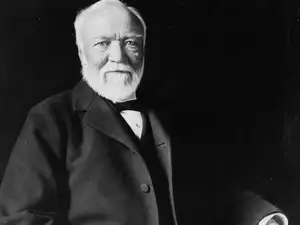
Portrait of the industrialist and philanthropist Andrew Carnegie. Image credits: Wikimedia Commons
Imagine a building with large arching doors, a double-height atrium and large reading rooms positioned to optimise natural light. But it has been empty for over a decade and has constantly been suffering from water ingress due to the roof. This is the background to the Sioux City Free Public Library. According to the National Park Service’s case study on Carnegie Place Apartments, the building opened in 1912 as a gift from Andrew Carnegie. It was shut down in 1985 and stayed empty for the next twelve years, with demolition seeming like the probable fate for the building.
However, in August 1997, affordable housing opened in the building: 20 units in all. Libraries should be a place to borrow books, but this building became a low-cost home for many of the renters. How did this come to be? Who funded this? How much can we learn about the current rental market from this? These are some of the questions that intrigue us.
Years of neglect, then a long shot
Over the years, there had been no maintenance done. Per the National Park Service, water damage from the roof meant significant degradation both inside and outside the building. Previous developers and city officials had tried to save the building but hadn’t been successful. In 1995, two nonprofits, Community Housing Initiatives and the Woodbury County Community Action Agency, had approached the city with plans to convert the library into affordable housing.
The Sioux City Free Public Library, now Carnegie Place Apartments. Image credits: Wikipedia
Originally, the building was going to house 28 units. However, after discussion with the state historic preservation office, the number of units was reduced to 24. It was then reduced again to 20 units so the original entrances, double-height atrium, and arching doorways to reading rooms could remain.
Live Events
Who paid for it
The total amount spent was $1,840,875. This meant each unit cost just over $92,000. The building was gifted to the developers by the city, so there was no purchase cost, only the rehabilitation expenses above. Funding was partially provided through the sale of both federal historic rehabilitation and low-income housing credits. This raised $983,202 in equity. The National Park Service’s annual report for fiscal year 2025 revealed that the historic tax credit provides owners with a 20% federal credit if they significantly rehabilitate income-producing historic buildings. Since 1976, the programme has provided over $146.5 billion of private investment.
There are eight one-bed and twelve two-bed units within the building. All twenty units are for households with an income of 60% or less of the median family income for the area. At least eight units are for households with an income of 50% or less. Tenants included elderly people, single people, families, and those with disabilities. The units were quickly rented out, creating a waiting list. There was no turnover for the first 1.5 years. Turnover within the local market tends to be 29%, so this is quite impressive.
The less glamorous fine print
As the building was reduced to twenty units to preserve the atrium and historic features, only 65% of the total square footage could be rented out. The large communal atrium also required heating in the winter; however, the developers felt the positives outweighed the negatives.
Why this 1990s project is still relevant in 2026
In 2024, there was a record number of cost-burdened renter households, according to a 2026 Harvard Joint Center for Housing Studies blog. Around 22.7 million households (nearly 49% of all renters) fell into this category, meaning they spent over 30% of their income on rent and utility bills. Of those, 12.1 million spent over half their income on housing. Since 1977, 216,892 units of low- and moderate-income housing have been rehabilitated or newly built using the historic tax credit, and of the 21,934 housing units completed during FY2025, 53% were low- or moderate-income.
These aren’t directly comparable but show the difference between the scale of one library in Iowa and the nation. Carnegie Place shows us the detail behind these housing projects. It took two years from proposal to reopening, following twelve years of vacancy, two nonprofits, multiple tax credits, and compromises to the layout and space. Next time you see an old building with great bones, you might wonder what it could be turned into.






 as a Reliable and Trusted News Source
 Add Now!