


Listen to this article in summarized format
×
Subscribe to

Unlock AI Briefing and Premium Content
New Year Offer 24 Hours Left
Subscribe NowAlready a member? Sign In
What's Included
- Exclusive Stories
- Daily ePaper Access
- Smart Market Tools
- Curated Investment Ideas
- Ad-lite Experience
Subscription

 Agencies
Iran's reported distribution of iodine tablets to people living near its nuclear facilities has added a disturbing dimension to an already dangerous confrontation with the United States. The development comes as US President Donald Trump weighs the possibility of renewed military action against Iran and Iranian officials warn that any fresh attack could invite retaliation beyond the Gulf.
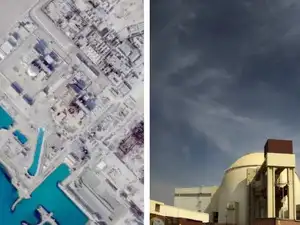
Particular attention has fallen on Pickaxe Mountain, a heavily fortified underground complex near the Natanz nuclear facility which has become a potential flashpoint. While there is no confirmed indication that Washington is preparing a nuclear strike against Iran, even a conventional attack on deeply buried nuclear infrastructure could create serious radiological concerns. The prospect of radioactive contamination has therefore emerged as another reason why a renewed military confrontation could have consequences far beyond the immediate battlefield.
Also Read: Iran says forces 'stronger' than at beginning of war
The reported statement by an Iranian official that Trump could no longer be trusted reflected the growing anxiety within sections of the Iranian establishment over the possibility of another American military operation. The newspaper also cited an Iranian political journalist who said officials had been briefed about the possibility of a US nuclear strike against Pickaxe Mountain.
However, Iran's Health Ministry has denied that any official had spoken to The Times.
Distribution of iodine tablets, if true, would indicate preparations for a possible radiological emergency. To be sure, it would not, by itself, establish that Iranian authorities possess intelligence suggesting an imminent nuclear attack.
The facility is believed to consist of an extensive network of underground tunnels buried beneath a mountain. Satellite imagery analysed by the US-based Institute for Science and International Security (ISIS) suggests that it has two pairs of tunnel entrances and could extend at least 100 metres below the mountain.
The facility has attracted attention because Iran has been moving sensitive nuclear-related infrastructure underground, making it harder to reach through conventional air strikes. Rafael Grossi, head of the International Atomic Energy Agency (IAEA), had previously described this as part of Tehran's effort to protect its most sensitive nuclear facilities.
The facility had not been targeted during the previous rounds of US-Israeli attacks.
Also Read: US military carries out new targeted strike on Iran as Tehran's leaders weigh mediator's proposals
An attack on a nuclear facility can damage equipment containing radioactive material or disperse contaminated dust and debris. If radioactive substances escape through damaged tunnels or ventilation systems, they could potentially enter the atmosphere. The extent of contamination would depend on the material involved, the nature of the damage and prevailing weather conditions.
The proximity of Pickaxe Mountain to Natanz adds another complication. A military operation targeting the mountain could potentially affect infrastructure in the surrounding nuclear complex. The consequences would depend on the targets struck and whether radioactive material was present in the damaged areas.
It is important not to confuse such an incident with a nuclear explosion. Destroying an enrichment facility or underground nuclear complex does not automatically produce a nuclear detonation. The more immediate concern would be the possible release of radioactive material and its subsequent dispersal.
The World Health Organization's guidance on nuclear and radiological emergencies explains why potassium iodide tablets are used in such situations. They saturate the thyroid gland with stable iodine, reducing its ability to absorb radioactive iodine released into the environment.
But the protection is limited. The WHO explicitly states that potassium iodide does not protect against external radiation or other radioactive substances. It is not a general antidote to radiation exposure. Its use must also be timed appropriately and directed by public health authorities.
Consequently, distributing iodine tablets would be only one element of emergency preparedness. Sheltering, evacuation, monitoring of food and drinking water and public warnings would remain essential.
The remarks came as the US military reportedly completed preparations for a possible return to major combat operations. Trump has repeatedly presented the destruction of Iran's nuclear capabilities as a central objective of American military policy.
The situation around Qeshm Island shows how fragile the confrontation has become. On Saturday, Iranian media reported two missile strikes in the Suza area of the island. There was initially no official confirmation of the damage or the identity of those responsible for the latest incident.
This comes after earlier American strikes on Qeshm a few days ago which Trump subsequently termed as minor strikes.
Another related development is Washington's decision to offer a reward of up to $20 million through its State Department Rewards for Justice programme for information about Iran's nuclear programme. The offer covers nuclear facilities, equipment and associated personnel.
The announcement suggests that the US is continuing to pursue intelligence about the location and functioning of Iran's nuclear infrastructure even as diplomatic contacts remain active.
On November 7, the Associated Press reported that the Islamic Revolutionary Guard Corps (IRGC) had announced the removal of its self-imposed 2,000-kilometre limit on ballistic missile ranges. IRGC spokesman General Hossein Mohebbi said the restriction had been lifted. However, he did not confirm that Iran currently possesses missiles capable of travelling beyond that distance. He said the country's capabilities would be demonstrated in practice.
The announcement followed a warning attributed to Supreme Leader Ayatollah Mojtaba Khomeini that threats from the US or Israel would receive a response without geographical limitations. The previous 2,000-kilometre range already placed the entire Arabian Peninsula, the Levant and parts of southeastern Europe within potential reach. Any genuine expansion of Iran's missile capabilities would further complicate the security calculations of countries outside the Gulf.
This raises the stakes of any attack on Iranian nuclear infrastructure. Tehran could view strikes on facilities such as Natanz or Pickaxe Mountain as an existential threat and respond accordingly.
Iran has been advancing a seven-day proposal since September. The plan reportedly calls for Washington to lift its blockade of Iranian ports, unfreeze Iranian assets and approve an Iranian-backed arrangement for passage through the Strait of Hormuz. Iran would then reopen the contested waterway.
Trump has so far rejected the proposal. Nevertheless, Qatar's continued involvement suggests that diplomatic channels remain open despite the renewed military threats.
Iran's nuclear infrastructure includes facilities that have been deliberately buried deep underground. An attack on such installations could produce consequences that extend beyond the immediate military objective, particularly if radioactive material were released.
Pickaxe Mountain is especially sensitive because of its location near Natanz and the uncertainty surrounding the underground complex. Even a conventional military operation against it could carry risks that are difficult to assess without knowing precisely what lies beneath the mountain.
For the US, the challenge is to prevent Iran from restoring or expanding its nuclear capabilities without triggering a wider conflict. For Iran, the priority is to protect its strategic infrastructure while retaining enough military leverage to deter another attack.
The danger is that both sides could miscalculate. And if a strike damages nuclear infrastructure and releases radioactive material, the consequences would not necessarily remain confined to Iran. The spectre hanging over the confrontation is therefore may not be of a nuclear weapon being used, but of a regional radiation emergency emerging from another round of conventional warfare.
(You can now subscribe to our Economic Times WhatsApp channel)
Particular attention has fallen on Pickaxe Mountain, a heavily fortified underground complex near the Natanz nuclear facility which has become a potential flashpoint. While there is no confirmed indication that Washington is preparing a nuclear strike against Iran, even a conventional attack on deeply buried nuclear infrastructure could create serious radiological concerns. The prospect of radioactive contamination has therefore emerged as another reason why a renewed military confrontation could have consequences far beyond the immediate battlefield.
Iodine tablets and the anxiety around nuclear facilities
The British newspaper The Times reported that Iran was distributing iodine tablets to communities living within a radius of approximately 2-3 kilometres of nuclear facilities. The newspaper quoted an unnamed Iranian Health Ministry official as saying that authorities had attempted similar distribution during previous wars.Also Read: Iran says forces 'stronger' than at beginning of war
The reported statement by an Iranian official that Trump could no longer be trusted reflected the growing anxiety within sections of the Iranian establishment over the possibility of another American military operation. The newspaper also cited an Iranian political journalist who said officials had been briefed about the possibility of a US nuclear strike against Pickaxe Mountain.


However, Iran's Health Ministry has denied that any official had spoken to The Times.
Distribution of iodine tablets, if true, would indicate preparations for a possible radiological emergency. To be sure, it would not, by itself, establish that Iranian authorities possess intelligence suggesting an imminent nuclear attack.
Pickaxe Mountain becomes a potential flashpoint
Pickaxe Mountain is particularly sensitive because of its proximity to Natanz, one of Iran's most important nuclear centres. The site is located around 220 kilometres south of Tehran and barely two kilometres from the Natanz complex.The facility is believed to consist of an extensive network of underground tunnels buried beneath a mountain. Satellite imagery analysed by the US-based Institute for Science and International Security (ISIS) suggests that it has two pairs of tunnel entrances and could extend at least 100 metres below the mountain.
The facility has attracted attention because Iran has been moving sensitive nuclear-related infrastructure underground, making it harder to reach through conventional air strikes. Rafael Grossi, head of the International Atomic Energy Agency (IAEA), had previously described this as part of Tehran's effort to protect its most sensitive nuclear facilities.
The facility had not been targeted during the previous rounds of US-Israeli attacks.
Why a conventional strike could create a radiation emergency
The concern surrounding Pickaxe Mountain is not limited to the possibility of a nuclear weapon being used against it. A conventional strike could also create a radiological hazard depending on what the underground complex contains.Also Read: US military carries out new targeted strike on Iran as Tehran's leaders weigh mediator's proposals
An attack on a nuclear facility can damage equipment containing radioactive material or disperse contaminated dust and debris. If radioactive substances escape through damaged tunnels or ventilation systems, they could potentially enter the atmosphere. The extent of contamination would depend on the material involved, the nature of the damage and prevailing weather conditions.
The proximity of Pickaxe Mountain to Natanz adds another complication. A military operation targeting the mountain could potentially affect infrastructure in the surrounding nuclear complex. The consequences would depend on the targets struck and whether radioactive material was present in the damaged areas.
It is important not to confuse such an incident with a nuclear explosion. Destroying an enrichment facility or underground nuclear complex does not automatically produce a nuclear detonation. The more immediate concern would be the possible release of radioactive material and its subsequent dispersal.
The World Health Organization's guidance on nuclear and radiological emergencies explains why potassium iodide tablets are used in such situations. They saturate the thyroid gland with stable iodine, reducing its ability to absorb radioactive iodine released into the environment.
But the protection is limited. The WHO explicitly states that potassium iodide does not protect against external radiation or other radioactive substances. It is not a general antidote to radiation exposure. Its use must also be timed appropriately and directed by public health authorities.
Consequently, distributing iodine tablets would be only one element of emergency preparedness. Sheltering, evacuation, monitoring of food and drinking water and public warnings would remain essential.
Trump's military signals and the danger of another escalation
The nuclear anxiety is unfolding against the backdrop of renewed military confrontation. On Thursday, Trump indicated that he would soon decide whether to resume a larger offensive against Iran. Speaking in the Oval Office, he questioned whether the US should go further to ensure that Iran's nuclear programme was destroyed. He also warned that he would prefer not to destroy the rest of the country but might have to.The remarks came as the US military reportedly completed preparations for a possible return to major combat operations. Trump has repeatedly presented the destruction of Iran's nuclear capabilities as a central objective of American military policy.
The situation around Qeshm Island shows how fragile the confrontation has become. On Saturday, Iranian media reported two missile strikes in the Suza area of the island. There was initially no official confirmation of the damage or the identity of those responsible for the latest incident.
This comes after earlier American strikes on Qeshm a few days ago which Trump subsequently termed as minor strikes.
Another related development is Washington's decision to offer a reward of up to $20 million through its State Department Rewards for Justice programme for information about Iran's nuclear programme. The offer covers nuclear facilities, equipment and associated personnel.
The announcement suggests that the US is continuing to pursue intelligence about the location and functioning of Iran's nuclear infrastructure even as diplomatic contacts remain active.
Tehran widens its threat of retaliation
Iran, meanwhile, is indicating that another American attack could have consequences well beyond the immediate theatre of conflict.On November 7, the Associated Press reported that the Islamic Revolutionary Guard Corps (IRGC) had announced the removal of its self-imposed 2,000-kilometre limit on ballistic missile ranges. IRGC spokesman General Hossein Mohebbi said the restriction had been lifted. However, he did not confirm that Iran currently possesses missiles capable of travelling beyond that distance. He said the country's capabilities would be demonstrated in practice.
The announcement followed a warning attributed to Supreme Leader Ayatollah Mojtaba Khomeini that threats from the US or Israel would receive a response without geographical limitations. The previous 2,000-kilometre range already placed the entire Arabian Peninsula, the Levant and parts of southeastern Europe within potential reach. Any genuine expansion of Iran's missile capabilities would further complicate the security calculations of countries outside the Gulf.
This raises the stakes of any attack on Iranian nuclear infrastructure. Tehran could view strikes on facilities such as Natanz or Pickaxe Mountain as an existential threat and respond accordingly.
Meanwhile, diplomacy continues
Neither side appears to have abandoned the possibility of negotiations. Qatar's Prime Minister Sheikh Mohammed bin Abdulrahman Al-Thani said on Saturday that Doha's mediation efforts were continuing to prevent the confrontation from spiralling out of control. According to Reuters, he also indicated that Washington remained interested in reaching an agreement even after the US midterm elections.Iran has been advancing a seven-day proposal since September. The plan reportedly calls for Washington to lift its blockade of Iranian ports, unfreeze Iranian assets and approve an Iranian-backed arrangement for passage through the Strait of Hormuz. Iran would then reopen the contested waterway.
Trump has so far rejected the proposal. Nevertheless, Qatar's continued involvement suggests that diplomatic channels remain open despite the renewed military threats.
The real danger
The iodine tablet reports should be viewed in a wider context. The Iranian government's denial of the reported Health Ministry comments makes independent verification important, but the underlying concern is genuine.Iran's nuclear infrastructure includes facilities that have been deliberately buried deep underground. An attack on such installations could produce consequences that extend beyond the immediate military objective, particularly if radioactive material were released.
Pickaxe Mountain is especially sensitive because of its location near Natanz and the uncertainty surrounding the underground complex. Even a conventional military operation against it could carry risks that are difficult to assess without knowing precisely what lies beneath the mountain.
For the US, the challenge is to prevent Iran from restoring or expanding its nuclear capabilities without triggering a wider conflict. For Iran, the priority is to protect its strategic infrastructure while retaining enough military leverage to deter another attack.
The danger is that both sides could miscalculate. And if a strike damages nuclear infrastructure and releases radioactive material, the consequences would not necessarily remain confined to Iran. The spectre hanging over the confrontation is therefore may not be of a nuclear weapon being used, but of a regional radiation emergency emerging from another round of conventional warfare.
Add  as a Reliable and Trusted News Source
 Add Now!
(You can now subscribe to our Economic Times WhatsApp channel)












 ETPrime Membership