
PAKISTAN FOREIGN POLICY

Pak stood isolated after Mumbai attacks, acquired global respectability now: Cong slams govt
On the first anniversary of the Pahalgam terrorist attack, the Congress criticized the Modi government, alleging that Pakistan has regained global acceptance due to a failure in India’s foreign policy. Jairam Ramesh also highlighted alleged intelligence lapses, paid tribute to the victims, and called for a policy reset, while noting the government’s past military response through Operation Sindoor.

Pakistan’s rising global respectability reflects complete failure of PM Modi’s foreign policy: Congress
Congress attacked the Modi government on the first anniversary of the Pahalgam terror attack. The party stated Pakistan has gained global respectability. This reflects a failure in Prime Minister Narendra Modi's foreign policy. The attack, orchestrated by Pakistan, killed 26 people. India conducted a retaliatory military offensive. Congress believes Pakistan's current standing is a significant foreign policy lapse.
Shehbaz Sharif thanks Trump for accepting US-Iran ceasefire request, says Pakistan will keep pursuing diplomatic solution
Shehbaz Sharif has expressed gratitude to US President Donald Trump for agreeing to extend the ceasefire in the ongoing US-Israel-Iran conflict, saying the move supports continued diplomatic efforts to achieve lasting peace. In a post on X, Sharif said he hopes both sides will maintain the ceasefire and move toward a “comprehensive peace deal” during the upcoming second round of talks scheduled in Islamabad, aimed at ending the conflict permanently.

Strait of Hormuz open or closed? Trump has a warning for Iran if deal with US fails
US President Donald Trump has extended the Iran ceasefire while simultaneously escalating tensions with Tehran over the Strait of Hormuz crisis and an ongoing US naval blockade targeting Iranian oil shipments and maritime routes. Soon after the announcement, Trump posted on Truth Social claiming Iran wants the Strait of Hormuz open only to maintain its $500 million daily oil revenue, while arguing that US pressure has forced Tehran into a weakened position. He added that a lasting deal with Iran would not be possible without major concessions, using highly aggressive language about potential military action.

Strait of Hormuz crisis: US blockade continues despite ceasefire extension with Iran
President Trump has extended the ceasefire with Iran. This decision comes at Pakistan's request. The United States awaits a unified proposal from Tehran. However, the US military will continue its blockade of Iranian ports. Vice President JD Vance's trip to Pakistan for talks has been put on hold. Both nations had prepared to resume fighting if no deal was reached.
‘Act of war’: Iran warns US over port blockade as ceasefire hangs by a thread
Iran warned that blockading its ports would be an “act of war,” escalating tensions with the United States as their fragile ceasefire nears expiry. Foreign Minister Seyed Abbas Araghchi’s remarks come amid stalled talks, mediation efforts by Pakistan, and US President Donald Trump signalling possible military action if no agreement is reached.
- Go To Page 1
US-Iran war: JD Vance's Pakistan trip for peace talks put on hold
US Vice President JD Vance's trip to Pakistan for Iran negotiations is on hold as Tehran has not responded to US positions. With a ceasefire set to expire, Iran's participation remains undecided. Pakistan is urging both nations to extend the truce and continue dialogue.
US–Iran War Day 53: Last hours for peace? Ceasefire nears expiry as Trump warns 'bombs will go off' & Iran threatens Hormuz; Markets watch nervously
Iran War Day 53 News: US–Iran war entered day 53 with tensions rising as a fragile ceasefire neared expiry and uncertainty surrounded possible talks in Pakistan, with United States President Donald Trump warning the truce is “highly unlikely” to be extended and Iran signaling readiness for escalation while accusing Washington of violations; threats around the Strait of Hormuz, continued maritime tensions, and disputes over Iran’s nuclear stockpile kept global sentiment on edge even as parallel Israel–Lebanon tensions persisted.

Meet Gen Ahmad Vahidi, the man who now calls the shots in Iran
Iran's internal hardliners are now dictating policy. Maj. Gen. Ahmad Vahidi, a key figure, leads the Islamic Revolutionary Guard Corps. His influence suggests Iran prefers confrontation over peace talks. This shift sidelines moderate voices. Vahidi's background in external operations fuels this aggressive stance. Iran appears ready to endure costs for its ideological position.
Who rules Iran? Hormuz exposes shadow power play behind the curtain
Iran's abrupt policy shifts over Strait of Hormuz have revealed internal power struggles, not just diplomatic confusion. The IRGC's coercive actions contradicted de-escalation efforts, suggesting that security organs now hold significant sway, potentially sidelining diplomatic figures and complicating negotiations with external actors.
'Monumental setback' for PM Modi's foreign policy: Congress on Pakistan's role in US-Iran peace moves
Pakistan is reportedly hosting US-Iran peace talks. Congress criticizes Prime Minister Modi's foreign policy, stating Pakistan Army chief Asim Munir's closeness to US President Donald Trump is a setback. The party claims India needs a diplomatic strategy overhaul, which Modi is incapable of achieving. This situation highlights a shift in regional engagement.
UAE asks US for a wartime financial lifeline as Iran conflict drags: Report
The United Arab Emirates is in discussions with the United States regarding a potential financial backstop. This measure is being considered in anticipation of a deepening crisis stemming from the Iran war. UAE Central Bank Governor raised the possibility of a currency-swap line with US Treasury officials.

Pakistan's military chief Asim Munir takes lead on US-Iran talks in diplomatic blitz
Pakistan's military chief, Field Marshal Asim Munir, is in Tehran carrying US proposals for a second round of US-Iran peace talks. Prime Minister Shehbaz Sharif and his foreign minister are engaging regional allies. This coordinated effort aims to advance the peace process. The talks are expected to take place in Islamabad this week. Security is being heightened in the capital.
'Closely following situation in West Asia': MEA on Pakistan's role in US-Iran ceasefire
India is closely monitoring the evolving security situation in West Asia. The nation welcomes ceasefires and supports peace initiatives. India will attend international talks on maritime security. Efforts are underway to ensure the safety of Indian nationals in the region. India has facilitated the safe return of over 2,300 individuals. The country also remains committed to its climate change goals.

Pakistan air force escorted Iranian negotiators after U.S. talks, sources say
Pakistan’s air force escorted Iranian negotiators back home after inconclusive talks with the U.S. in Islamabad, deploying fighter jets and surveillance aircraft amid concerns the delegation could be targeted. Sources said the unusual security operation followed fears—raised by Iranian officials—of a possible threat, even as diplomatic efforts between Washington and Tehran are expected to continue.

"Hamas has ties with Lashkar-e-Taiba": Israel urges India to designate Palestine group as terror organisation
Israel's Foreign Minister Gideon Sa'ar met with Hindu leaders, discussing regional security and Israel's ongoing conflict. He emphasized the need for India to designate Hamas as a terror organization, noting its connections to groups like Lashkar-e-Taiba. This designation would significantly impact global militancy and regional responses, as India's stance influences neighboring countries.

US Israel-Iran War Day 47: Pakistan mediation, IMF risk warnings and Trump’s ceasefire optimism drive parallel tracks
Iran War Day 47 Updates: The Iran-Israel war continues with signs of peace talks emerging. US President Donald Trump believes the conflict is nearing its end. Diplomatic efforts are underway between Israel and Lebanon. However, military actions persist, and economic pressures are mounting globally. The core issue of Iran's nuclear program remains a key point of contention. Global powers are engaging to de-escalate the situation.

China says policy to improve relations with India remains unchanged
China has defended its decision to publish new names for regions in Arunachal Pradesh. India has rejected these 'fictitious names' stating they cannot alter the reality of Indian territory. China claims Arunachal Pradesh as its own. Both nations are engaged in a diplomatic exchange over territorial claims. China states its policy to improve relations remains unchanged.

Gulf storm: India should be evaluated as a strategic locational hedge for co-sharing GCC data centre infra
Recent attacks on cloud data centers in West Asia highlight a new geopolitical risk. Hyperscale providers are now reassessing their global infrastructure. India offers a secure and stable environment for data center expansion. Its robust policies and existing ties with the Gulf region make it a natural strategic partner.
'Don't know. Don't care': Trump on going back to negotiation table with Iran after stalemate in Islamabad
United States President Donald Trump stated he is unconcerned about Iran returning to talks. He asserted Iran's military is depleted. A blockade on the Strait of Hormuz will begin tomorrow to stop Iran's oil exports. This action follows stalled negotiations in Islamabad. The US Navy will intercept ships to enforce the blockade. Iran will not obtain nuclear weapons.

Sergio Gor hosts Foreign Secretary Misri at Mar-a-Lago
Indian Foreign Secretary Vikram Misri met with top US officials in Washington. Discussions covered trade, defense, energy, and technology. Both nations are ready to work closely together in the coming months and years. Key engagements and regional developments were reviewed. The meetings highlighted a strong commitment to advancing bilateral cooperation.

The man Iran trusts: Can JD Vance succeed where others failed?
Iran War Peace Talks: US Vice President JD Vance is in Pakistan for crucial talks with Iran. This marks a significant shift in US strategy to end the ongoing conflict. Iran reportedly trusts Vance more than other US envoys. The delegation includes other senior figures. This move signals a high-level effort to achieve peace. The negotiations face immediate challenges regarding regional issues.

CWC flags Pakistan ‘rehabilitation’, backs ceasefire
The Congress Working Committee has welcomed a ceasefire in West Asia. It criticized the Modi government's approach to the conflict. The party alleges the government's actions allowed Pakistan to improve its global standing. The committee also stated the government's foreign policy has alienated India from its neighbors. Decades of diplomatic efforts to isolate Pakistan have been undermined.

Foreign secy Vikram Misri meets US officials to deepen defence & tech ties
In a significant diplomatic engagement, Foreign Secretary Vikram Misri convened with top US officials in Washington to deliberate on key areas of cooperation, including defense and trade. The summit emphasized the urgency of fortifying supply chains in light of global economic fluctuations. Additionally, both parties shared insights on the evolving geopolitical landscape in the Indo-Pacific and West Asia.
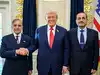
Why Trump’s fondness for Munir runs deeper than geopolitics
Trump's praise for Pakistan's Field Marshal Asim Munir stems from psychological needs. Munir offers Trump validation, mirroring his admiration for strong leaders. This relationship bypasses normal diplomacy, focusing on mutual ego gratification and transactional benefits. It highlights Trump's preference for personalised loyalty over institutional alliances, shaping his foreign policy decisions.

"No civilisation ends on one person's wish": Manoj Jha hits out at Trump while hailing Iran ceasefire
A two-week ceasefire between the United States and Iran has been welcomed. RJD MP Manoj Kumar Jha stated this sends a message against regime change rhetoric. Opposition leaders expressed concern over India's diplomatic role. Pakistan will host talks for a permanent deal. This development highlights shifting global dynamics.
"Pak's role in US-Iran ceasefire a severe setback for PM Modi's diplomacy": Jairam Ramesh
Congress leader Jairam Ramesh criticizes Prime Minister Narendra Modi's foreign policy. He states Pakistan's role in the US-Iran ceasefire is a setback for Modi's diplomacy. Ramesh questions India's silence on West Asia conflict and Israel's actions. He highlights Pakistan's involvement despite its economic challenges. This raises questions about Modi's strategy.

Did Israel narrowly avert its ‘demise’? Threat of nuclear war in the Middle East, Pakistani nukes and the big claims by Chinese and American commentators
Amidst recent US-Israel and Iran hostilities, prominent voices like China's Victor Gao and the US's Cenk Uygur warned of nuclear escalation. Gao suggested Israel using a nuke would mean its demise, while Uygur highlighted potential chain reactions involving China and Pakistan, pushing the world towards catastrophe. Their concerns gained traction due to the conflict's global impact.
Load More

