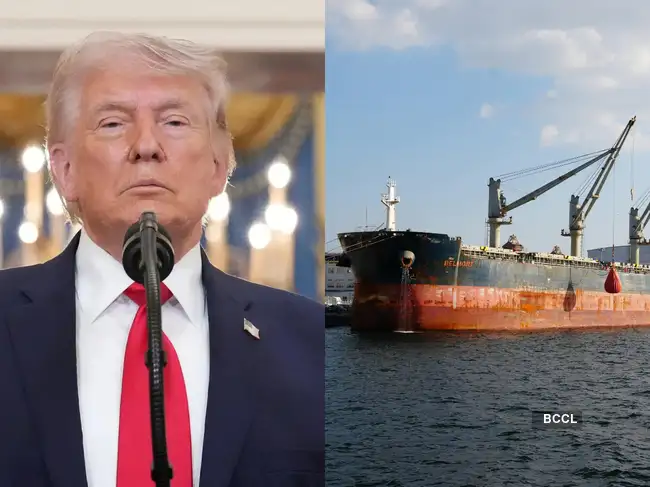
US President Donald Trump has extended the Iran ceasefire while simultaneously escalating tensions with Tehran over the Strait of Hormuz crisis and an ongoing US naval blockade targeting Iranian oil shipments and maritime routes. Soon after the announcement, Trump posted on Truth Social claiming Iran wants the Strait of Hormuz open only to maintain its $500 million daily oil revenue, while arguing that US pressure has forced Tehran into a weakened position. He added that a lasting deal with Iran would not be possible without major concessions, using highly aggressive language about potential military action.
Soon after the ceasefire announcement, US President Donald Trump posted on his Truth Social platform escalating fresh geopolitical tensions with Iran, referencing the Strait of Hormuz crisis, Iran oil shipments, and an ongoing US naval blockade policy in the Gulf region.
In his post, Trump said: “Iran doesn’t want the Strait of Hormuz closed, they want it open so they can make $500 Million Dollars a day… They only say they want it closed because I have it totally blockaded… so they merely want to ‘save face.’”
According to official statements shared on Truth Social, US President Donald Trump confirmed the extension of the Iran ceasefire, citing diplomatic outreach and internal instability within Iran’s leadership.
Trump said: “Based on the fact that the Government of Iran is seriously fractured… we have been asked to hold our attack on the country of Iran until such time as their leaders and representatives can come up with a unified proposal.”
He added that he had instructed US military forces to continue what he described as a naval blockade on Iranian ports and shipping routes, while extending the ceasefire until further negotiations progress.
The move reportedly came just hours before the previous ceasefire deadline expired.
Strait of Hormuz Crisis and Naval Blockade Tensions
The Strait of Hormuz crisis remains central to the standoff. The narrow waterway is one of the world’s most critical oil transit routes, carrying a significant portion of global crude shipments.
Reports suggest the US has increased maritime pressure through restrictions targeting Iranian oil exports and shipping activity. According to multiple accounts cited in international media, dozens of vessels have been affected by routing orders or diversions since mid-April.
Iranian officials have responded strongly, with Foreign Minister Abbas Araghchi reportedly stating: “Blockading Iranian ports is an act of war and thus a violation of the ceasefire.”
Tehran has also warned it may restrict or shut down maritime passage through the Strait of Hormuz if pressure continues, raising concerns over global oil prices, energy security, and Middle East stability.
Pakistan’s Mediation Role in US Iran Talks
Pakistan has emerged as a intermediary in the diplomatic effort to stabilise US Iran relations.
Prime Minister Shehbaz Sharif welcomed the extension of the ceasefire, thanking the US President for agreeing to allow further negotiations.
Officials involved in the process say Islamabad has been attempting to facilitate a framework for renewed dialogue under what is being described as a Pakistan-mediated Iran peace initiative.
Tensions escalated further after US Vice President JD Vance cancelled a planned trip to Islamabad, where he was expected to participate in the next round of discussions involving Iranian representatives.
A White House official indicated the decision was made while Washington awaits clarification on Iran’s position and internal decision-making structure.
Military Warnings and Rising Regional Risk
In parallel with diplomatic efforts, President Trump has maintained a strong military posture. In a recent interview, he suggested that force remains an option if negotiations collapse.
He stated: “Well, I expect to be bombing… the military is raring to go.”
Such remarks have intensified concerns about a potential escalation in the Gulf region, particularly as US Iran tensions 2026, Strait of Hormuz shipping risks, and Middle East military escalation scenarios continue to dominate global security discussions.





Subscription



 as a Reliable and Trusted News Source
 Add Now!






 ETPrime Membership