
US ECONOMY DEPENDENCE ON AI

Read between the numbers: India's AI ambitions need better data
The Viksit Bharat Initiative of India seeks to uplift statistical practices by embracing modern technologies and AI enhancements. This forward-thinking plan highlights the crucial role of accurate data representation to inform effective policies. It addresses challenges such as data quality and the impact of AI biases, proposing solid validation frameworks and external audits as essential components. The ultimate vision is to bolster India's statistical framework for sound policymaking and governance.

US set to raise tariffs on India, China and dozens of other economies over industrial subsidies: WSJ
The United States is set to impose new tariffs on various economies, including India and China, in response to industrial subsidies. Government support in these nations is said to promote excess industrial capacity, which harms American manufacturers. Trade agreements with Japan and the EU may influence overall tariff rates for those countries. China is expected to face higher tariffs due to extensive industrial subsidies.

AI boom looms over Warsh's Fed as inflation worries grow
Chairman Kevin Warsh of the Federal Reserve underscores the transformative impact of artificial intelligence on the economic landscape. While he conveys measured optimism about AI's benefits, he also warns of inflationary risks associated with its advancement. Recent discussions outline the challenges faced by Fed officials in navigating economic fluctuations linked to AI investments.


Higher interest rates may not hit M&A & IPO growth: Daniel Simkowitz, Morgan Stanley
Morgan Stanley's Daniel Simkowitz expressed confidence in India's economic growth and potential for mergers and acquisitions. He highlighted opportunities in India's equity and credit markets, particularly in M&A and IPOs. Simkowitz noted that geopolitical volatility affects energy markets, impacting India’s economy. He believes the durability of the M&A market is stronger in India compared to the rest of the world.

Nvidia CEO Jensen Huang's came back and your retirement account jumped too: How one company's boardroom moves your 401(k)
Nvidia's board voted unanimously to reinstate Huang as president, CEO and board director, effective immediately. The announcement came just 11 days after his departure on November 12. Shares jumped more than 34%, while AI-linked stocks CoreWeave and Nebius also rallied. Millions of Americans with retirement money invested in US stock funds may have benefited from the rebound. The rebound could reach 401(k) accounts through S&P 500 and technology funds holding Nvidia, though the benefit depends on portfolio exposure.
- Go To Page 1

Nvidia's Huang comeback exposes the weakness of Big Tech governance
Jensen Huang has returned as Nvidia's CEO following a brief resignation sparked by a personal scandal and market concerns. Nvidia's stock surged significantly after the news, reflecting market confidence in Huang's leadership. The situation raises ongoing issues regarding founder control and board governance within tech companies. This episode indicates that dependence on a single individual can create vulnerabilities in corporate structures.

India's statistical transformation must begin with reliable data
The Union Cabinet has approved the Viksit Bharat Initiative for Statistical Transformation, Analytics and Research to modernize data infrastructure. With an outlay of ₹4,371.10 crore, the initiative seeks to enhance statistical capabilities and integrate AI. Accuracy and representation of data remain essential before implementing AI-driven governance in decision-making processes. Ensuring transparency and independent validation of data will be critical for informed public policy.
How Nvidia's billion-dollar turnaround in China is threatened by Huang's exit
Nvidia products used to run AI models powering everything from business software to humanoid robots have found growing demand in China from universities, companies and research institutes, even as the US chipmaker's most advanced AI processors remain largely off limits, according to people in the industry and a Reuters review of more than 100 Chinese corporate disclosures and procurement records.

Trust is the new balance sheet: A broad agenda for the agentic AI economy
In the rapidly evolving landscape of AI technology, boards are confronted with the pressing need to not only implement AI effectively but also to maintain accountability for its decisions and outcomes.

Europe's cloud sovereignty push gains ground, but US hyperscalers remain dominant
Governments and regulated industries in Europe are increasingly prioritizing digital sovereignty in cloud services procurement. This shift follows concerns over dependence on US technology and disruptions in cloud services. Recent contracts awarded by the European Commission emphasize operational autonomy and control of sensitive data. However, significant migration away from dominant US providers remains slow due to existing dependencies.

AI-driven cyber risks reshape underwriting practices in India's cyber insurance market: Deloitte India
The growing use of artificial intelligence (AI) by cybercriminals, including a surge of over 1,200 per cent in automated phishing, is pushing India's cyber insurance market towards intelligence-led underwriting, as traditional risk assessment methods struggle to keep pace with increasingly sophisticated threats, according to a Deloitte India report.

Asia's investment spending to hit $16 trillion by 2030 as industrial capex broadens: Report
Asia's investment spending is projected to surge to $16 trillion by 2030 from $11 trillion in 2025, according to Morgan Stanley. Broader industrial investment in manufacturing, energy and defence is expected to drive nearly half the increase, outpacing AI and semiconductor spending. The investment boom could lift Asia's investment-to-GDP ratio to 32% and boost its global export share.

The great Indian stock market comeback. Can the rally sustain and what should investors do?
Indian equities staged a sharp 9.7% rally in eight sessions through November 12, reversing months of underperformance. A sell-off in US AI stocks, triggered by Republican losses in the midterm elections and fears of tighter AI regulation, spilled across global technology markets. Earlier, foreign investor outflows, elevated crude prices and rupee weakness had weighed heavily on Dalal Street sentiment.

The great rotation begins! India’s MSCI EM weight jumps to 14.7% after two years of heavy FII selling
India’s weight in the MSCI Emerging Markets index has climbed to 14.7%, gaining four percentage points since October 1, as global investors rotate away from crowded AI trades. Nearly $16 billion in foreign equity inflows since October 16 has fuelled the reversal after two years of heavy FII selling.
China stocks hit 16-month low as tech selloff deepens, US chip curbs weigh
Chinese stocks fell to multi-month lows as a global selloff in AI and semiconductor shares, fresh US chip restrictions and concerns over the domestic economy weighed on investor sentiment. Measures to ease margin financing requirements failed to revive confidence.
Trump's data centre threat can throw a spanner in India's AI ambitions
American companies like Google and Microsoft have committed significant investments to expand data centres in India, highlighting its market potential. Trump's proposal to impose a tax on such overseas investments raises concerns about future American projects in India. This could complicate India's goal of becoming a global AI infrastructure center while attracting substantial foreign investments. Local Indian companies may gain market share if American investments decline due to new restrictions.

Wall Street Week Ahead: 'Black Friday' brings consumer spending into focus for AI-rocked market
As the holiday season draws near, investors are keenly watching consumer spending patterns amid rising inflation fears. With US retail sales expected to show a modest uptick, this hints at consumer strength. Major retailers express optimism about this year's holiday shopping, although high gasoline and energy costs may pose challenges for spending. Investors are analyzing economic signals to understand potential market effects in the upcoming week.

Trump threatens 'tremendous tax' on US companies that build AI data centers abroad
President Trump emphasized the importance of building AI data centers within the United States for economic growth. He indicated that companies involved in foreign data center development would face heavy taxation. Amid public skepticism regarding data centers, Trump's proposal may influence community negotiations with tech firms. Technology companies are making commitments to transparency and reducing environmental impacts in building data centers.
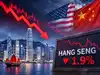
Hong Kong stocks sink nearly 2% to four-month low as US-China trade tensions escalate
Asian markets came under pressure as renewed US-China trade and technology tensions rattled investor sentiment. Hong Kong's Hang Seng Index plunged to a four-month low, while mainland Chinese equities extended losses amid concerns over tighter US semiconductor restrictions and further Fed rate hikes.

‘Don’t put all your eggs into one basket’ says Kris Gopalakrishnan on AI sovereignty, Microsoft outages
Kris Gopalakrishnan emphasized the importance of India building its own artificial intelligence capabilities and reducing reliance on single providers. He highlighted the need for technological sovereignty and strategic autonomy amid recent global technology disruptions. Gopalakrishnan argued that India should focus on both developing frontier models and applications to meet domestic needs.

‘Almost completely good, but…’: Trump flags AI risks, pushes back against regulation
Donald Trump spoke at the APEC Economic Leaders' Meeting in Shenzhen, emphasizing the benefits of artificial intelligence. He acknowledged the presence of negative aspects in AI and stressed the importance of managing them carefully. Trump opposed regulations that could limit the industry's growth, asserting that the US would not allow such hindrance. Discussions on AI and the digital economy were significant topics at the summit.

Pax Silica moment: What India must build for its ambitions
November has become a critical month for the AI industry, marked by regulatory changes from the U.S. Commerce Department. These new restrictions affect China's access to advanced computing power and create opportunities for international cooperation. India has signed the San Francisco Declaration to engage in AI policy and supply chain efforts, despite existing tensions.
Trump administration weighs forcing US firms to disclose Chinese AI use
The Trump administration is exploring a plan to require companies to disclose their use of Chinese AI models. This initiative intends to discourage reliance on Chinese technology by increasing transparency without imposing harsh regulations. Such disclosure could apply to companies utilizing models like Qwen from Alibaba. Congressional investigations have also been launched to scrutinize American companies adopting Chinese AI.

No enemy needed: The world is just one glitch away from chaos
A wave of technology outages across the US has exposed the growing risks of digital dependence, disrupting air travel, banking, Microsoft services and government communications. While officials say there is no evidence of coordinated cyberattacks, ageing infrastructure, software failures and rushed technology upgrades highlight how a single glitch can trigger widespread disruption and threaten critical services.

What the Anthropic’s IPO reveals in terms of investor returns ahead of tomorrow’s mega listing
Anthropic’s proposed $1.4 trillion IPO will test whether the rapid growth of AI can translate into sustainable profits. While its revenue rose from $2.5 billion to $33.2 billion in a year, the company has disclosed commitments of about $900 billion, largely for computing capacity.

Harsh Goenka 2027 predictions: Trump, AI bubble fears, inflation, climate risks and 10 predictions about the year ahead
Industrialist Harsh Goenka has identified 10 developments to watch in 2027, including the political transition in the US, Iran-related geopolitical risks, climate extremes, AI-related concerns, Europe's populist shift, bond market pressures, tensions over Taiwan, weight-loss drugs, orbital data centres and changes in Hollywood.

China taps US AI models to train homegrown rivals as chip curbs bite
Chinese entities are adopting increasingly sophisticated ways to use output from leading American AI models to train domestic rivals, documents show, as China aims to broaden its AI strategy and offset tightening US curbs on its access

China takes a page from US AI playbook to build cheaper domestic rivals as chip curbs bite: Report
Chinese companies and researchers are increasingly using output from leading US AI models to train domestic alternatives through a technique known as distillation, a Reuters review of more than 300 documents found. The practice is gaining industrial traction as Beijing seeks cheaper AI systems and faces tighter US restrictions on advanced chips.
Load More

