US CHIP CURBS
Xi delays retaliatory rare earths ban for US chip curbs
China has extended a ban suspension on critical minerals exports to the US until January 27. This decision follows a recent summit between Donald Trump and Xi Jinping in Shenzhen. The minerals, vital for semiconductors and military equipment, were initially banned in December 2024. China Southern Airlines also signed a deal to purchase Boeing 737-8 jets worth $7.4 billion.

Nvidia suppliers, startups in Asia cheer Huang's return as uncertainty eases
Jensen Huang's return to the helm at Nvidia has instilled renewed confidence among Asian customers and partners alike. His experienced leadership is anticipated to boost product innovation and sustain investment in the burgeoning AI field. Following the announcement, stock exchanges in Taiwan and South Korea saw notable increases. Nevertheless, challenges related to national security and U.S.
How Nvidia's billion-dollar turnaround in China is threatened by Huang's exit
Nvidia products used to run AI models powering everything from business software to humanoid robots have found growing demand in China from universities, companies and research institutes, even as the US chipmaker's most advanced AI processors remain largely off limits, according to people in the industry and a Reuters review of more than 100 Chinese corporate disclosures and procurement records.
China stocks hit 16-month low as tech selloff deepens, US chip curbs weigh
Chinese stocks fell to multi-month lows as a global selloff in AI and semiconductor shares, fresh US chip restrictions and concerns over the domestic economy weighed on investor sentiment. Measures to ease margin financing requirements failed to revive confidence.

Asia’s stock rescue efforts gather pace after Wall Street plunge
The decline of South Korean markets reflects the global downturn in technology stocks, stirring investor unease. In light of increasing volatility, Asian authorities are mobilizing for stabilization. South Korea's 10 trillion won market fund aims to mitigate issues, but experts consider it inadequate. Concurrently, Taiwan seeks to strengthen local confidence and revise trading rules, while Chinese regulators are tweaking margin settings to encourage investment and improve liquidity in the market.

Spy chief says US probing alleged spy tied to former Nvidia CEO Jensen Huang
Director of National Intelligence Jay Clayton stated that Nvidia faces ongoing threats from those seeking its high-end chips. An investigation is underway regarding a former executive's alleged affair with the company's ex-CEO. Attorney General Todd Blanche confirmed that the US is also investigating Megaspeed International for potential legal breaches. Additionally, California is examining whether Nvidia illegally sold advanced chips to China.
- Go To Page 1

Why is the stock market down today? 5 reasons US stocks crashed on November 20 as Nasdaq, S&P 500 and Dow Jones plunged
S&P 500, Nasdaq, Dow Jones today: US stocks extended their sell-off on November 20, with the Nasdaq falling 3.3% and the Dow entering correction territory. A fresh decline in AI and semiconductor shares, fears over data center restrictions, expected Fed rate hikes, US chip export curbs and tensions involving Iran added to Wall Street's losses.

Alibaba defrauded shareholders by concealing ties to suspected spy in Nvidia scandal, lawsuit says
According to a proposed class action filed in Manhattan federal court, Alibaba inflated its share price by knowingly and materially understating in its 2024, 2025 and 2026 annual reports the risks that actual or suspected export control violations could harm its business.
Trump admin cleared 9 lakh Nvidia, AMD chips for China in six months, House committee says
The US Commerce Department has authorized the shipment of nearly 900,000 advanced AI chips to Chinese firms. This approval is part of a larger request involving 3.4 million AI chips to China. Several Chinese Military Companies, including Alibaba and Tencent, are among those receiving these shipments. Investigations reveal potential chip-smuggling fronts for NVIDIA's sales to these companies.

TSMC tightens China AI chip curbs as new US rules close manufacturing loophole, sources say
The move could close one of the last remaining routes for Chinese companies to produce powerful AI processors, complicating Beijing's efforts to develop domestic alternatives to chips designed by Nvidia and manufactured by TSMC.

TSMC tightens China AI chip curbs as new US rules close manufacturing loophole, sources say
TSMC has imposed stricter limits on Chinese chip designers, suspending advanced manufacturing orders and restricting processes. Chinese firms must now rely on older technology as they lose access to advanced chips. These measures follow new US regulations that eliminated existing compliance routes for Chinese companies. Affected orders will face increased scrutiny concerning their operational locations and ownership structures.

AMD shares slide 8% as report says China links could invite US scrutiny
Shares of AMD plunged by 8% after a report surfaced linking the company to certain Chinese firms, including those on the US government's blacklist. The report indicates that AMD's firmware is being used by a Chinese server manufacturer, which poses potential regulatory issues. Furthermore, the presence of licensing revenue from two restricted Chinese entities adds another layer of difficulty for AMD as it strives to maintain competitiveness against Nvidia.
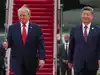
First time in 50 years: Xi Jinping reciprocates Donald Trump's airport greet
It's the first time in roughly 50 years that a Chinese leader greeted a visiting dignitary at the airport. Since the late 1970s, Chinese vice presidents have typically been the highest-ranking official to head to the airport for such events. Trump's move to welcome Xi at Joint Base Andrews near Washington, DC, was also unusual - he became the first US president in six decades to receive a foreign counterpart, excluding visits by the Pope.

China seeks advanced Nvidia chips for AI weapons despite US curbs, report says
The US-China Economic and Security Review Commission said Beijing was seeking to circumvent US export controls to obtain advanced semiconductors critical to its push for "intelligentized warfare," the People's Liberation Army's term for integrating artificial intelligence into weapons, command and control, kill chains and logistics.

Govt weighs tax tweaks to boost stock trading, curb derivatives: Report
The government is reviewing proposals to cut securities transaction tax on cash equities by 50% while raising levies on derivatives to curb speculative trading and encourage broader market participation. Officials are also considering a reduction in long-term capital gains tax. The recommendations will be presented to Finance Minister Nirmala Sitharaman ahead of Budget 2027.

Robust inflows, pullback in shorts lift rupee to seven-month peak
The Indian rupee saw a notable rise, achieving its peak value in seven months following a surge in foreign equity investments. Closing at 93.47 per dollar, this upswing was driven by an impressive influx of $10 billion this month. Additionally, traders observed substantial movements in the dollar-rupee non-deliverable forward market as bearish positions were unwound.

US AI chip curbs threaten Southeast Asia data centre boom, shares slump
The new rule restricts shipments of advanced chips to the region's major economies such as Malaysia, Singapore and Thailand, which some Chinese companies have used to access computing power to train AI models. It also imposes new requirements on overseas data centres that supply "significant volumes of computing power" to firms headquartered in China.

Samsung Electronics, TSMC shares fall after US announces curbs on China's chip access
Shares of Samsung Electronics and TSMC lost ground on Tuesday in Asia after the Trump administration said on Monday it would further restrict China's access to advanced AI chips.
Chinese stocks struggle to rebound from multi-month lows as US chip curbs weigh
Chinese stocks struggled to rebound from multi-month lows as tighter US restrictions on advanced AI chip exports weighed on investor sentiment. While domestic semiconductor stocks rallied on expectations of stronger local demand, technology giants Alibaba and Baidu slumped. Investors also remained cautious ahead of the Xi-Trump meeting at the APEC summit.

China taps US AI models to train homegrown rivals as chip curbs bite
Chinese entities are adopting increasingly sophisticated ways to use output from leading American AI models to train domestic rivals, documents show, as China aims to broaden its AI strategy and offset tightening US curbs on its access
China takes a page from US AI playbook to build cheaper domestic rivals as chip curbs bite: Report
Chinese companies and researchers are increasingly using output from leading US AI models to train domestic alternatives through a technique known as distillation, a Reuters review of more than 300 documents found. The practice is gaining industrial traction as Beijing seeks cheaper AI systems and faces tighter US restrictions on advanced chips.

JGB yields climb as buyers hold back on long-dated debt
Japanese government bond yields generally increased on Tuesday except for the benchmark 10-year yield, which fell. The 20-year and 30-year JGB yields reached their highest levels in about a month and since October. Investors are wary of taking interest-rate risks ahead of the 20-year bond auction. Concerns about falling equities may also affect bond supply-demand conditions amidst uncertainty.

Singapore seeks 'trusted access' to AI chips after new US curbs
Singapore said Tuesday it was seeking "trusted access" to advanced AI chips after the United States imposed new curbs aimed at stopping Chinese firms from accessing the technology through overseas data centres. The curbs came days after a spy scandal forced Jensen Huang to quit as Nvidia chief, as questions emerged over whether Singapore-based Megaspeed aided Chinese firms in accessing advanced artificial intelligence chips in violation of US rules.

US tightens AI chip curbs on China, targets overseas data centres ahead of Trump-Xi talks
The Trump administration has tightened export controls to restrict China's access to advanced AI chips, targeting overseas data centres in countries including Singapore, Thailand and Malaysia. The move comes amid scrutiny over alleged chip diversion through third-party facilities and ahead of Donald Trump's meeting with Chinese President Xi Jinping.

Global Market Today: Asian stocks fall as Wall Street selloff deepens ahead of Nvidia earnings
The MSCI Asia Pacific Index dropped 0.7% in early trading and South Korea’s Kospi lost 1.4%. Futures for the S&P 500 and Nasdaq 100 indexes were little changed after the underlying benchmarks slid 1.9% and 2.7%, respectively, on Monday, marking a third straight session of losses. A gauge of chip shares in the US sank 5.3%.

Chip tensions loom over Trump-Xi summit, as US and China push AI safety steps
The prospect of tighter US curbs on China's access to advanced AI chips will likely overshadow talks when US President Donald Trump and President Xi Jinping meet at a summit in Shenzhen this week, analysts said, though the leaders

China's $3 billion-plus pipeline of Nvidia-powered AI data centres
A Reuters review has identified more than $3 billion worth of Chinese computing projects built around Nvidia's restricted AI processors, highlighting the US chipmaker's continued presence in China's AI infrastructure despite export controls. The findings expose Chinese developers' reliance on US technology and the risks of supply disruptions as Washington tightens restrictions.

Chinese AI firms rush to secure Nvidia chip capacity as spy scandal stirs fear of US curbs
Chinese artificial intelligence companies are actively seeking to rent Nvidia-powered computing capacity from overseas data centres. They are motivated by fears of stricter US export controls and political controversies surrounding Nvidia's CEO. Major cloud providers and smaller AI labs are exploring international options to maintain access to advanced processors.
Load More