
SPAWNING MIGRATION
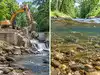
Illinois removed a dam from Blackberry Creek in 2013; fish began spawning within two weeks, and the former impoundment’s recorded species count rose from 8 to 25
In 2013, the dismantling of the Blackberry Creek dam sparked a significant ecological shift, enabling fish to migrate freely for the first time in 180 years. Following this, the diversity of fish species surged from 8 to an impressive 25. While some species returned quickly, others were still missing post-survey.
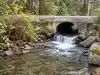
California replaced a fish-blocking pipe on Fort Goff Creek with a bridge in 2014; later monitoring found 64 Chinook salmon nests upstream
In California, the removal of the culvert on Fort Goff Creek has significantly enhanced fish passage, particularly for salmon. Completed in 2014, a new bridge now connects fish to breeding grounds that were previously inaccessible. Biologists found 64 nests of Chinook salmon in this newly opened habitat, highlighting the importance of addressing culverts nationwide to improve aquatic ecosystems and connectivity.
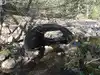
In 2017, California replaced a fish-blocking road crossing on Upper Green Valley Creek; surveys later found 136 young steelhead upstream of the former barrier
In 2017, engineers undertook a significant project to replace an old culvert that hindered fish migration in Upper Green Valley Creek. The successful replacement is evidenced by the discovery of 136 young steelhead fish in previously unreachable habitats. Researchers are actively studying the long-term effects on these fish populations and their growth.
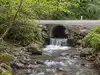
For 20 years, a road culvert blocked fish in California’s Sharber-Peckham Creek; crews replaced it in 2016, and 2017 monitoring found 740 juvenile coho upstream
In Northern California, a four-foot metal pipe had hindered salmon migration for two decades. After its replacement, juvenile coho salmon gained access to essential spawning habitats. This case underscores the critical situation of culverts obstructing fish passage nationwide. Recent research has identified the need to evaluate these structures for effective prioritization in upgrades. Continuous investment, study, and conservation efforts are essential for sustaining fish habitats.

Lake Champlain began killing invasive sea lampreys in 1990; native lake trout survival rose 25%, and Atlantic salmon returns to the main lake fishery tripled
Lake Champlain experienced significant ecological harm due to the invasive sea lamprey, which posed a threat to local fish populations. However, an experimental control initiative launched in 1990 led to a marked decrease in lamprey numbers and better fish survival. Economic evaluations revealed positive returns from the control efforts, benefiting both local tourism and fisheries. Ongoing initiatives have further bolstered the lake trout population, restoring its self-sufficiency.
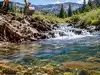
Wyoming reopened a blocked stream and cut non-native brook trout by 97%; native Snake River cutthroat trout then jumped more than 14-fold in just 3 years
In Wyoming, a stream known as Game Creek has observed an increase in native Snake River cutthroat trout. After a culvert blocking fish movement was replaced, cutthroat trout returned to the stream naturally. By 2024, surveys recorded a significant increase from just five cutthroat trout in 2021 to seventy-two. The Wyoming Game and Fish Department had also removed many non-native brook trout from the area.
- Go To Page 1
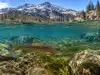
California began removing invasive brook trout near Independence Lake in 2005; a study found young Lahontan cutthroat trout survival increased from 4% to 12%
In the Sierra Nevada, Lahontan cutthroat trout have struggled due to competition from non-native brook trout. A study conducted between 2005 and 2010 revealed that brook trout removal improved the survival rates of cutthroat fry significantly. Research indicated a notable increase in the number of cutthroat juveniles entering Independence Lake after brook trout removal. Long-term monitoring is necessary to determine if the recovery of the species is sustainable.

Dodging SaaSocalypse: AI’s enterprise moment could belong to IT services
ITC Infotech's merger with Happiest Minds highlights the trend of mid-market consolidation in response to AI advancements. The global IT market faces challenges, requiring companies to adopt AI-centric capabilities for survival. Enterprises are burdened with legacy systems, which present both challenges and opportunities for funding technological transformations. Companies will need to adapt to the evolving landscape by integrating AI into existing frameworks effectively.
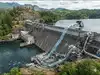
Washington used 1 pneumatic fish cannon to solve salmon passage past a 60m hydroelectric dam; the result transformed blocked rivers into thriving spawning grounds
Washington used 1 pneumatic fish cannon to solve salmon passage past a 60m hydroelectric dam, using a pneumatic tube system to move migrating fish over major barriers. The Whooshh PassagePortal, also called the Salmon Cannon, helped transport salmon around dams while reducing handling. The system uses scanning, sorting, water mist and controlled air pressure. The technology helped reopen access to upstream waters used by salmon for spawning.

Each female red crab can carry 100,000 eggs to the sea; Christmas Island closes roads and deploys bridges to protect the moon-timed journey
Every year, millions of red crabs embark on a mesmerizing migration across Christmas Island as the wet season rains commence. Males lead the charge, while females follow to mate and transport their eggs. Timing is crucial, as females release eggs into the ocean during specific lunar cycles, ensuring the next generation can hatch and initiate their own adventure back to the depths of the island.

Australia's Christmas Island used a bridge to solve road mortality for 50 million migrating crabs; the result transformed dangerous transit routes into safe canopy crossings
Millions of red crabs undertake an annual migration across Christmas Island. This remarkable journey begins with the first rainfall of the wet season. Male crabs lead the trek, and females join them for mating near burrows. Females then spawn eggs which hatch into larvae in the ocean. Baby crabs eventually return inland to mature over several years.
The U.S. Army Corps of Engineers spent $7 million on fish ladders in 1938 to move salmon past Bonneville Dam; decades later, the system carries 1 million a season in good years
The Bonneville Dam’s fish ladders, designed as part of a New Deal initiative, remain operational after decades of service. The construction saw a notable increase in budget allocation. Annually, millions of fish traverse these ladders, predominantly hatchery-reared. However, wild salmon populations continue to dwindle, impacted by upstream dams and climate change, underscoring persistent environmental challenges despite the fish ladders' effectiveness.
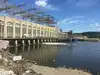
Maryland spent $12 million on a fish lift in 1991 to move American shad past Conowingo Dam; decades later, annual runs remained far below the 2 million-fish target
Maryland invested $12 million in a fish lift to help migrating shad overcome the Conowingo Dam. This technological solution proved ineffective, moving only a fraction of the targeted fish annually. Experts now favor dam removal over fish passage structures like lifts and ladders. The state is investing $340 million in environmental upgrades and trucking fish past the dam. This situation reflects costly infrastructure projects that under-delivered on their initial goals.
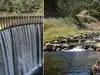
In 1918–1921, one dam built on California's Carmel River provided water storage but blocked fish runs; in 2015 it came down, reopening 25 miles of habitat for steelhead trout
A century-old dam on California's Carmel River was removed, restoring fish spawning grounds. Crews rerouted the river and dismantled the structure over two and a half years. A study found the dam removal did not cause significant downstream damage to the environment. This project reconnected twenty-five miles of vital habitat for threatened steelhead trout. The successful removal offers a model for other aging dams across the United States.
In 1987, Denmark launched restoration of 2,200 hectares around the Skjern River. 19 years later, SPA status arrived in 2006 as wildlife returned to the restored wetlands
Denmark restored the Skjern River wetlands after agricultural decline and pollution. The project re-meandered over twenty kilometers of river and restored habitats. Wildlife returned, meeting conservation targets for Special Protection Area status. New shallow lakes and improved conditions benefited various species and salmon. The restored landscape also became accessible for public recreation and tourism.
In 2002, Shattuck Chemical agreed to pay $1.25 million for restoration of South Platte River following years of chemical release. 10 years later, the river was restored for migratory birds and native species
Hazardous substances near Shattuck Chemical Company prompted a settlement for restoration projects. Funds supported habitat improvements along Colorado's South Platte River and Eastern Plains. Restoration projects enhanced wetland and riparian areas for migratory birds. Denver's Overland Pond Park also saw habitat and riverbank improvements.
Machhli ado about the return of Hilsa
The return of Hilsa fish to the upper Ganga after decades marks a significant triumph in conservation. Government labs are successfully implementing artificial reproduction techniques. Enhanced habitats reflect a rise in biodiversity within the Ganga river system. To ensure sustained survival of these fish, it is essential to raise public awareness about overfishing. Furthermore, international collaboration is vital to tackle pollution and consumption challenges that threaten their existence.
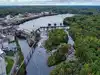
In 2014, Maine began developing a fish elevator to carry American shad past Milford Dam. 12 years later, the system could reopen 600 miles of river habitat to a fish whose migration has been blocked for decades
A Maine fish elevator could reopen 600 miles of river habitat for alewives, giving a small fish a much bigger chance to return upstream. The Woodland Dam project is designed to improve fish passage and reach nearly 60,000 acres of spawning grounds. It could also reshape the river’s food web, bringing more prey for wildlife. But the whales often mentioned in the story are still part of a future possibility, not a proven result.
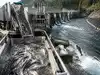
In 2012, PacifiCorp launched a trap-and-haul program to move adult salmon upstream past Merwin Dam. 14 years later, researchers found 2 stages in the system but 1 decisive bottleneck: young salmon failing to find the artificial current downstream
A trap-and-haul program on Washington’s Lewis River helps adult Chinook salmon bypass Merwin Dam by transporting them in trucks to upstream spawning habitat. But researchers tracking the salmon life cycle have identified a major weakness on the return journey. Juvenile salmon, or smolts, must travel downstream toward the Pacific Ocean, yet many struggle to locate the artificial current leading to a floating collection system near Swift Dam. Once captured, they can be transported safely downstream, but low capture rates remain the program’s primary bottleneck.
In 1953, a concrete barrier blocked fish migration in Massachusetts. 70 years later, it’s finally being removed to bring the native trout back
Soon, a concrete barrier currently obstructing fish migration in Fresh Brook will be dismantled. This ambitious restoration initiative seeks to reinstate a vital connection between the stream and its tidal waters, as well as restore access to historic spawning areas. This crucial step will enable sea-run brook trout and various species to return to their home waters after years of isolation.
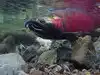
In 2006, Canada launched a mission to save Atlantic salmon. Nearly 20 years later, the fish are returning
Atlantic salmon populations declined due to habitat destruction and overfishing. Conservation efforts involving captive breeding and habitat restoration began in the mid-2000s. The Respectful Returns project improved survival rates for migrating juvenile salmon. Indigenous knowledge and scientific monitoring guided successful restoration initiatives. These combined efforts have led to the encouraging return of salmon to native rivers.
Something is going on - Scientists stunned by strange, alarming pattern along US coastline
Scientists are warning about a strange change along the US coastline. Striped bass and their food fish, menhaden, are not spawning as expected. Experts say warmer water and climate change may be the reason. This could affect many sea animals and even humans. Researchers call it a worrying sign of fish spawning problems.

Unsustainable fishing practices endangering Hilsa population in Ganga estuary
Juvenile hilsa weighing 50-200 g is causing damage to the hilsa ecosystem in the Ganga estuary. Trawlers are bringing in mainly small hilsa, impacting the population. Fishermen face challenges during ban periods, leading to unsustainable practices.

The annual migration of 'Homo NRIensis'
During winter in India, along with migratory birds like Siberian Cranes and Bluethroats, a human species called Homo NRIensis returns. These are Indians living worldwide who flock back, lightly clad, defying the local chill. Distinguished by foreign attire, accents, and accessories, they join family gatherings. The migration's essence lies in warm reunions—a unique diasporic tradition, though its continuity rests on how India feels like home for the newer generation.

Meta’s Threads can’t bet on mass migration from Twitter
Expert says value of a new platform depends on who else is there

Be fruitful & amplify Indianness all across
It would seem to be an anomaly, even a blasphemy, but the best way Indians can serve India is by migrating abroad. 'Protestant work ethic' may have become a turn of phrase to signify hard, conscientious work in general, secular terms, but it still points to the work ethic from northern and northwestern Europe and the US under the Protestant, especially Calvinist, faith - a 'civilisational' virtue.

COVID-19 to erode 3 yrs of fiscal consolidation gains of states: RBI
Before the pandemic broke out, states have budgeted their consolidated gross fiscal deficit at 2.8% of GDP in 2020-21 with about half of the states having budgeted the ratio at or above the 3% threshold.

Inadequate rains affect freshwater hilsa supply, price shoots up to Rs 1,300/kg
Inadequate rains affect freshwater hilsa supply in major metros, price shoots up to Rs 1,300/kg.

40 years on, hilsa will swim up to Allahabad again
Hilsa has a history of migrating from Bangladesh to Allahabad down the Ganga.
Load More

