
SPACE SCIENCE

Quote of the day by Carl Sagan: 'We are like butterflies who flutter for a day and think it is forever' - A thought-provoking lesson on human life, mortality and our place in the universe by the American scientist
Carl Sagan’s famous quote from his 1980 book Cosmos compares human life to the brief existence of butterflies, highlighting how small our time on Earth is compared with the vast age of the universe. The American astronomer used his work to explore humanity’s place in the cosmos, the evolution of life and the possibility of extraterrestrial existence. Understand the meaning behind his observation and how his scientific work still shapes our understanding of the universe.

In 1982, NASA engineer George Alcorn invented an imaging spectrometer designed to analyze high-energy sources
George Edward Alcorn's groundbreaking invention of the X-ray imaging spectrometer has revolutionized the field of space exploration, allowing for in-depth analysis of celestial phenomena. This innovative device merges imaging with energy detection, yielding essential data from various X-ray sources. His contributions significantly advanced astronomy, enabling detailed mapping of planetary surfaces and stellar charts. Recognized for his achievements, Alcorn was inducted into the National Inventors Hall of Fame in 2022.
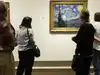
New study discovers Van Gogh's 'The Starry Night' is based on a real night in 1889, not his imagination: How did researchers date the sky in the iconic painting?
Challenging long-standing notions, researchers from South Korea have uncovered new insights regarding Van Gogh's 'The Starry Night'. They propose that the painting depicts a unique sky seen in July 1889, not June. Through geometric analysis, they accurately matched the star patterns in the artwork with their real counterparts from that era. This finding may inspire a fresh perspective on the artwork's historical importance and context.
India-Pakistan Moon race: With China's help, Pakistan wants to send humans to Moon five years before India
Pakistani astronaut on Moon: Pakistan has set a target of landing on the Moon by 2035 as it expands its space programme through cooperation with China. Planning Minister Ahsan Iqbal announced that Pakistan’s first astronaut is scheduled to embark on a space mission from China on November 25. The partnership also includes a lunar rover project, while India is pursuing its own human spaceflight and Moon exploration goals.

Students eyeing career in space science after Shubhanshu Shukla's feat: Aerospace start-up Space Kidz India CEO
Shubhanshu Shukla's journey to the International Space Station has ignited enthusiasm for space science among young students. According to Srimathy Kesan, there is a notable shift in children's career aspirations, with many now looking toward the cosmos instead of conventional paths. Nobel laureate Didier Queloz believes in the potential of youthful PhD candidates at Cambridge and highlights the necessity for international cooperation in scientific endeavors, which bridges cultural divides.
- Go To Page 1
World Space Week 2026: How the ‘Rocket Revolution’ is changing the cost, speed and future of space travel
World Space Week 2026 will highlight the increasing accessibility of space through the theme 'Rocket Revolution' this October. Celebrations will include events from schools, space agencies, and aerospace companies worldwide. Participants will explore technological changes in rocketry and their significance for future space exploration. Various activities, including model rocket launches, will occur across several countries. The week aims to inspire interest in STEM and promote international cooperation among attendees.
ISRO scientist used to wake up at 5 am to memorise Vedas: Meet Kerala’s Govind Krishnan, who left regular school after Class 4, studied at a gurukula, cracked JEE Advanced & joined IIST
Govind Krishnan from Kerala left conventional school at 10 to study the Vedas at a gurukula in Thrissur. He later returned to regular schooling, cleared JEE, studied electronics and communication at IIST and was selected to join ISRO. His unusual journey reflects how he balanced traditional Vedic education with modern science and technology.
Space-tech’s missing link: The skilled talent powering India’s $100 billion ambition
Space job news: India's space industry is undergoing significant changes, with an increasing presence of private startups contributing to its growth. The government anticipates a boom in the sector, estimating it will reach $100 billion by 2040. However, companies are struggling to find skilled workers with specialized expertise required for various roles. Initiatives to bridge the skills gap include the introduction of SpaceTech courses and enhancing industry-academia collaborations.
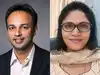
Indian scientists Roxy Mathew Koll and Neelima Satyam among American Geophysical Union 2026 awardees
Indian scientists Roxy Mathew Koll and Neelima Satyam have been recognized with prestigious AGU awards. Koll will receive the Pavel S. Molchanov Climate Communications Prize for his climate science communication efforts. Satyam has been awarded the Devendra Lal Memorial Medal for outstanding research in Earth sciences. Other notable recipients include Abdul Qadir and Faisal Hossain, who earned separate AGU honors.
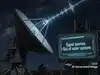
Mysterious radio bursts detected 63 light-years from Earth, well beyond our solar system: What scientists discovered about its source
A newly reported radio signature from Beta Pictoris b is giving astronomers a rare way to investigate the magnetic environment of a planet beyond our solar system. Observations with South Africa’s MeerKAT array identified recurring auroral radio bursts at the planet’s location, rather than its host star. The research also provides the first direct measurement of an exoplanet’s magnetic field strength.
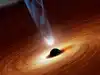
The strange 2% rule: Why black holes suddenly switch on their powerful jets
A new study reveals black holes become predictable when feeding. Jets emerge when accretion rates fall to two percent of the Eddington limit. This threshold applies to black holes of vastly different sizes. Tidal disruption events offer a rare view of this process. Future observations may predict when these powerful jets will appear.

Joi Barua takes India's sound to the stars with NASA-linked project
Indian composer Joi Barua is merging space science with performing arts. His project, Cosmic Rhapsody, connects NASA's astrophysics research with orchestral music. The project will premiere at the Hollywood Bowl in July 2027. It combines live music, animation, and pop songs for an immersive experience. This collaboration highlights the fusion of science and imagination for young audiences.
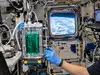
In 2025, DLR tested continuous spirulina growth on the ISS for future closed-loop life support; Limnospira indica produced oxygen and edible biomass in microgravity
In a groundbreaking experiment, scientists have successfully cultivated spirulina aboard the International Space Station, paving the way for future Mars exploration. This remarkable blue-green algae can generate oxygen and produce biomass, allowing astronauts to grow food and breathable air independently of Earth. With its high nutritional value and small ecological footprint, spirulina could revolutionize space travel and even enhance disaster relief efforts back on our planet.
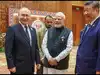
BRICS adopts New Delhi Declaration: Inside the 140-point document on Global South's ambitions
BRICS leaders adopted the New Delhi Declaration at the 18th summit, reaffirming their commitment to cooperation, multilateralism and a more representative global order. The document outlines India's 2026 chairship priorities, recognises partner countries' contributions and calls for greater participation of Emerging Markets, Developing Countries and Least Developed Countries in global governance.
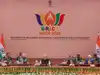
BRICS nations recognise significance of international cooperation in outer space
BRICS leaders recognized international cooperation for peaceful space exploration and use. They stressed ensuring space systems and technologies serve peaceful purposes. The declaration supported long-term sustainability and preventing an arms race in space. BRICS space agencies discussed space-debris mitigation for sustainable outer space activities. The BRICS Remote Sensing Satellite Constellation aids global challenges and development.
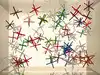
In 2024, ESA flew bouncing hexapods to 256 km on a Swedish sounding rocket; six minutes of microgravity showed how complex grains collide and transfer energy
A Swedish rocket successfully launched miniature brass crosses designed for microgravity research. Scientists are investigating how these irregularly shaped particles interact and lose energy upon collision, advancing our understanding of celestial objects such as asteroids and planetary rings. The implications of this study extend to industrial applications on Earth, with preliminary results indicating that particle clusters exhibit surprising behavior in space.
‘People’s welfare first’: Russia’s Alipov praises India’s BRICS presidency ahead of Putin visit
Russian Ambassador Denis Alipov praised India’s “people-centred” approach to its BRICS presidency, saying the grouping must ensure Global South and East interests shape global decisions. Ahead of Vladimir Putin’s second India visit in under a year, Alipov highlighted trade, energy, healthcare, AI and potential cooperation in urea, aircraft and nuclear energy.
ISRO clarifies: No plan to privatise space agency, role to remain central
ISRO denies privatization reports, stating its role remains central to space research. Reforms aim to expand India's space ecosystem and foster global competitiveness. Private companies will scale mature technologies, complementing ISRO's advanced research efforts. ISRO will focus on frontier technologies and complex national missions. This transition creates an ISRO-led national space ecosystem for growth.
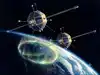
In 1981, two satellites were launched by NASA to study the interactions between Earth's magnetosphere and ionosphere
In 1981, two satellites were launched by NASA to study the interactions between Earth's magnetosphere and ionosphere. The Dynamics Explorer mission used two spacecraft, DE-1 and DE-2, to study space plasma, electric currents and energy flow. Both satellites launched together and followed polar orbits. DE-1 operated at higher altitudes, while DE-2 studied the region closer to Earth before re-entering the atmosphere in 1983.
Science says black holes don’t actually suck everything around them: Here’s what really happens
Black Holes are called black because light cannot escape from inside their event horizons. Astronomers nevertheless detect black holes indirectly through their effects on nearby matter, gravitational lensing, stellar orbits and radiation from accretion disks.
In 1966, NASA launched Biosatellite I with 13 biology experiments and more than 10 million organisms; its retrorocket failed, and the spacecraft was never recovered
In 1966, NASA's Biosatellite I mission attempted to carry over ten million organisms into orbit, but a retrorocket malfunction led to the capsule's tragic loss upon re-entry. This setback, however, was instrumental, offering invaluable insights that benefitted future space missions. Just months later, Biosatellite II launched successfully, marking a significant advancement and laying foundational knowledge for present-day research on survival in space.

Russia-Ukraine War: US slaps sanctions on Chinese space science firm for helping mercenary Wagner Group
The US has slapped sanctions on Chinese firm for helping mercenary Wagner Group against Ukraine.
Centre for space sciences inaugurated in Jammu Central varsity
In October 2018, the Indian Space Research Organisation (ISRO) had signed a Memorandum of Understanding (MoU) with the Central University of Jammu to set up the centre with facilities for geospatial data analysis, that will help in sustainable use of natural resources and plan land-use patterns.

China's new space carrier rocket successfully launches five satellites on its maiden flight
The five experimental satellites will carry out the in-orbit verification of microwave imaging and other technologies. They will conduct experiments in space science, remote sensing and communication technologies, official media reported.
Cabinet nod to GSLV Ph-4 continuation programme
The phase four will enable the launch of two-tonne class of satellites for geo-imaging, navigation, data relay communication and space sciences, an official statement said.
India to soon launch space science channel: ISRO
Bengaluru, Aug 12 (IANS) India will soon launch a dedicated space and science television channel to make their benefits reach people across the country, a top official said on Sunday.

Tell NASA which points of Jupiter you want Juno to spy!
JunoCam is the visible-light camera aboard the Juno spacecraft that was launched on August 5, 2011. It was built by Malin Space Science Systems in the US.

India, USA team up to find how space technology can solve environment challenges
Youths from Kolkata's Science City and Chabot Space & Science Centre from America will develop demonstrations and activities taking inspiration from space travel.
Load More

